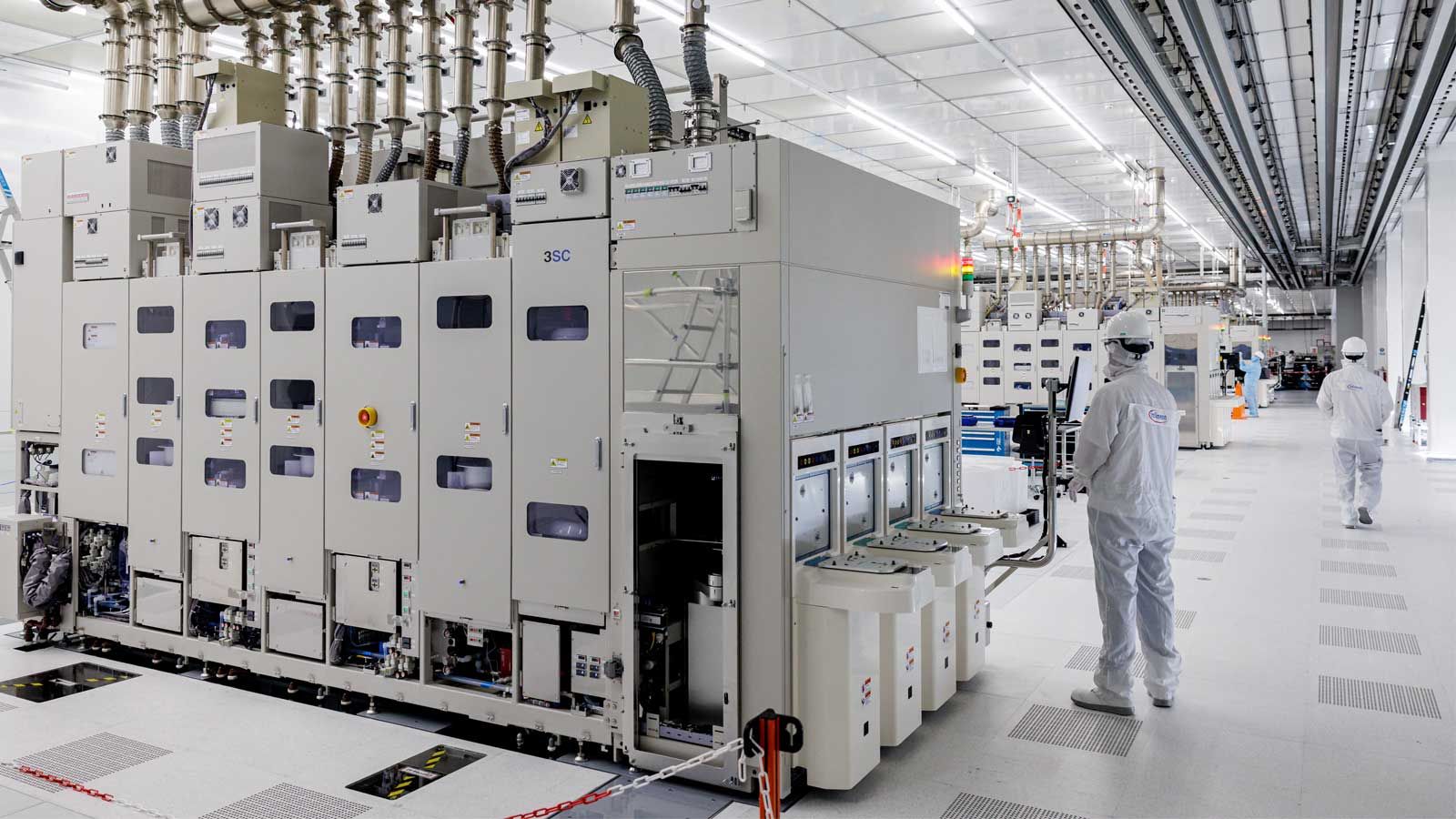
Gigaphoton has introduced a neon recycling system for argon fluoride (ArF) excimer lasers, claiming a recovery rate of 50 percent. The Japanese company already offered the technology for krypton fluoride (KrF) lasers and has now extended it to ArF. According to Gigaphoton, one hTGM unit for ArF can cut neon gas consumption by as much as 470 kilotres annually, lowering material costs and reducing dependence on a global supply chain that has proven unstable.
The 50 percent figure is not new for the industry. Cymer's excimer laser neon recovery system reached the same efficiency level in 2015, and Gigaphoton's own testing pointed to a possible peak above 90 percent for ArF recovery in 2017. Fellow Japanese firm Kanken Techno demonstrated a neon recycling system exceeding 90 percent efficiency at SemiCon Taiwan at the start of September. Kanken works with both major ArF laser developers and is in the certification process, with approval expected soon.
Neon recycling at chip fabs has moved quickly. The first systems were qualified for Cymer excimer ArF lasers at the end of 2023, and Samsung and SK Hynix became the first major memory makers to adopt neon gas recycling in 2024. Recycling is one of the few levers available to companies that cannot control their own supply chains directly.
Neon is a noble gas that is inert under standard conditions but scarce in Earth's atmosphere, since it vaporizes easily and bonds poorly. It is most efficiently extracted through fractional distillation of super-cooled air, making it cheapest as a byproduct of other processes. For decades, Ukrainian steel-mill air-separation units produced crude neon, which was refined in-country by two key companies.
When Russia escalated its war against Ukraine into a full-scale invasion in 2022 and Ukrainian refiners shut down, the world responded. South Korea accelerated domestic production and launched a large national recycling initiative focused on in-fab recovery. Taiwan installed purification systems in existing blast-furnace air-separation units and targeted self-sufficiency within a few years. China tied neon purification to steel and petrochemical production, while the U.S. is building new air-separation units at Gulf-coast petrochemical hubs, though those are not expected to meaningfully improve American supplies until near the end of the decade.
Lithography consumes roughly 70 percent of global neon, mainly in advanced DUV processes, but not in EUV, which uses a tin-plasma laser. Neon's role in the chip supply chain has become a strategic concern as DUV-produced semiconductor supply advances with the AI buildout. Recycling may prove a temporary fix. EUV can build more complex chips than DUV, and alternatives such as solid-state lasers and nanoimprint lithography are being developed, though they still face hurdles in performance, certification, and integration with existing fabrication plans.
More hardware news from TechManNews.