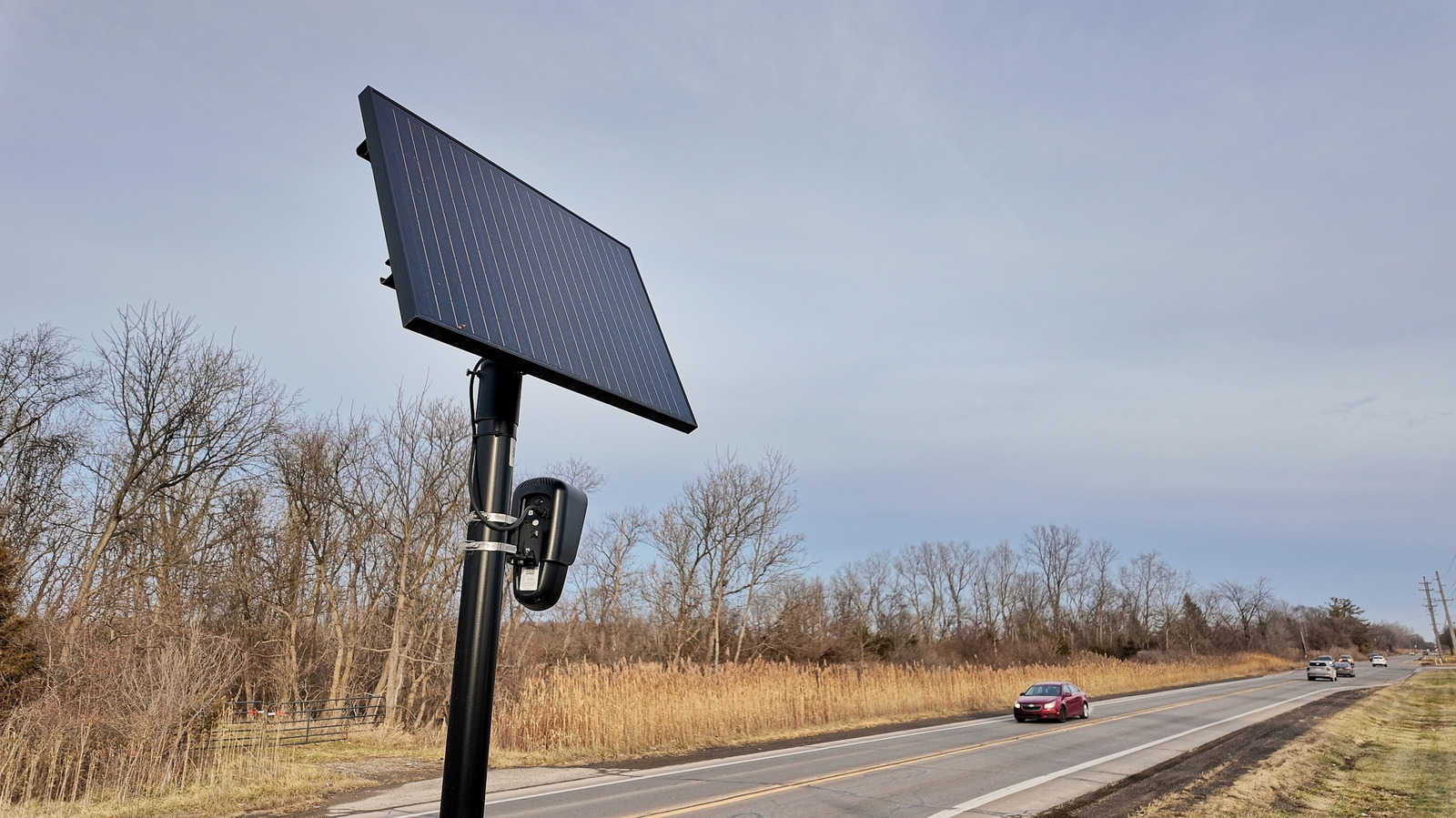
Flock, the company best known for its automated license plate readers, is testing a new AI product that can identify and locate people based on their driving habits, according to a report from Wired. The software, reportedly first called Nightshift and now named OS Investigate, draws on a network of cameras across 6,000 communities to log driver movements. This tool could help police find a witness to a crime by analyzing vehicle patterns near the incident, then cross-referencing that data with police files, 911 dispatch logs, and commercial identity records to surface names, addresses, relatives, and even friends.
The tool reportedly allows officers to search for people in a mapped area using only a physical description, without needing a license plate, name, or an actual crime. OS Investigate includes a chatbot component where officers can enter prompts to conduct broad searches. Wired shared examples of pre-loaded prompts that let users search for witnesses based on vehicles most seen in a neighborhood during a specific time window. Flock says it is testing the product with certain law enforcement partners and that current capabilities may not reflect what it eventually sells, but it has not disputed the reported features.
The reaction from reviewers is sharply critical. Noel Pichardo, a former police officer who examined the software for Wired, said the tool "sounds completely insane" and argued that no one could deny Flock literally tracks people. A current anonymous police officer said the witness-finding aspect makes him "slightly uncomfortable" but added that law enforcement must use every available tool. Independent security researcher Buchodi warned that many innocent activities could be flagged, even if the tool might be useful for investigators.
Concerns about abuse are central to the backlash against Flock. A Massachusetts police officer is facing possible dismissal and charges for allegedly misusing Flock camera data, while an Ohio community has called for a pause in the systems' use. Chad Marlow, an attorney with the ACLU, said the danger is that officers could use the AI to go fishing for crimes, noting the difference between asking whether criminal patterns exist and asking the AI to find them. He added that the lack of limitations on prompts could let police lead the AI in what it does.
Past reports have documented police officers using Flock cameras to spy on people and stalk ex-partners, which forced the company to add safeguards like locking out flagged users and requiring case codes for searches. It remains unclear what protections would be needed for the new beta software. The unease has fueled widespread backlash, with several law enforcement agencies cutting ties with Flock and citizens vandalizing or stealing cameras across the country. One Minnesota town discovered all of its Flock cameras had disappeared overnight, and the police department said it will not replace them.
More AI news from TechManNews.