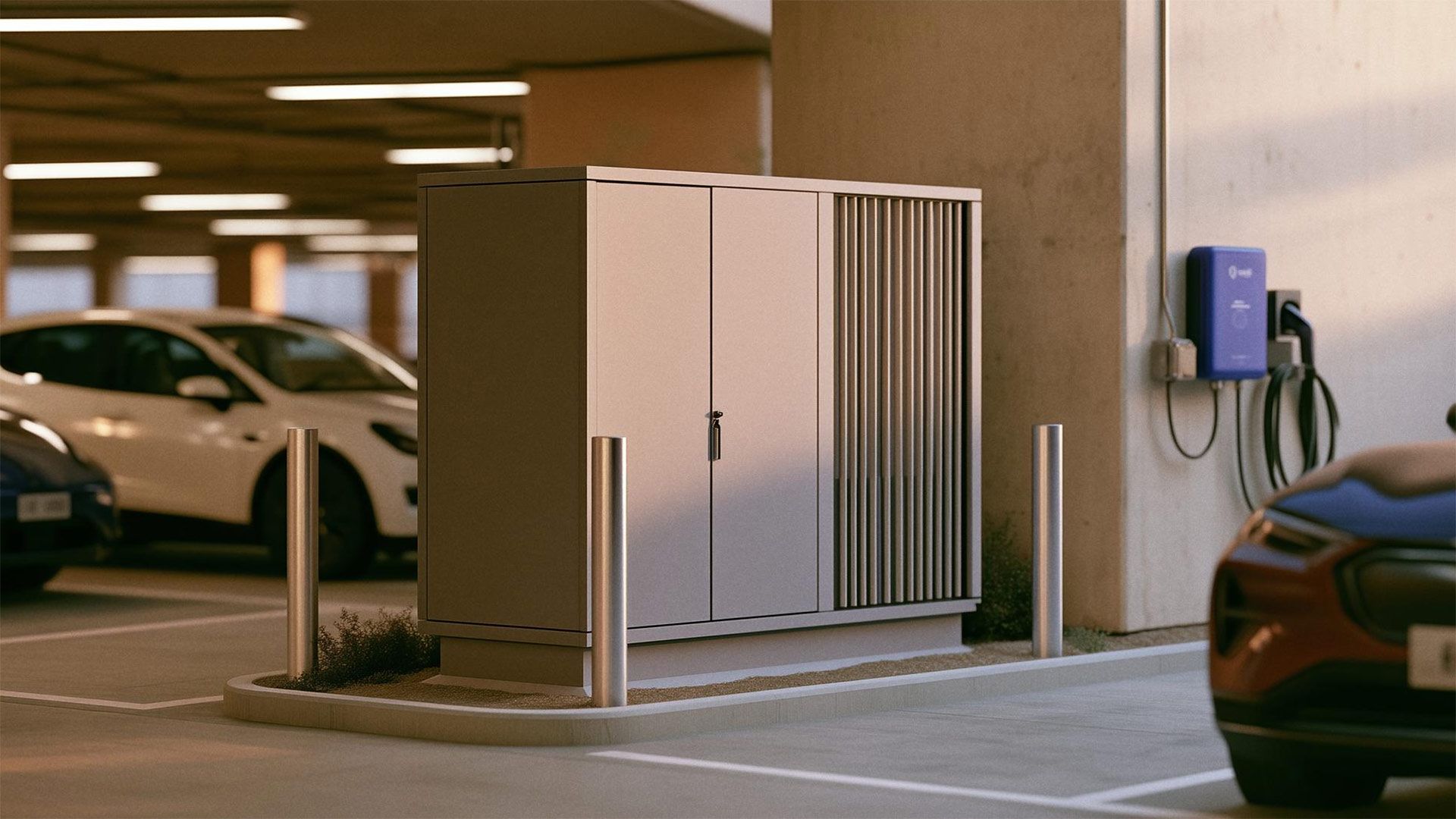
Xeal, an electric vehicle charging company, plans to deploy 100,000 Nvidia GPUs in units it calls Latient Pods at its roadside sites across the United States. The company's co-founder and CEO, Nikhil Bharadwaj, said the pods can deliver inference compute now, while new data centers are still under construction. He described Latient as the fastest route to bringing new compute online by using energy capacity that is already permitted and connected to the grid but sitting idle. According to Bharadwaj, those sites are positioned where ultra-low latency is needed and require no water hookup.
Xeal points to grid interconnection as one of the hardest obstacles for anyone trying to add compute capacity. Its EV charging locations typically run at less than 10 percent of their permitted capacity, which the company says allows it to supply processing power through a distributed network spread across a metropolitan area. Xeal has more than 1,600 locations, and a single Latient Pod holds up to 48 GPUs. With a purchasing target of 100,000 Nvidia GPUs, some sites would need more than one pod, or the company would need to expand toward nearly 2,100 EV sites in total.
An Nvidia representative praised the planned Latient Pod network, calling it an innovative way to move low-latency inference closer to users and to make better use of infrastructure that already exists. In a rendered image from Xeal, a Latient Pod resembles the broadband fiber cabinets found on many streets. Xeal says the placement of its pods around metro areas, a feature it calls Metro Edge, provides sub-20ms latency, a notable improvement over inference handled in a distant data center.
The comparison to other distributed computing ideas is not new. Last year, Elon Musk proposed using the millions of Tesla vehicles on the road as an untapped asset, describing what he called 100 gigawatts of inference that could be used when the cars are bored. EV charging stations have also drawn attention from thieves. A wave of electric car charger cable thefts has been driven by the copper scrap value of the heavy cables at those sites, raising questions about the security that would be needed for Latient Pods filled with expensive GPUs. Based on 2024 figures, 48 Blackwell GPUs would be worth around $2,000,000. Xeal says the first Latient Pod will be online by the end of the year.
More hardware news from TechManNews.