US power utilities and other customers waiting years for new transformers may soon have an alternative, as a technology with roots in semiconductor manufacturing moves toward commercial use. Solid-state transformers, which use high-frequency switching instead of hand-wound copper coils, can be mass-produced and are drawing serious interest from data center builders. The conventional transformers they could replace have a basic design from the 1880s and are custom-built for each substation, a process that has led to delivery delays of several years amid a scramble to upgrade US power infrastructure.
The largest AI data centers are driving early demand for solid-state transformers because those facilities increasingly use DC power to run server racks packed with energy-hungry chips. A solid-state transformer can take AC power from the local grid and convert it directly to the DC power those racks need, removing a separate conversion device. Srdjan Lukic, a professor of electrical and computer engineering at North Carolina State University, described the unit as a single control point that replaces multiple components and reduces interoperability issues common in traditional data centers. He said data centers have become the “killer application” for the technology right now. Several US companies, including Amperesand, Heron Power and DG Matrix, have raised more than $280 million combined in the past year to commercialize it.
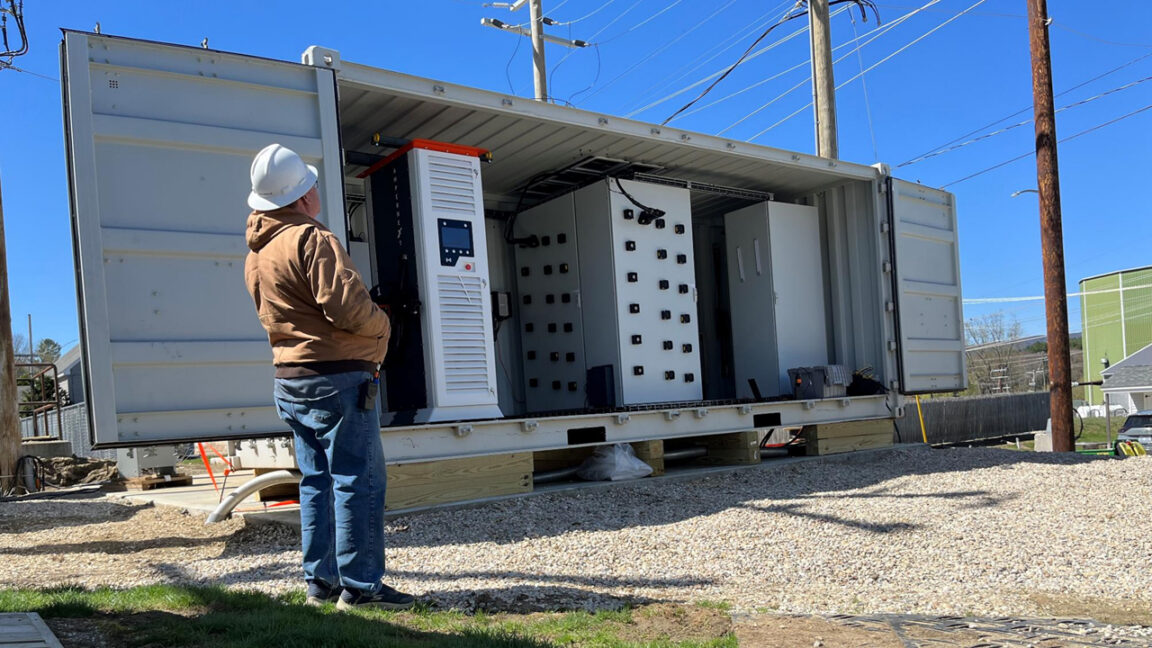
Beyond data centers, the technology appeals to electric vehicle charging, which also relies on DC power. Lukic and colleagues recently demonstrated a solid-state transformer connected to a live grid line that handled up to 1 megawatt of power while charging an EV battery, performing both the voltage step-down and the AC-to-DC conversion. That demonstration is taking place at a power delivery laboratory run by the nonprofit Electric Power Research Institute in Lenox, Massachusetts, as part of a collaboration with the New York Power Authority that began in 2018. The device, roughly one meter by 1.5 meters by 2 meters in size, has been housed in a shipping container at the site since May and is scheduled to return to NC State in September after testing through the summer.
Lukic said the solid-state transformer replaces multiple large steel components with one unit of similar form, eliminating much of the wiring and trenching typical of EV installations. Its modular design includes an active front end that interacts with the grid, an AC/DC converter, and a high-frequency isolation transformer that changes voltage levels. The key piece is a custom isolation component able to withstand the full distribution voltage of the grid while remaining compact, he explained.
Solid-state transformers are physically smaller and lighter than conventional ones, and their modular nature allows for easier upgrades or part replacements. They also cut the amount of copper and other materials needed in data center projects, giving developers more flexibility with space. In the long term, successful commercialization could ease the broader supply chain shortage, Lukic suggested, since solid-state devices are essentially electronics and open manufacturing to far more companies than the few specialized firms that build traditional transformers.
Engineering and commercialization work remains, but Lukic said data center adoption can help “derisk” the technology for wider use. Beyond data centers and EV charging, he noted that many household loads now run on DC, so distributing DC in modern homes could bring significant benefits.
More technology news from TechManNews.