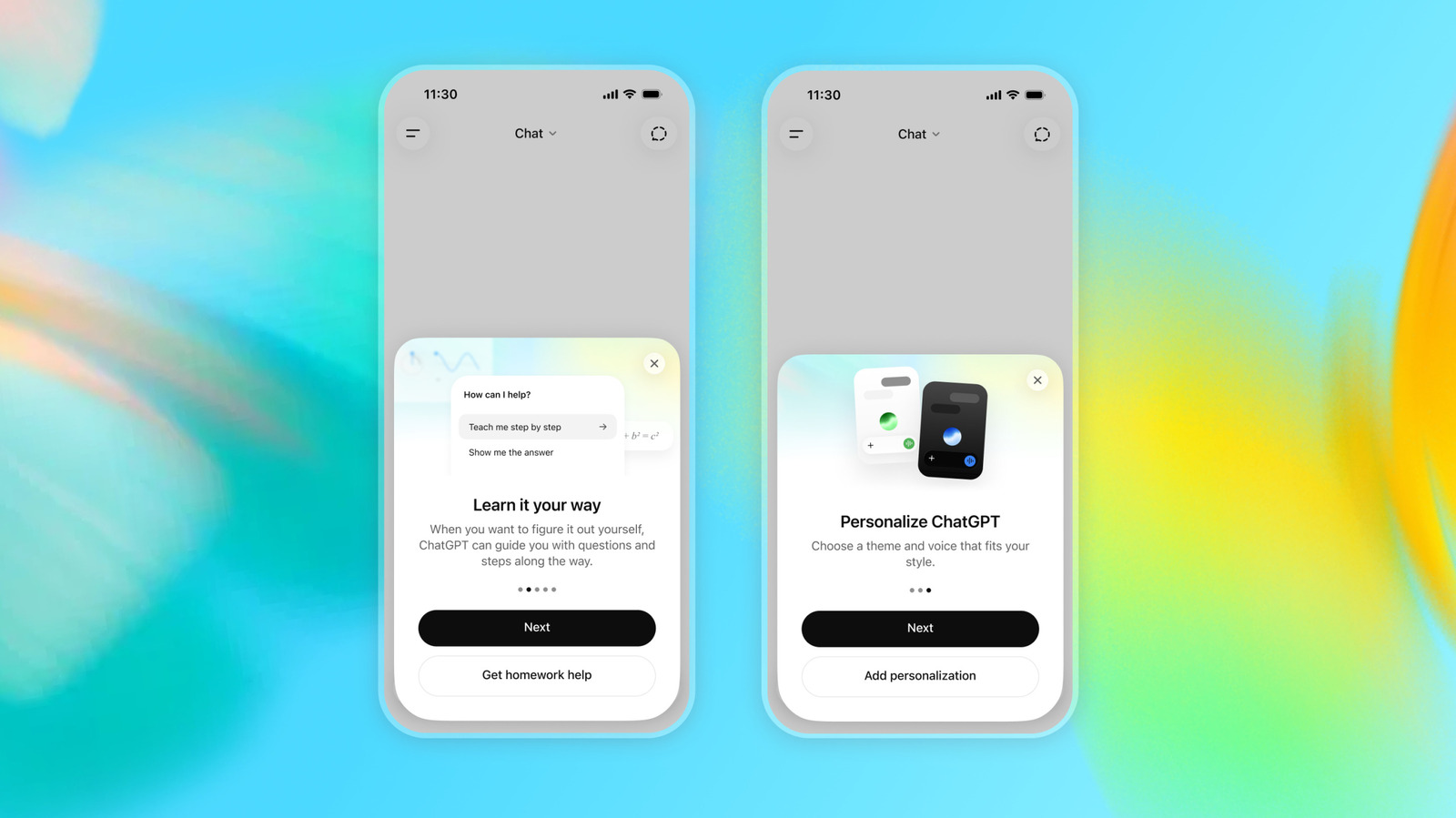
OpenAI has launched ChatGPT for Teens, an age-gated version of its chatbot aimed at young users, but child safety experts are urging caution until the company proves its safeguards work. The release follows the death of 16-year-old Adam Raine, whose parents filed a lawsuit alleging ChatGPT enabled his suicide. OpenAI first announced it was developing a system to automatically identify teens and restrict their usage last September. The company says teens who are predicted to be under 18, or who tell OpenAI their age, will automatically get the new experience without needing to create a separate account.
The new version is designed to push young users toward educational features like Study Mode and data visualizations, which OpenAI has been rolling out over the past year. OpenAI also announced expanded safety notifications that will contact parents with linked accounts when their child has unsafe discussions about eating disorders with ChatGPT. The company published an updated under-18 model spec stating that ChatGPT should not use romantic language, encourage emotional dependence, or imply it has feelings or consciousness. These measures are intended to reinforce healthy, real-world relationships.
Child safety experts who spoke with Engadget were split on the announcement, but all agreed that ChatGPT for Teens requires extensive independent testing before it can be recommended to families. Robbie Torney, head of AI and digital assessments for Common Sense Media, said the announcement makes important commitments but that evidence is needed to show those safety features actually work. Josh Golin, executive director of the non-profit Fairplay, was more critical, noting that there is no accountability mechanism and that trusting companies has not worked when it comes to protecting kids on social media. Golin also pointed out that OpenAI already had content restrictions related to suicide, violence, and drug use in place before Tuesday that he said do not work or erode over time.
Both experts questioned whether OpenAI’s automatic age-gating system will reliably identify teens. Torney noted that OpenAI has not published data on the false-positive or false-negative rates of the system, and he pointed to reporting that the company’s planned erotica features were shelved partly because the age-estimation technology was not correctly identifying enough teenagers. He also said it is hard to imagine teens won’t try to circumvent the system, using tools like VPNs or other workarounds.
OpenAI’s most concrete commitment was also the hardest for experts to accept: the company says all flagged content is reviewed by full-time employees before a parent is notified, with a goal of notifying parents within an hour. Lauren Jonas, OpenAI’s head of youth and families, said the company has the workforce to ensure flagged content goes through human review within that time frame. Torney questioned whether the automated classifiers that flag content for human moderators can be trusted, while Golin said he would like to see hard numbers on how many chats are flagged daily and how many people are reviewing them. When asked for specific examples of what conversations around eating disorders would trigger a notification, OpenAI only said that conversations indicating the possibility of serious self-harm could result in an alert.
Common Sense Media tested OpenAI’s parental notifications last November and found that even explicit messages mentioning suicide and self-harm took anywhere from 24 hours to more than 48 hours to trigger a warning, or sometimes no warning at all. Torney acknowledged that November was a while ago and progress may have been made, but he stressed that improving the system would require investment and a larger group of human moderators. He also noted that the way teens talk about distress requires cultural interpretation, and that OpenAI, as a global company, needs a workforce capable of interfacing with teens across the world to respond effectively within the one-hour commitment.
The experts all agreed that OpenAI should take eating disorders seriously. Ellen Fitzsimmons-Craft, associate professor of psychology and brain sciences at Washington University in St. Louis, said eating disorders are far more prevalent than people realize, citing a 2023 meta-analysis that found 22 percent of children and adolescents screened positive for disordered eating. She noted that less than 20 percent of people with an eating disorder report ever receiving treatment for it. Torney added that certain eating disorders, particularly anorexia, have the highest mortality rate among mental health conditions for teenagers, making parental notification a matter of life or death in some cases.
More AI news from TechManNews.