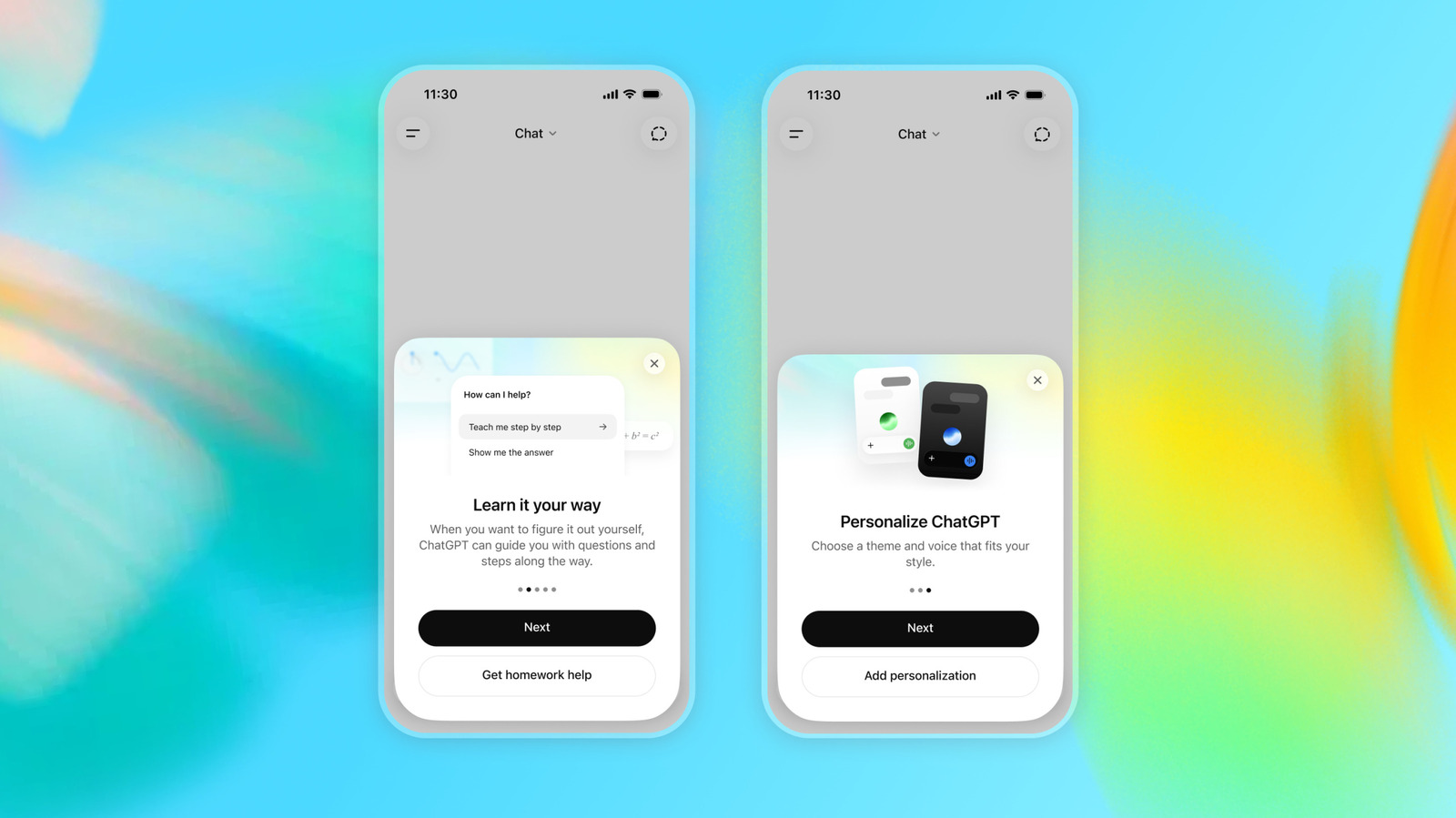
OpenAI has begun rolling out ChatGPT for Teens, a new default experience designed to automatically identify and restrict younger users starting today. The company said the global rollout will be complete within the next two weeks. Teens do not need to create a new account or change any settings; the system will default to the new experience if OpenAI predicts a user is under 18 or if the user has stated their age. The announcement follows a lawsuit filed last September alleging ChatGPT contributed to the death of 16-year-old Adam Raine.
The new experience is built around two main areas: learning and safety. On the learning side, OpenAI is pushing Study Mode, a feature first announced last summer that uses a Socratic method, guiding users to solve problems themselves rather than giving direct answers. While Study Mode will not be the default, OpenAI is adding starter prompts that are learning-focused for teens, along with a new feature called Study Hours that can automatically enable Study Mode at set times. Teens can set those times themselves, or parents can set them through a linked account. OpenAI says ChatGPT will also recognize when a young user is attempting to skip homework and will try to redirect them to Study Mode.
Lauren Jonas, OpenAI’s head of youth and families, said Study Mode has been tested in randomized controlled trials and has shown positive performance gains, though she declined to provide specific numbers. The company has also improved the tool’s ability to generate visuals that help explain concepts. At launch, ChatGPT could generate visuals for over 70 topics; today that number exceeds 300, including subjects like integrals, mitosis, and moon phases.
On the safety front, OpenAI is adding stricter restrictions on relational boundaries. Jonas said the model should not call itself a friend, suggest it has personal feelings, or imply sentience. Break reminders will now emphasize that ChatGPT is an AI that teens do not need to answer immediately, and those reminders will trigger more often. Teens and parents can also set quiet hours during which ChatGPT is unavailable. New customization options, such as wallpapers, are designed to let teens personalize the experience without blurring the line between a useful tool and a human relationship.
OpenAI is also expanding its parental notification system. Last month, the company said it would notify parents with linked teen accounts when their child is removed from ChatGPT for policy violations involving violent threats. With today’s release, that effort now includes notifications related to eating disorders. OpenAI framed this expansion as part of broader safeguarding, saying any conversation indicating serious self-harm concerns could trigger an alert.
The effectiveness of OpenAI’s age gating system in testing was not addressed in the conversation with Jonas. The company acknowledged that no such system is perfect, noting that platforms like Discord have recently struggled with teens finding ways to bypass safeguards. Jonas admitted that ChatGPT for Teens is just a starting point, saying safety work is never finished and that teens should have access to the technology in a safe way. The rollout begins globally today, with completion expected over the next two weeks.
More AI news from TechManNews.