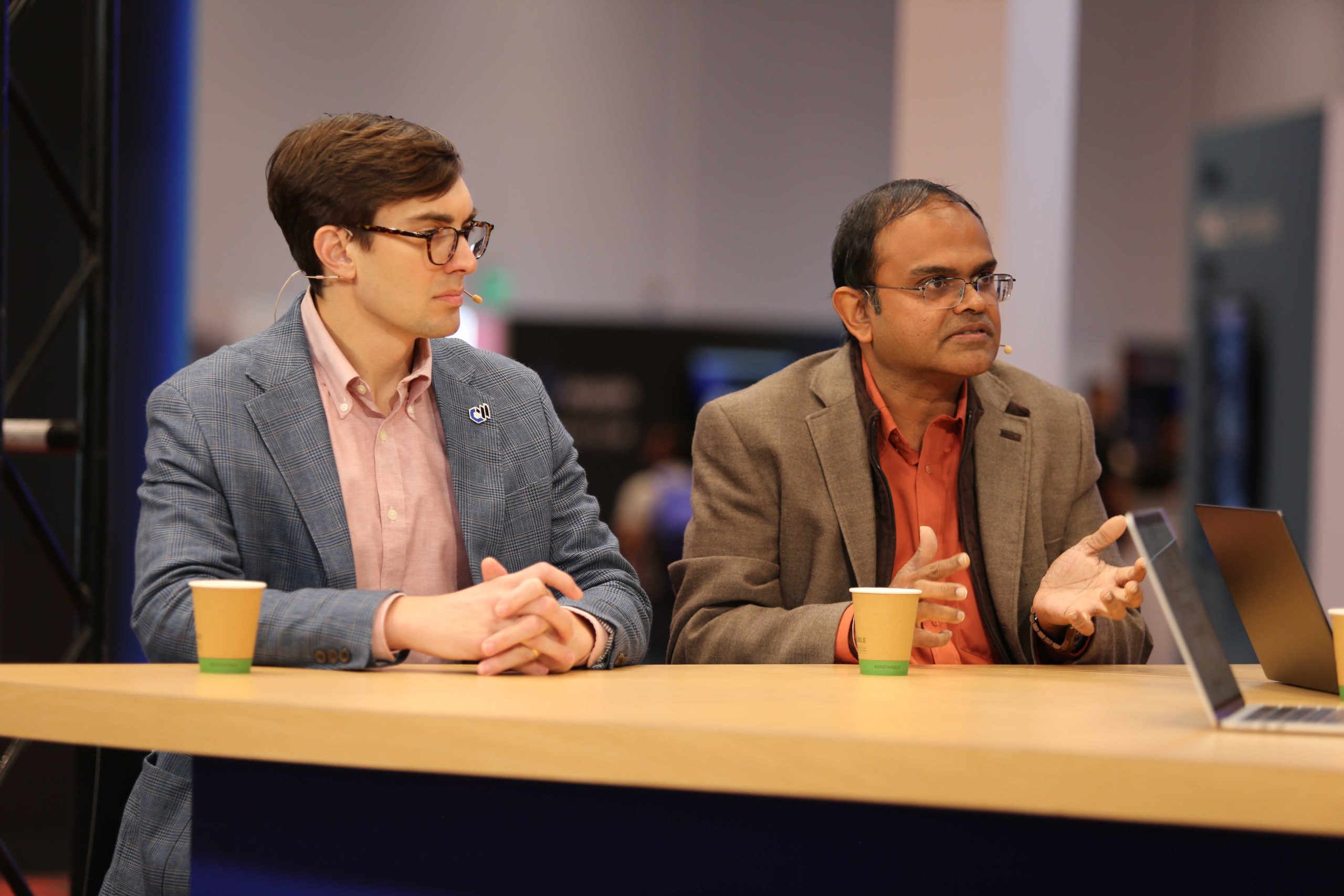
Dell Technologies and CoreWeave have built a joint engineering and manufacturing operation that lets rack-scale AI systems adapt to different data center facilities, according to two executives who described the work at the Fully Connected event. Sarat Krishnan, Dell's director of PowerEdge AI architecture and systems development engineering, said the two companies have learned to build modular rack-scale infrastructure that quickly adjusts to facility differences such as cooling that enters from the top or the bottom and power whips of varying sizes. Jacob Yundt, CoreWeave's vice president of engineering, compute architecture, said the collaboration is mutually beneficial because CoreWeave draws on Dell's supply chain and engineering experience, while Dell gains from CoreWeave's deployment and operations work at scale.
Krishnan and Yundt spoke with theCUBE Research's Dave Vellante and John Furrier in an exclusive broadcast on theCUBE, SiliconANGLE Media's livestreaming studio. They covered joint engineering, manufacturing diagnostics, liquid cooling and data center coordination. The two executives said design work for CoreWeave and Dell begins months or years before new systems reach production, with firmware settings, mechanical changes and deployment requirements settled ahead of the first rack.
Dell uses operating feedback from CoreWeave to sharpen diagnostics for server and rack assembly. Krishnan described the approach as pushing risk earlier in the process, saying remediation gets more expensive later in manufacturing and becomes extremely expensive if a part must be replaced inside a data center. Over the past two years, he said, Dell has moved its most complex diagnostics, the ones designed to catch true hardware failures, further and further toward the start of that process.
Liquid cooling adds another layer of complexity. CoreWeave's Racky rack manager consolidates power, cooling and environmental telemetry into a single control interface. Krishnan said Dell integrates Racky in its L11 factories so the system ships already tested, and he credited the CoreWeave partnership with inspiring work on better leak detection mechanisms, noting that leaks can be catastrophic.
Yundt said the operating challenge for Nvidia's Vera Rubin systems now spans compute trays, switches, data processing units and network fabrics. Matching those components with facility power and liquid cooling demands management across the full infrastructure stack. He said that for Vera Rubin and beyond, the rack is no longer the computer, and that the row, the data hall or the entire data center increasingly fills that role, which requires tight systems integration across the whole stack.
More AI news from TechManNews.