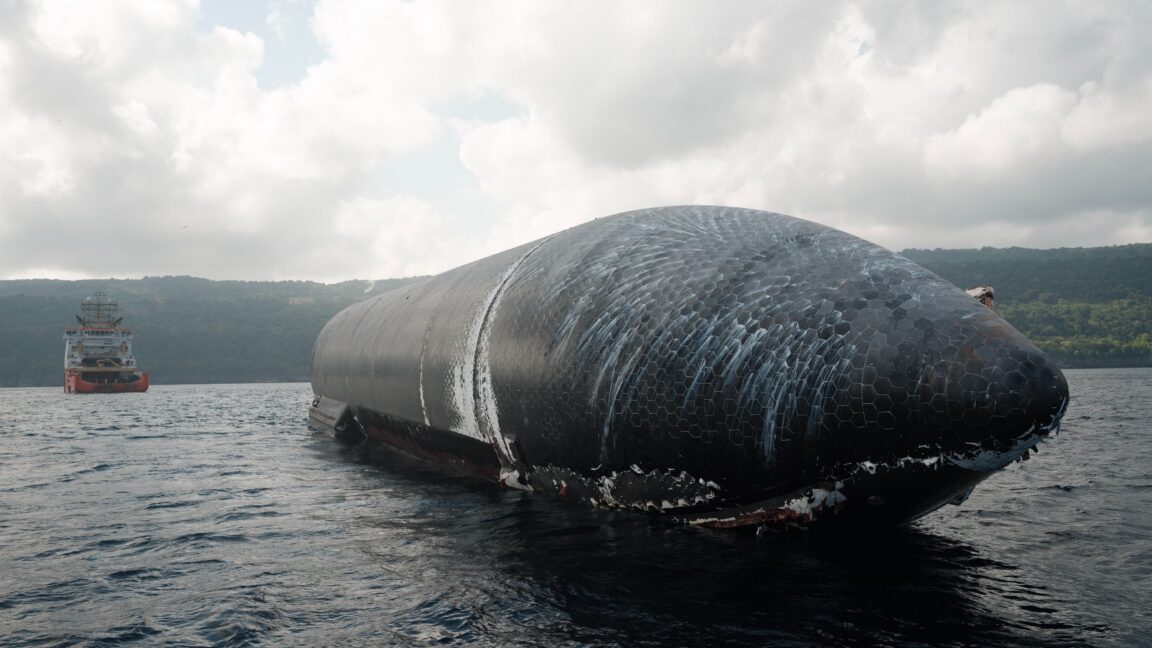
SpaceX has recovered its Starship prototype after the vehicle survived a full test flight and a 24-day journey by sea, a result that surprised company engineers who had expected the ship to break apart after splashdown. The spacecraft came down intact in the Indian Ocean after traveling halfway around the world from the company’s launch site in South Texas, then remained in one piece even after tipping over in the water. A recovery vessel towed the Starship engine-first for several hundred miles to Christmas Island, an Australian territory, where it arrived this week. SpaceX stated that engineers are heading to the site to study the vehicle in calmer waters before attempting to return it to Starbase, the company’s development hub in Texas.
The recovery is a significant win for SpaceX because the company typically has to rely on sensors, cameras, buoys, and drones to evaluate heat shield performance after test flights, since past Starships were destroyed in post-splashdown fires. Engineers now have the physical hardware back for inspection, which is something they have long valued from the Falcon 9 program, where booster stages are routinely recovered and reused. The Falcon 9’s rare failures have involved its single-use upper stage, making the intact return of Starship’s upper stage particularly valuable for analysis. The vehicle will not fly again, as saltwater exposure from the ocean splashdown likely damaged its engines, stainless steel structure, and sensitive electronics, and it also took some damage during the tip-over.
Getting the ship to Christmas Island was almost as unexpected as the intact landing, and at one point last week, SpaceX CEO Elon Musk said the recovery was looking doubtful. He noted that teams in the Indian Ocean managed to capture close-up images of the heat shield and engines for future improvements, and they kept the ship afloat in rough seas by attaching air-filled fenders around it. The company has not said how it will move the 170-foot-long, 30-foot-diameter vehicle back to Texas, a distance of more than 10,000 miles, though travel by sea is the only practical option since no aircraft can carry it in one piece.
The heat shield, made of roughly 18,000 ceramic tiles, is central to SpaceX’s goal of rapid and complete reusability, and the company wants to avoid the heavy maintenance that NASA’s Space Shuttle required between flights. Musk has long described the heat shield as the most pressing unresolved issue, but during an earnings call this month, he said he considers the problem solved. The tiles appeared to be in better condition after this latest flight than in previous reentries, but outside experts remain cautious. The key question is whether the shield can endure the high flight rates needed for missions to the Moon, Mars, and large satellite constellations, and recovering the tiles for lab testing or future flights could help answer that.
More technology news from TechManNews.