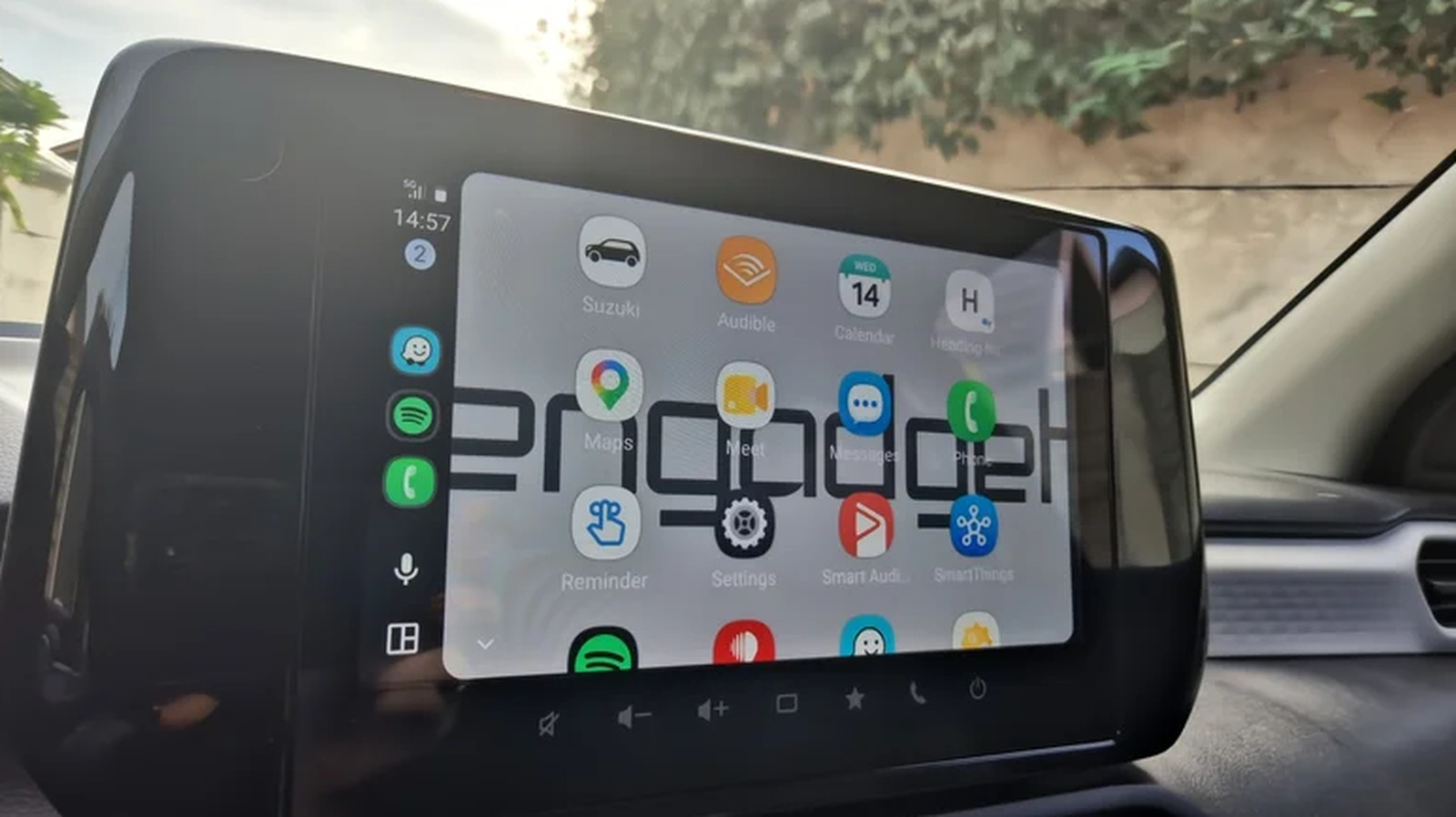
Drivers who use Android Auto have access to a broader set of applications than the navigation and music tools most of them rely on, according to a review of the platform's compatible app library. The roster now spans meeting software, fuel and charging trackers, navigation alternatives and messaging services, many of which appear automatically in the Android Auto launcher once installed from the Google Play Store on a phone.
Google Meet leads the communication category on Android Auto. Because it is Google's own app, it integrates directly into the car interface: drivers can view upcoming meetings on the display and join an audio-only call with one tap, keeping their eyes on the road. Zoom, Webex by Cisco and Microsoft Teams also support Android Auto, each offering audio-only participation in video conferences. Teams goes further by letting users check their calendar and place calls from the car screen.
Some employers could limit those features. Companies that require corporate apps such as Google Meet and Microsoft Teams to run inside an isolated Android Work Profile may find that Android Auto blocks calendar sync or keeps the app off the display entirely. A Work Mode feature under development on Android Auto could eventually make those locked-out apps easier to reach.
For fuel costs, the app Fuelio logs fill-ups, odometer readings and fuel prices, then calculates average fuel economy and cost per mile over time. Filters can surface gas stations whose prices were updated within the past day or those rated most favorably by users. Fuelio is free to use with Android Auto, and a paid premium version is also offered.
Electric vehicle drivers have their own tools. Charging apps allow filtering by plug type, charging speed and network, and show nearby amenities such as restrooms or coffee. For longer trips, they can recommend charging stops automatically based on a specific EV model's range, though the data is only as current as its contributors, so stations in less-traveled areas may have fewer recent reports.
Navigation apps beyond Google Maps add their own options. HERE WeGo can route around tunnels and U-turns, flag parking spots and rest areas along a route, and give visual references such as a traffic light or landmark for a turn. Waze, for its part, can avoid ferries and highways.
Messaging is also supported. Android Auto reads incoming texts aloud, and WhatsApp, Signal, Facebook Messenger, Microsoft Teams and Google Chat offer read-aloud and voice reply functions, with Gemini drafting responses. Drivers can reorganize the launcher through Android Auto settings to keep the tools they use most within easy reach.
More software news from TechManNews.