The stories on this desk share a single thread: the machinery of American industrial policy has grown faster than the ability to verify what it is buying. A $250 million conditional loan, an approved-vendor list for AI chips, a factory tooling request and a cancelled vehicle are all bets placed on assertions - about who a company is, what a plant will produce, and what consumers will buy. In each case, the evidence behind the assertion is thinner than the money and the strategic stakes attached to it.
An Empty Office on the Approved List
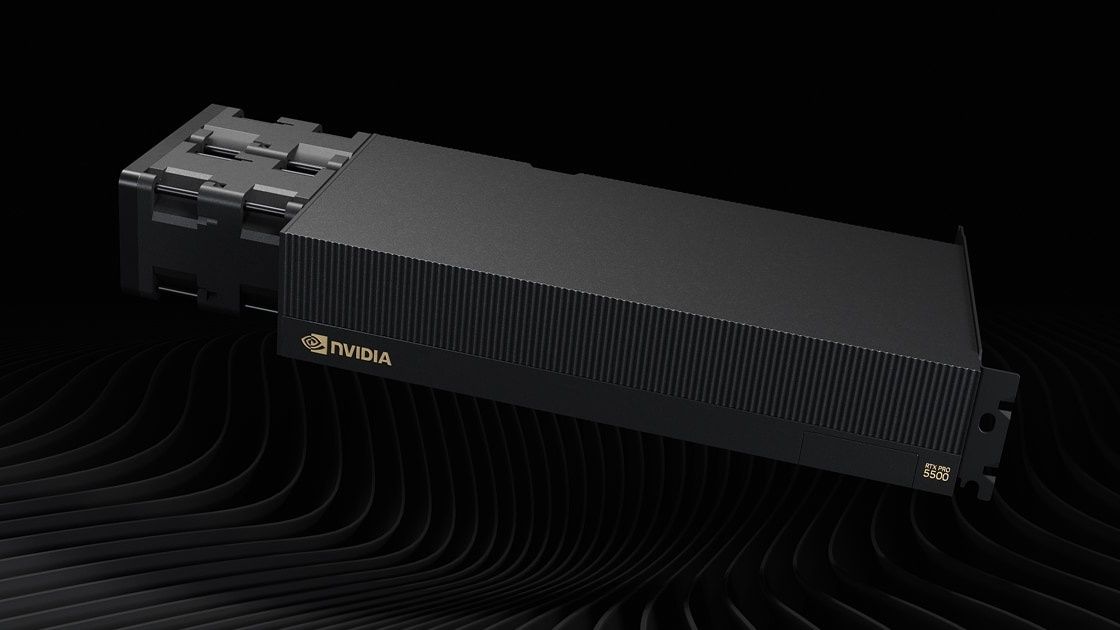
The most direct example comes from The Verge, summarizing reporting by The New York Times: New Matrix sits on the list of firms cleared to handle Nvidia's H200 AI chips, yet its offices are described as an empty, hollow gray shell. The Commerce Department maintains that list; Nvidia sells against it. Neither, according to the concerns raised, appears to have done much vetting. This is the central weakness of export controls as practised in 2026: the policy exists on paper, and the paper is not being checked against the building.
For US technology companies, the exposure is asymmetric. A vendor list is a permission slip, not a guarantee, and companies that rely on it inherit its errors. If an approved recipient turns out to be a shell, the reputational and legal cost lands on the seller as much as on the regulator, while the licensing process itself creates an illusion of diligence that discourages firms from doing their own. The empty office is not a failure of one company or one agency; it is what happens when a control regime is designed around throughput rather than verification.
The Loan That Is Not Yet a Loan
TechCrunch reports that the Pentagon has conditionally approved a $250 million loan to battery startup 6K to scale its microwave-plasma battery material manufacturing. The word to hold onto is conditional. The money is a bet on a process, made before the process has proven itself at the scale the loan is meant to fund. That is not automatically wrong - frontier manufacturing often needs public capital precisely because private markets will not underwrite unproven processes - but it shifts the burden of proof onto milestones and oversight that the announcement does not describe.
US battery supply chain ambitions rest on a small number of these conditional commitments. If they convert, the country gains domestic material capacity. If they do not, the cost is not only the money but the years spent waiting for plants that never reach production. The 6K loan and the New Matrix listing are the same instrument used at different stages: a public endorsement standing in for a verified fact.
Promises Made Upstream
Tom's Hardware reports that Nvidia asked TSMC to produce "3D DRAM" to address memory shortages, and that TSMC denied exploring it at Nvidia's request. Read plainly, this is a request that did not become a programme, and it is worth reporting as such. But it is instructive about where demand pressure is being expressed: the largest buyer of AI silicon is asking its foundry partner for a memory technology that does not yet exist in production, at a time when memory is already tight.
That pressure propagates. US chip designers plan roadmaps around assumptions about memory availability that depend on suppliers who have not committed, and on a Taiwanese foundry whose denial leaves the assumption unresolved. The pattern is consistent with the rest: a strategic dependency is identified, a request is made, and the gap between request and delivery is not accounted for in anyone's public planning.