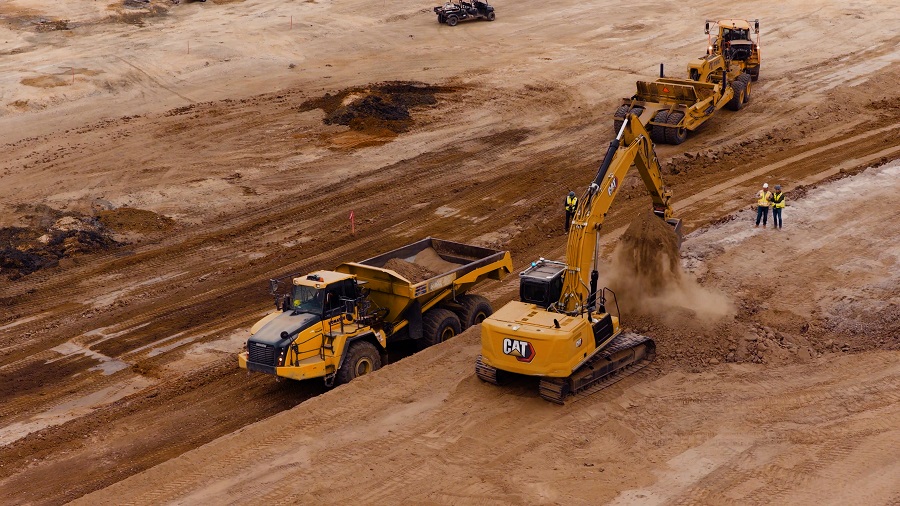
US technology investors are converging on a single thesis: the next wave of value creation will come from companies that build hard, physical, or foundational infrastructure rather than application-layer software. Three recent funding events, logged on this beat, illustrate the pattern. General Compute raised a $100 million Series A for inference chips outside the Nvidia ecosystem, as TechCrunch reported. Bedrock Robotics closed a $600 million Series C for autonomous excavators, led by Alphabet's CapitalG and Emergence Capital with Nvidia participating, as SiliconANGLE reported. And Edge Sound Research raised $2 million to build audio infrastructure for physical AI systems, also per SiliconANGLE. The sizes differ by orders of magnitude, but the direction is the same: capital is moving toward the picks and shovels of computation and automation.
The inference chip bet
General Compute's $100 million Series A is notable less for its size than for what it signals about the neocloud narrative. The round, reported by TechCrunch, funds a company betting on inference chips from outside the Nvidia ecosystem. That is a direct wager that the market for running AI models, rather than training them, will reward alternatives to the dominant supplier. For US technology companies, this matters because inference is where AI spending becomes recurring operating expense rather than one-time capital outlay. If inference silicon can be sourced outside Nvidia, the cost structure of every US company deploying AI models changes. The round also counters the "neocloud disaster narrative" that has circulated around AI infrastructure startups, suggesting that at least some investors see a durable business in specialized compute rather than a bubble.
Physical AI moves from demo to deployment
Bedrock Robotics' $600 million Series C is the largest of the three and the clearest evidence that physical AI has moved into the deployment phase. The round was led by CapitalG and Emergence Capital, with Nvidia, Bessemer, and more than a half-dozen others participating, according to SiliconANGLE. The company is now valued at nearly $1 billion. An autonomous excavator startup attracting that kind of capital from Alphabet's growth fund and Nvidia suggests that construction and heavy equipment are being treated as viable near-term markets for autonomy, not science projects. For the US market, the implication is that automation is reaching sectors that have historically been labor-intensive and slow to digitize. That has consequences for productivity and for the competitive position of US equipment makers and contractors.
The small round that explains the pattern
Edge Sound Research's $2 million raise, led by Stormbreaker Ventures and bringing total funding to $9 million, is the smallest deal here but the most instructive. According to SiliconANGLE, the company builds audio infrastructure that isolates useful sounds and combines them with other sensor data to help physical AI systems understand what is happening in real time. That is not a consumer app. It is a component that other physical AI systems need. The presence of a small, specialized infrastructure round alongside a $600 million autonomous equipment deal shows the same logic operating at both ends of the capital stack: investors are funding the layers that make physical AI work, from sensors to compute.