Robotics Startups Move From Demos to Factory Floors

Photo: TechCrunch

Article

Robotics Startups Move From Demos to Factory Floors

JaysuryaOctober 27, 20264 min read

The robotics startup beat is being reorganized around a single question: can it be built at scale? Three recent signals point the same way. Venture funding to robotics startups jumped sharply in the third quarter of 2026, a builder-focused event argued that deep tech infrastructure is moving out of the lab and onto the factory floor, and one autonomous excavator company raised new capital at a multi-billion-dollar valuation. Together they describe a market that has stopped rewarding proof of physics and started rewarding proof of production.

The Money Confirms the Shift

The clearest evidence is in the aggregate numbers. Crunchbase data shows global venture funding to robotics startups totaled $9.9 billion in Q3 2026, more than double the $4.3 billion invested in the same quarter a year earlier, with the bulk of investment going to companies based in China and the U.S. That is a 185 percent jump, as Crunchbase News reported. A single quarter doubling year over year is not a rounding error or a handful of outlier rounds. It is a repricing of an entire category, and it lands while the broader startup market has been selective about capital. The money is not being spread evenly across robotics. It is concentrating in companies whose products can be manufactured, shipped and financed at scale, which is precisely the framing SiliconANGLE drew from the F1 Capital Factory event.

A Valuation That Prices Execution

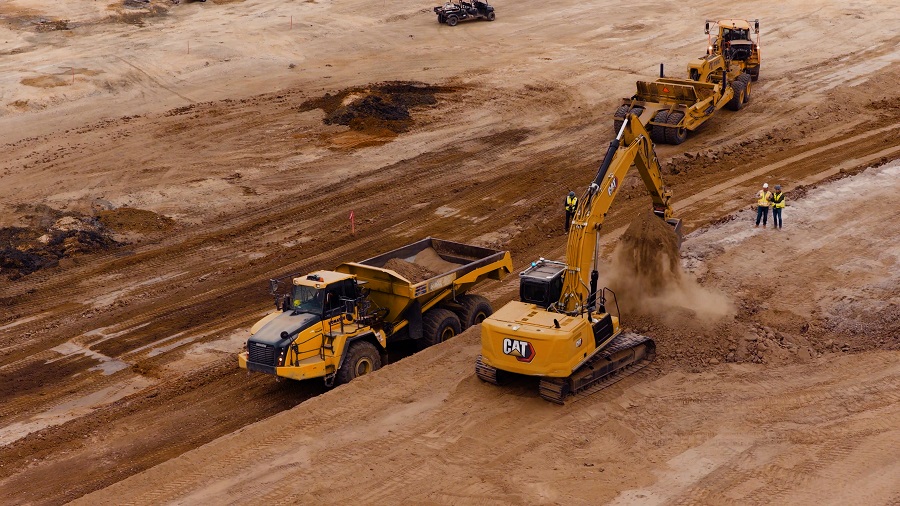
Bedrock Robotics, which TechCrunch reports is now valued at $4.1 billion, is the individual example that illustrates the aggregate trend. The company raised $600 million and focuses particularly on autonomous excavators, a choice the reporting ties in part to a growing shortage of skilled operators. Note what is being valued here. An excavator is not a humanoid robot or a research platform. It is a heavy, expensive, unglamorous machine already embedded in construction workflows, sold into an industry with a chronic labor problem. The investment case rests less on whether autonomy is technically possible than on whether the units can be produced and deployed into work sites that already exist. That is the factory-floor logic in a single deal.

Deep Tech Leaves the Lab

The SiliconANGLE writeup of the F1 Capital Factory insights makes the same argument in general terms, across energy, defense, space and applied AI. The startups building deep tech infrastructure, the argument goes, are no longer trying to prove that the physics works. They are proving it can be manufactured, shipped and financed at scale. That sentence is the connective tissue across all three stories. It describes a maturation point that is uncomfortable for founders and investors alike, because the skills that get a company to a working prototype are not the skills that get it to volume production, distribution and revenue. The next phase, in that framing, will be defined by execution rather than demonstration.
Why This Matters in the United States

The US position in the Crunchbase data is strong but not dominant. Investment is going heavily to companies based in China and the U.S., which means American robotics startups are competing for capital and customers against a well-funded Chinese cohort in the same category. For US technology companies, the implication is that the advantage increasingly sits in supply chains, manufacturing partnerships and deployment logistics rather than in proprietary hardware tricks. A prototype lead that cannot be manufactured at volume is not a durable lead. The capital is now priced accordingly, and startups that treat fundraising as a validation milestone rather than a production commitment are likely to find the next round harder.

For US consumers, the effects are further out and less certain. Cheaper, more reliable robotics in construction and industrial settings could eventually affect the cost and pace of physical work, but nothing in the reporting above establishes a timeline for that. What the reporting does establish is that the money is being directed at sectors where labor shortages are already pressing, with autonomous excavators cited specifically as a response to a shortage of skilled operators.

The Concentration Risk

A doubling in quarterly funding also carries a warning. When capital concentrates quickly into a category, it tends to concentrate further into the companies that already look like winners, and the Crunchbase data already shows geographic concentration in the U.S. and China. The startup beat has seen this pattern before: a surge in a promising vertical, a handful of very large rounds, and a long tail of companies that raised on the narrative and then could not ship. The distinguishing feature of this cycle, based on the F1 Capital Factory framing, is that investors are at least asking the production question earlier. Whether that discipline holds as the numbers keep climbing is a separate matter.

What to Watch

The next quarter of Crunchbase data will show whether the Q3 2026 figure was an inflection or a spike. Bedrock Robotics, now valued at $4.1 billion with $600 million in new capital, becomes a test case for whether a large round in heavy autonomous equipment converts into deployed units and revenue rather than remaining a valuation story. And the clearest signal for the US startup market will be whether capital continues to flow toward companies that can demonstrate manufacturing and scale, or reverts to backing prototypes. Those are the questions the reporting above leaves open, and they will define the beat over the coming quarters.

More on this beat: Companies on TechManNews.

#robotics#venture funding#deep tech#startups#autonomous vehicles#manufacturing

Newsletter

Get Tech News in Your Inbox

The latest AI, gadgets, software and startup stories from TechManNews, delivered every morning - free.