📣

Advertisement

Google Ad - 970×90 Leaderboard  TOP_LEADERBOARD_4

The Unpatchable Middle: Why Edge Security Keeps Failing
Article

The Unpatchable Middle: Why Edge Security Keeps Failing

Four stories show one pattern: attackers exploit the gap between patching and identity, where edge controls and user trust both break down.

Arjun NairSeptember 5, 20266 min read

Photo: BleepingComputer

📣

Advertisement

Google Ad - 970×90 Leaderboard  TOP_LEADERBOARD_4

The Unpatchable Middle

The four stories logged on this desk in the past two days share a single, uncomfortable premise: the most critical security controls - patching, edge filtering, and identity verification - are each failing for a different reason, but along the same fault line. That fault line is the middle ground between a vulnerable server and a trusted session. Three stories describe active exploitation or imminent risk to widely deployed enterprise gateways (Microsoft Exchange, Citrix NetScaler), while the fourth describes asset protection (cold wallets) that works only if the user understands identity and custody. The pattern is not that vendors are sloppy or that users are careless. The pattern is that security still treats trust as binary - patched or unpatched, allowed or blocked, signed or unsigned - while attackers treat trust as a gradient they can slide through.

The Unpatched Server Problem Is an Identity Problem

As BleepingComputer reported, nearly 22,000 Microsoft Exchange servers exposed online remain unpatched against a high-severity authentication bypass vulnerability that allows attackers to hijack all user mailboxes. The number is large, but the more telling detail is the nature of the flaw: an authentication bypass. That means the attacker does not need a password, a token, or a stolen credential. They need only reach a server that has not been updated. For an American enterprise, that server might sit behind a firewall, but the firewall’s job is to filter traffic, not to verify intent. Once the bypass is used, the attacker becomes, from the server’s perspective, an authenticated user with full mailbox access. No further checks apply. The server trusts the authentication layer because the authentication layer trusts the protocol - and the protocol is broken.

The same theme appears in the Citrix NetScaler story. As BleepingComputer also reported, a critical-severity auth bypass flaw (CVE-2026-19490) is now being leveraged in attacks, according to vulnerability intelligence company Previdian. NetScaler is an edge gateway - precisely the device that is supposed to inspect sessions before they reach internal resources. Yet the flaw bypasses authentication on that very gateway. The pattern is recursive: the tool built to enforce trust is itself vulnerable to a trust bypass. For US companies that rely on NetScaler for remote access, this means the front door is not the weak point; the lock on the front door is. And because the flaw is critical and already exploited, the window between patch availability and patch deployment is the entire risk window. That window is measured in days, while enterprise patch cycles are measured in weeks.

Edge Security Cannot See What It Refuses to Measure

The second story, also from BleepingComputer, explains why even the best edge security still misses high-risk sessions. The report notes that attackers hide behind residential proxies, VPNs, and other infrastructure to make malicious sessions appear legitimate to existing edge controls. Spur, a firm that provides session enrichment, argues that adding data points - such as the type of network, the reputation of the IP, and the behavioral context of the session - allows organizations to identify risky sessions and make stronger enforcement decisions.

The key phrase is “appear legitimate.” Existing edge controls typically make a binary decision: allow or deny based on IP reputation, geolocation, or device posture. But those signals are spoofable or, worse, not even spoofed - a residential proxy is, by definition, a real home network. An attacker using a compromised home router in Ohio looks more legitimate to a US-based enterprise than a datacenter IP in a foreign country. The edge sees a residential IP, a standard user-agent, and a normal hour of activity. It has no reason to deny the session. Spur’s point is not that edge security is useless, but that it is blind to the middle - the session’s actual risk score derived from multiple weak signals that individually look benign.

For a US market that has spent billions on zero-trust architectures, this is a hard truth. Zero trust assumes no implicit trust, but in practice, most zero-trust implementations still trust the network layer for user identity. If the session looks like it comes from a home ISP, and the user enters a valid password, the system grants access. The password may be phished; the home ISP may be a proxy. Neither is visible to the edge. The solution Spur proposes is enrichment - adding context that is not currently part of the decision. That is not a new product category; it is a recognition that the current set of signals is insufficient. The problem is not that edge security is bad, but that it is measuring the wrong things.

Advertisement

📣

728x90

MID_CONTENT_2

Custody Is the Ultimate Authentication

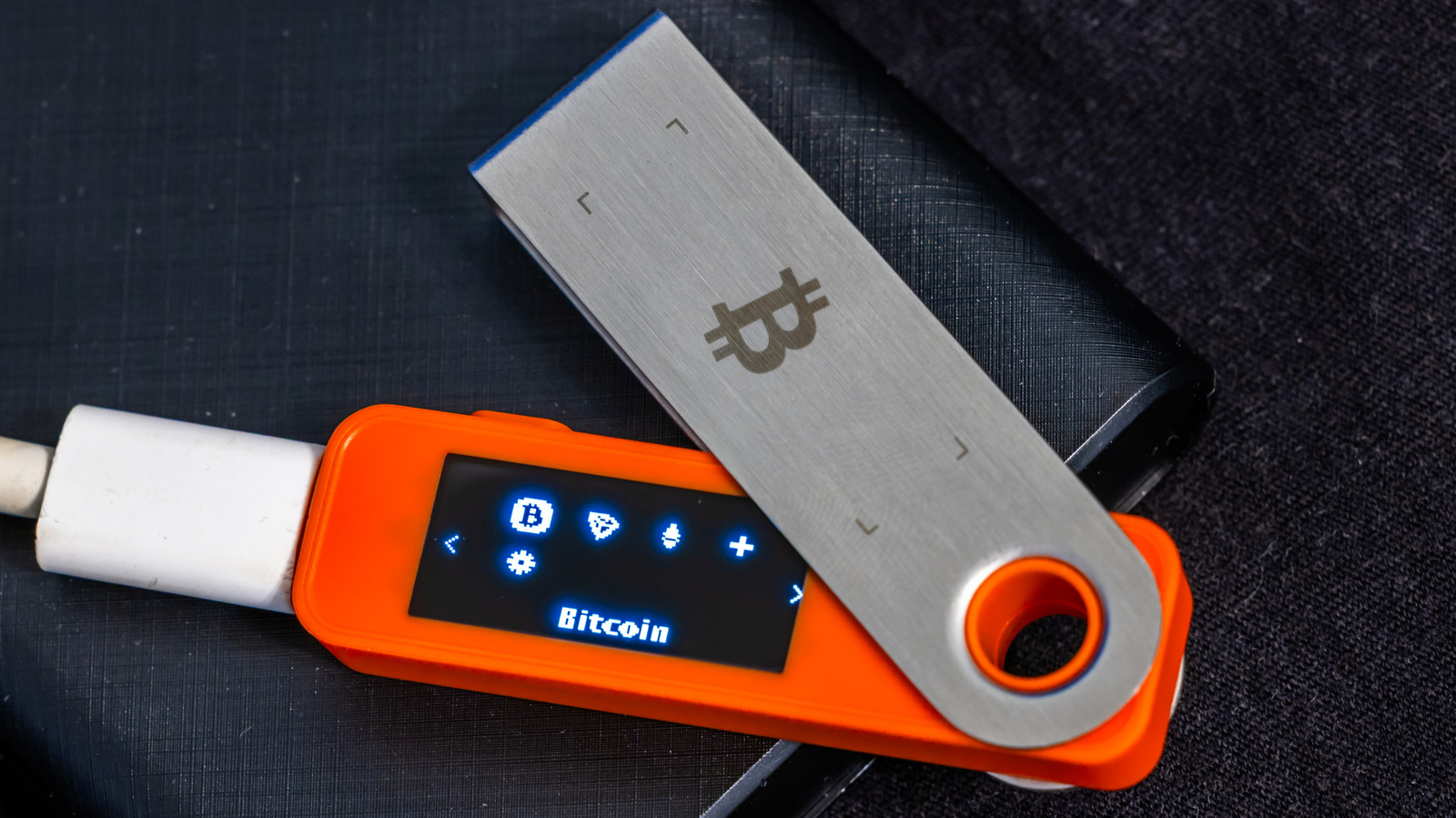
The fourth story, from Engadget, explains cold wallets for cryptocurrency. The report states that with cryptocurrency wallets becoming huge targets for hackers, using a cold wallet to protect private keys has never been more important. A cold wallet is a piece of hardware that stores private keys offline, so they are never exposed to an internet-connected device. The principle is simple: if the private key never touches a network, it cannot be stolen remotely. But the cold wallet story is not just about hardware; it is about the same trust gradient. A cold wallet protects against remote theft, but it does not protect against a user who signs a malicious transaction, or a user who loses the device, or a user who enters their seed phrase into a phishing site. The edge - the wallet’s interface - cannot see that the transaction is malicious. The user is the final authenticator, and users make mistakes.

For American consumers, the cold wallet is both the most secure and the most fragile solution. It moves the trust boundary from the server to the human. That is exactly what the first three stories show is a liability. The Exchange and Citrix flaws trust the protocol; edge security trusts the network; cold wallets trust the user. In each case, the trust boundary is a single point of failure. Attackers are not brute-forcing encryption or breaking math; they are finding the place where trust is implicit and then impersonating whatever is trusted - a mailbox user, a session, or a wallet owner.

The Common Thread: Trust Is Being Delegated to the Wrong Layer

The pattern across these stories is that security failures occur when trust is delegated to a layer that is either unpatched, opaque, or human. In the Exchange case, trust is delegated to a server that should have been patched. In the Citrix case, trust is delegated to a gateway that should have verified identity. In the session enrichment case, trust is delegated to an edge that cannot see proxies. In the cold wallet case, trust is delegated to a user who may be phished. None of these layers is inherently untrustworthy; all are incomplete.

The shift in the American cybersecurity market is beginning to reflect this. Vendors are not selling “firewalls” or “antivirus” anymore; they are selling “identity threat detection” or “session intelligence.” But the underlying assumption remains that a single control can close the gap. The stories suggest otherwise. The Exchange server was unpatched because patching is a fragmented, ongoing chore. The NetScaler flaw was exploited because a critical vulnerability was announced and then attacked before all customers could patch. The edge missed sessions because it lacked context. The cold wallet failed if the user’s own judgment failed. In each case, the missing element is not a better algorithm but a more holistic view of the session, the asset, and the human.

What to Watch

The next six months will show whether the market moves from identifying this middle ground to actually securing it. The evidence in these stories points to two specific developments. First, the speed of exploitation is outpacing patch latency. Previdian’s report on NetScaler confirms that attackers now scan for newly disclosed critical flaws within days, meaning US organizations must treat patch deployment as a real-time function, not a weekly ritual. Second, session enrichment is becoming a necessary layer, not a luxury. Spur’s argument that existing edge controls miss high-risk sessions implies that any enterprise relying solely on a next-generation firewall or zero-trust network access is making a wager - and losing. For US consumers, the cold wallet reminder signals that even the most secure storage defaults to human fallibility. The thread is that security will not be solved by any single product, but by making trust continuous, contextual, and verifiable at every step - from patch to proxy to private key. Until then, the gap is open.


Sources: BleepingComputer, Engadget.

More on this beat: Cybersecurity on TechManNews.

Advertisement

📣

728x90

IN_ARTICLE_5

#servers#vulnerability#microsoft#online#user#data

Newsletter

Get Tech News in Your Inbox

The latest AI, gadgets, software and startup stories from TechManNews, delivered every morning - free.