Three items logged on this beat recently look unrelated: a shared incident workspace for AI agents and engineers, a hobbyist's portable floppy-disk NAS, and an argument that agentic AI is pulling cloud workloads back on-premises. They share one thread. The tooling conversation in late 2026 is drifting away from hosted abstraction and back toward things a development team physically owns, controls, and can inspect - whether that is a workbench where humans and agents share findings, a box on a desk that reads old media, or a model serving on hardware the enterprise bought outright.
The shared war room as a control surface
Groundcover Inc.'s Agent Investigations, as SiliconANGLE reported, is a shared workspace where the observability vendor's own AI agents, a team's coding agents and on-call engineers work production incidents together. The stated problem is scattered findings as agents take on more of incident response. Read the announcement for what it implies about how developers work: the value is not another autonomous agent. It is a place where agent output is made legible to the humans who are accountable for it. That is a control surface, and control surfaces are what teams build when they stop treating AI as a black box and start treating it as a colleague whose work has to be reviewed. For US engineering organizations, which have spent the past several years bolting agent tooling onto existing observability stacks, the practical question has shifted from which agent to deploy to where the evidence lives when several agents and a human are all poking at the same outage at once.
Ownership as a developer instinct
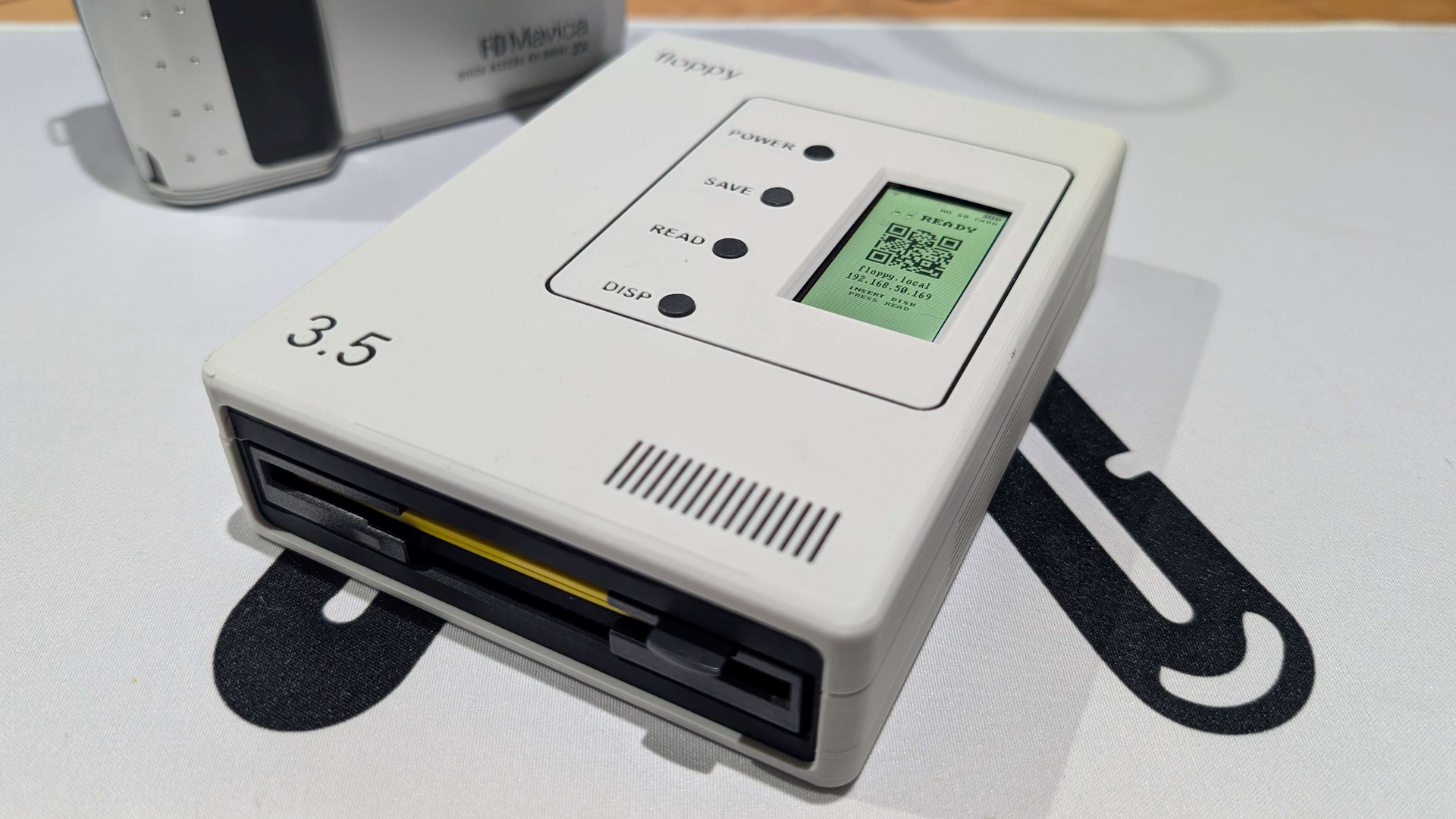
The floppy-disk NAS, covered by Tom's Hardware, is a hardware hacker's project: a portable Wi-Fi device that reads and transfers digital camera floppy disks and doubles as an archival tool. It is a small story, and it would be easy to file it under retro computing and move on. The instinct behind it is the same one driving the enterprise conversation. A developer confronted with a proprietary interface, a deprecated reader, or a service that will be switched off at some future date does not simply wait. They build the thing they control. That instinct is not nostalgia; it is risk management performed by someone who knows what happens when the only path to their own data runs through someone else's product roadmap.
The model plane and the rent-versus-own argument
The third story is the one that names the pattern. As SiliconANGLE reported, agentic AI is reviving the rent-versus-own debate over compute, with the model plane - the layer that decides where AI models run - at the center. Open-source efforts such as Upbound Inc.'s Modelplane route inference across clouds, but many enterprises want the models on hardware they control. That is the same decision developers make at small scale with a homemade NAS, made at corporate scale with inference infrastructure. The routing layer matters because it is where lock-in is either enforced or avoided. If the model plane is open and portable, a team can move inference; if it is not, the team's architecture is a rental agreement with terms it did not write.