The most telling pattern in this week's software news is not about a single product or feature, but about a shared shift in how applications are being built to understand the person using them. Across transportation, performance tuning, and operating system design, companies are increasingly embedding contextual awareness - knowing not just that a user exists, but who they are, where they are, and what they are doing - into the core of their software. This is a move away from one-size-fits-all interfaces toward a future where the application itself adjusts to the user's age, physical environment, and even hardware tolerances, without asking for a manual setup. For American consumers and the companies serving them, this represents a quiet but fundamental change: software is becoming a layer that negotiates identity and environment on its own, rather than a tool that waits for explicit input.
The Common Thread: Software That Adapts to Context
Look at the four stories on this desk and the through-line is unmistakable. Lyft is integrating fully autonomous Waymo rides in Nashville, which means the ride-hailing app is no longer just a matching service but a dispatcher for a vehicle that must understand traffic, road conditions, and passenger behavior without a human driver in the loop. Microsoft is adding age-awareness APIs to Windows 11 that let applications infer whether a user is a child, teen, or adult without ever seeing an exact birth date. Intel's collaboration with Hypertune produces an overclocking tool that optimizes each individual system's specific silicon rather than applying a generic test profile. And Autodesk's bundled software discount, while purely commercial, points to the same idea: a suite of creative tools that must work across different skill levels and projects, sold as a single package that adapts to whatever a user throws at it. None of these are isolated features. They are all examples of software moving from static configuration to dynamic response based on context - who you are, where you are, and what your machine can do.
Identity Without Exposure: The Age-Awareness API
Microsoft's age-awareness APIs are the most explicit illustration of this trend. As reported by BleepingComputer, the APIs allow Windows 11 apps to determine whether a user is a child, teenager, or adult without requiring the user's exact date of birth. This is a clever engineering solution to a regulatory and privacy problem: enforcing child-safety rules without collecting more personal data than necessary. For US consumers, this could change how hundreds of apps handle parental consent, content filtering, and online safety. It also sets a precedent for how operating systems can act as trusted intermediaries - a platform that verifies a coarse attribute (age band) while withholding a precise one (date of birth). This is not just about age; it suggests a broader design philosophy where the OS holds a verified identity profile and doles out only the minimal facts an app needs. American developers will have to learn to build against such APIs, which could reduce the burden of storing sensitive personal data on their own servers, a shift with legal and security implications in a market already under state and federal privacy scrutiny.
From Generic to Individual: The Hardware Tailor
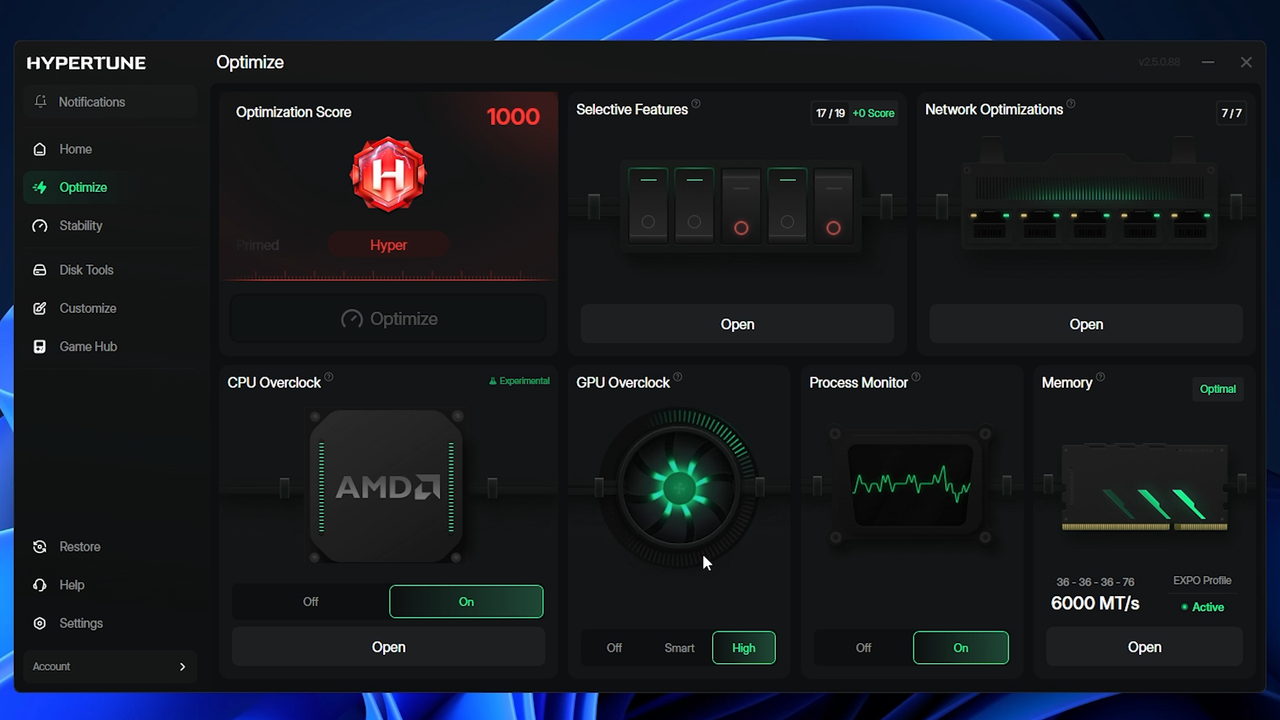
Hypertune, as Tom's Hardware reported, is an automated overclocking tool built on Intel's Extreme Tuning Utility SDK and developed in collaboration with Intel engineers. Its claim of up to 60% FPS improvement on Intel-based systems is notable, but the more significant detail is that the tool optimizes individual systems, not test profiles. Traditional overclocking software often applies a preset profile - a one-size-fits-all set of multiplier and voltage settings - that may work for a reference CPU but not for your specific chip. Hypertune instead probes the actual hardware and tailors its tuning to that unit's thermal headroom, silicon quality, and cooling solution. This is context awareness at the hardware level. For US gamers and creative professionals who build their own PCs, this means less manual trial-and-error and a safer path to increased performance, because the software is adapting to the physical reality of their machine rather than to a laboratory average. It also signals an industry trend where performance software becomes more like a personal trainer than a rulebook - analyzing the individual and prescribing a workout, not a generic routine.