The CPU World's Weird Streak Says Something About 2026

Photo: Tom's Hardware

Article

The CPU World's Weird Streak Says Something About 2026

NagiSeptember 25, 20265 min read

A steampunk PC, a resurrected Celeron, and Google's orbital Tensor chip all point to the same thing: the processor business is being pulled away from the mainstream.

Three recent items on the CPUs and processors beat look unrelated at first glance: a custom copper PC, a revived twenty-year-old Celeron, and Google's plan to put AI chips in orbit. They are not unrelated. Each one shows silicon being pushed outside the ordinary consumer and data-center paths - into hobbyist extremes, into salvage and repair, and into orbit - and together they describe a processor business that is increasingly defined by where chips run, not just how fast they run.

The Copper PC and the Hobbyist Extreme

Tom's Hardware reported on a fully custom copper PC built around an upcycled blowtorch reservoir, sitting on an antique wooden pedestal, with a steampunk look hiding an AMD Ryzen 7 9800X3D and an RX 9070 XT. The story is a curiosity, but the specification underneath matters. The builder chose a current-generation AMD desktop CPU and GPU, not vintage parts. The case is the radical element; the silicon is mainstream.

That inversion is the point. For most of the personal computer era, the exotic part was the chip and the box was commodity sheet metal. Today a top-tier gaming processor is available enough that the interesting design problem has moved to fabrication, cooling, and presentation. The 9800X3D is the kind of part a US enthusiast can buy and drop into a strange enclosure, and the enthusiast community treats it as raw material rather than a trophy. For US consumers, this is a mild positive: the bleeding edge of desktop gaming performance is no longer so scarce that using it in an art project feels wasteful.

The Resurrected Celeron and the Repair Economy

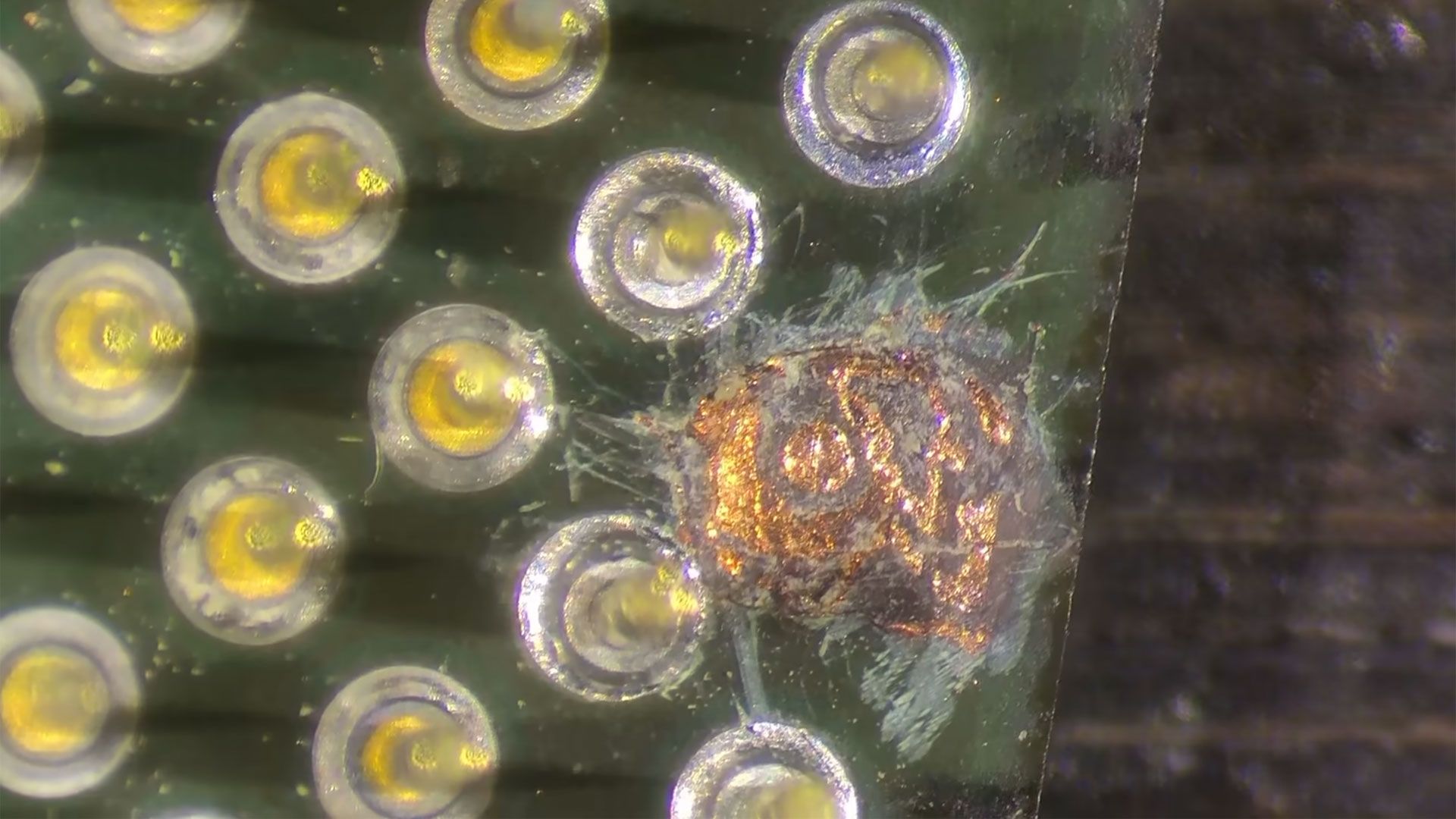
A second Tom's Hardware item concerns an enthusiast who dug into a CPU substrate to replace a ripped-off data pin on an Intel Celeron 1200, a Tualatin-era part. The chip booted again and reached a 33 percent overclock. This is not a mainstream activity, and it is not going to change how US consumers buy computers. But it is a signal about the state of the used and legacy processor market.

Substrate-level repair is difficult, unforgiving work, and the fact that someone bothered suggests these parts retain enough value - functional, sentimental, or experimental - to justify the effort. It also speaks to a supply environment where older processors are not simply e-waste. The repair is only possible because the chip's failure mode was mechanical rather than electrical: a pin was torn off, and a pin can be replaced. That kind of damage is exactly what happens to parts that get handled, resold, and shipped.

For US technology companies, the lesson is narrower than it looks. The aftermarket for CPUs is real, and it rewards parts that can survive rough handling. Vendors that treat every returned chip as scrap are leaving recoverable value on the table. There is no new market size to claim here from the material available, but the behavior itself is evidence that the installed base of older x86 silicon is being worked, not discarded.

Google's Orbital Tensor Chip and the Geography of Compute

The Verge reported that Google is preparing to launch a satellite carrying its AI processors to test how well they perform in space, as previously reported by The New York Times. The satellite is equipped with Google's Tensor chips, and the effort is part of Project Suncatcher, an experimental initiative that could eventually put AI data centers into orbit.


This is the most consequential of the three stories for US technology companies, and the least resolved. The test is explicitly about performance in space, which is a question about environment rather than raw throughput. Radiation, thermal cycling, and the difficulty of servicing hardware in orbit are the obvious variables; the published material does not say which of them Google considers the binding constraint. What the material does establish is that a major US processor designer is willing to spend on a satellite to find out whether its accelerators behave acceptably outside the atmosphere.

If the answer is yes, the implications for the US market are structural rather than immediate. Terrestrial data centers are constrained by land, power, and cooling, and those constraints are felt acutely in the United States. Orbit does not remove those constraints so much as relocate them, but it does change who can build capacity and where. A company that can put compute above the atmosphere is a company that can route around some of the terrestrial bottlenecks that US operators currently manage.

Why These Three Belong Together

Read as a set, the stories describe a processor industry whose center of gravity is drifting. The 9800X3D in the copper PC is a mainstream part used in a non-mainstream way. The Celeron is a legacy part kept alive by hand. The Tensor chip in orbit is a current part being tested in a radically non-standard environment. In all three cases, the interesting question is not what the chip can do in a normal box. It is what the chip can do when the box is strange.

That is a change in emphasis for a beat that spent years obsessed with process nodes and benchmark deltas. Those things still matter, and nothing in the recent material suggests otherwise. But the differentiation increasingly comes from the surrounding system: the enclosure, the repair bench, the launch vehicle. For US consumers, the near-term effect is limited. Enthusiast builds and pin-level repairs do not change what a typical buyer pays for a laptop. For US technology companies, the effect is strategic. The firms that control unusual deployment environments - orbital platforms, salvage channels, custom thermal designs - gain options that firms that only ship standard parts do not have.

What to Watch

Google's satellite launch is the near-term event to track, per The Verge's reporting. The useful signal will be whether the company describes the Tensor chips as performing within expected bounds in space, and whether Project Suncatcher moves from a single experimental satellite toward anything resembling a repeatable platform. Until that data exists, the orbital data center remains an experiment, not a plan.

On the hobbyist side, watch whether the copper build and the resurrected Celeron stay isolated curiosities or become part of a broader pattern of substrate-level repair and extreme enclosure work. The Celeron overclock, in particular, is worth noting because it required physically modifying the chip rather than the board. If that kind of work becomes more common, it says something about how much older x86 silicon is still circulating in the US market and how much value users place on keeping it running. Neither story predicts a market shift on its own. Together with Google's orbital test, they show a processor business being stretched in three directions at once, and the stretch is the story.

More on this beat: Hardware on TechManNews.

#CPUs#AMD#Intel#Google Tensor#data centers#PC hardware

Newsletter

Get Tech News in Your Inbox

The latest AI, gadgets, software and startup stories from TechManNews, delivered every morning - free.