The startup stories that matter this week share one thread: value is migrating toward agentic software that embeds itself in existing work, while the geographic spread of venture dollars is narrowing in ways that undercut the old assumption that capital follows the political map. Perplexity and Atomicwork are both selling the same proposition to US enterprises - AI that takes on roles rather than answers questions - and Crunchbase's 2026 data suggests the states that hosted those companies' customers are increasingly irrelevant to where the checks are written.
The agent becomes the product
Perplexity's new work-focused agents, reported by The Verge, are always-on "Teammates" that can take on multiple roles within a workspace and pull existing projects, skills and memory from the Perplexity tools a customer already uses. That last detail is the commercial point, not a feature note. The agent is designed to compound the value of an existing subscription rather than replace it, which is the difference between a startup selling a new seat and a startup selling a new layer on top of seats it already owns.
The company is explicitly taking on OpenAI and Anthropic with this, per The Verge. That framing matters for US technology companies because it describes a market where the incumbent advantage is distribution rather than model quality. A startup that has already won individual users can convert them into enterprise agents without a separate go-to-market motion; a model lab has to build that motion. The Teammates product, tied to a system that can deploy agents on a user's device, is a play for the workday rather than the chat window.
Atomicwork's move, reported by SiliconANGLE, is the enterprise mirror image. The information technology service management startup launched an AI Coworker Marketplace giving enterprise IT and security teams access to prebuilt, certified AI coworkers with verified roles and capabilities across cloud infrastructure, access management and security. Where Perplexity sells to the individual and expands outward, Atomicwork sells to the department and standardizes inward.
Certification is the new distribution
The word "certified" is doing more work in Atomicwork's announcement than any model benchmark could. Enterprise IT and security buyers do not purchase agents the way consumers purchase apps; they purchase things that have passed a review. A marketplace of prebuilt, certified coworkers is an attempt to make the startup the clearinghouse for that review, which is a durable position precisely because it is boring.
This is where the two stories converge. Perplexity is competing on reach into existing workflows. Atomicwork is competing on trust inside existing procurement. Both are betting that the agent layer, not the model layer, is where startups can hold ground against larger competitors. For US technology companies, that reframes the competitive question: the threat is less that a rival has a better model and more that a rival owns the place where agents get deployed and approved.
Geography stops predicting the check
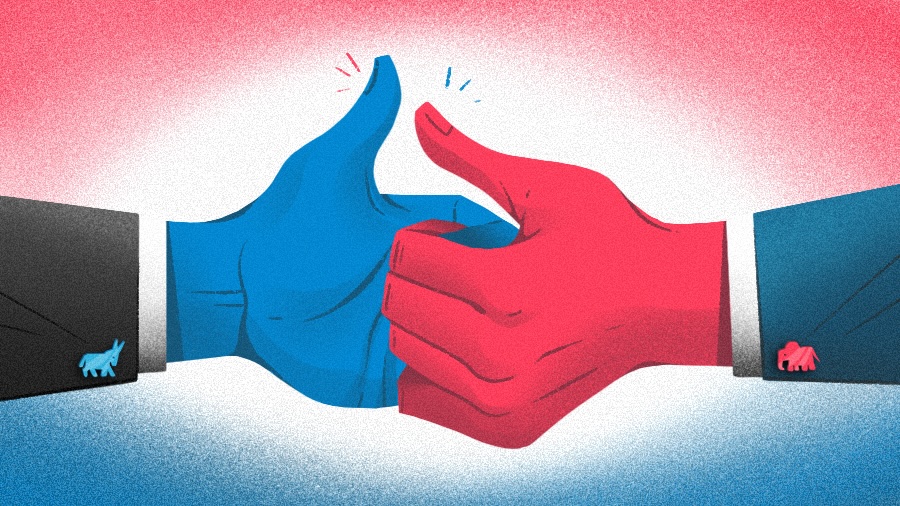
Crunchbase's 2026 data, reported by Crunchbase News, shows less than 2% of all startup investment so far this year went to companies in post-election red states, a share much smaller than in years past, with five states shifting to purple in the most recent election. The temptation is to read that as a political signal. The more defensible reading, given what the two agent launches show, is that capital is clustering around a narrow set of capabilities - agentic enterprise software, workflow integration, certification infrastructure - and those capabilities are concentrated in a small number of ecosystems regardless of how any state voted.
That has a direct consequence for US consumers and for the startup market. If investment is concentrating in fewer places, the companies building consumer-facing agent products will be shaped by a narrower set of assumptions about how work gets done. The under-2% figure is not evidence that founders in those states stopped building; it is evidence that the capital backing the current wave is not traveling to them.

