The recent run of smartphone and tablet news points to one uncomfortable pattern: upgrades are getting more expensive and more eccentric at the same time that they deliver less obvious improvement. Samsung is charging more for iterative hardware, as two separate reports show, while Huawei is trying to buy differentiation with a physically enormous add-on lens. For US buyers, the practical result is a market where staying current costs more and switching brands looks increasingly foreign.
The Iteration Tax
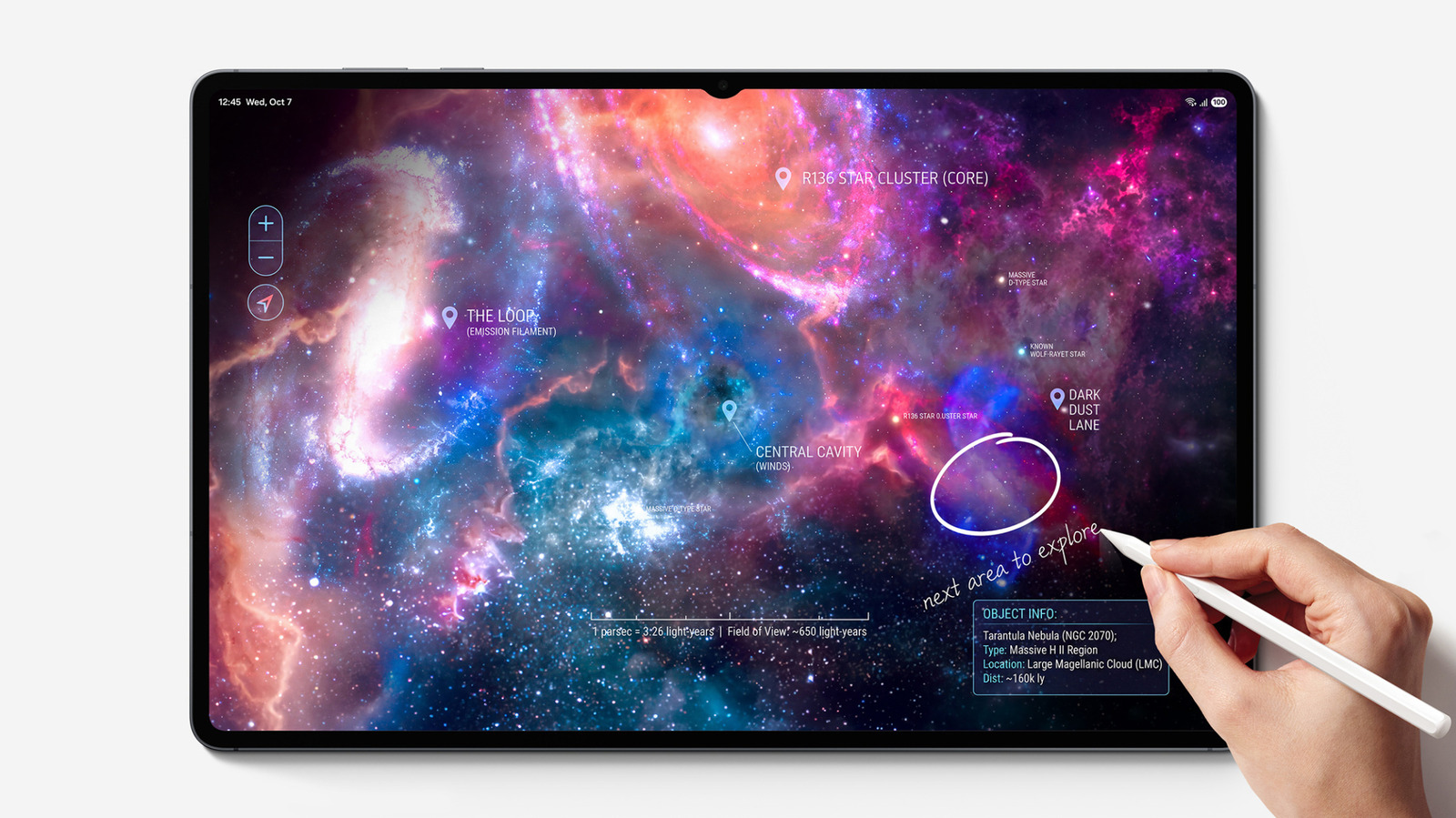
Samsung's Galaxy Tab S12 Ultra versus Galaxy Tab S11 Ultra is, by Engadget's account, an iterative upgrade once again for the company's laptop-sized tablet line. That phrase does a lot of work. It describes a product category where the annual refresh no longer promises a reinvention, only refinement, and where the manufacturer still expects buyers to treat the new model as the default choice.
The same dynamic shows up in Samsung's phone line. The Galaxy S26 and S26 Plus were already $100 more expensive than their S25 predecessors when they launched earlier this year, and Samsung said RAM price hikes were partly to blame. Now Phone Arena reports that Samsung raised US prices on the Galaxy S26 by $100 or more, pushing the base 256GB model to nearly $1,000. That is two rounds of increase on a product family whose year-over-year changes have not been framed as transformative.
The pattern is not that any single increase is unreasonable. It is that the price is moving faster than the pitch. A buyer comparing an S25 to an S26 is being asked to absorb a higher starting point without a corresponding leap in what the device does. The tablet line tells the same story in slower motion.
What Buyers Actually Get
In a mature category, iteration is normal. Phones and tablets have converged on similar designs, similar camera arrays and similar software experiences, and the honest framing is that each generation is a modest step. The problem is the mismatch between that honesty and the marketing and pricing that surround it.
When the hardware story is incremental, the burden shifts to software, services and trade-in economics to justify an upgrade. Samsung's US price increases make that math harder. A consumer holding a two- or three-year-old device now faces a higher entry point for the same broad experience, which lengthens replacement cycles and pushes more buyers toward the used and refurbished market.
For US technology companies, that is a mixed signal. Longer cycles reduce unit volume but can raise the value of each sale and strengthen the accessory and services attach. The risk is that the price increases train customers to wait, and waiting becomes the default habit rather than a temporary response to one expensive launch.
Huawei's Opposite Bet
Huawei's add-on lens for the Mate 90 Pro Max, reported by The Verge, is the mirror image of Samsung's approach. Where Samsung is asking more for roughly the same shape of product, Huawei is asking buyers to accept a strange shape to get a capability the phone cannot reach on its own.
The context matters. Over the last few years, Chinese Android manufacturers have followed Vivo's example of launching add-on teleconverter lenses for flagship phones, enabling long-distance photography the phones alone could never match. The Verge describes Huawei's version for the Mate 90 Pro Max as comically huge, which is the point: it is not a subtle accessory but a statement that the integrated camera stack has hit a ceiling.
This is the other way to escape iteration. If you cannot make the phone dramatically better, make it part of a system that is. The trade-off is friction. An add-on lens is something to carry, attach, and possibly lose, and it signals that the best version of the product is not the one in the box.