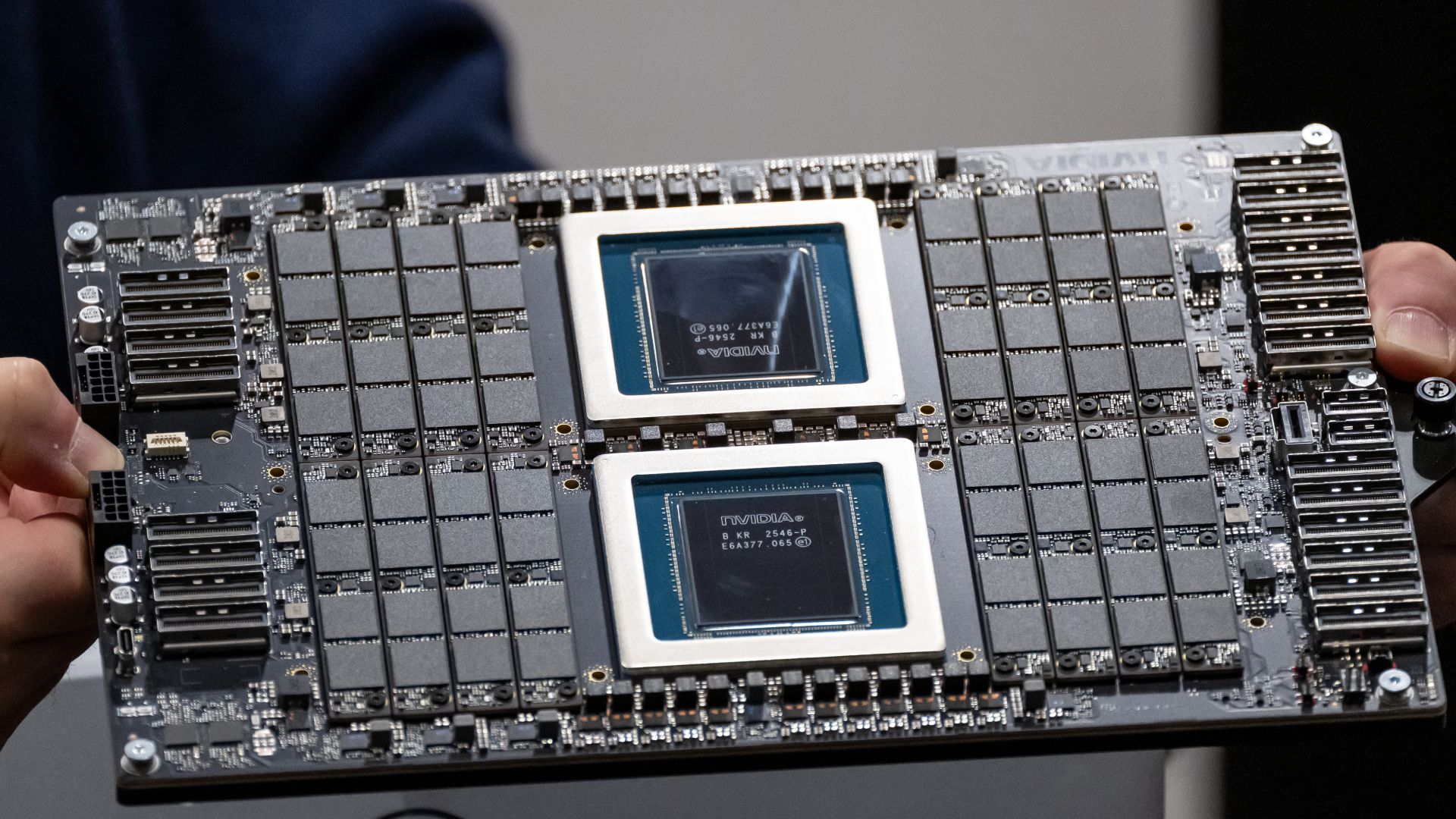
The recent server processor news points to one thread: supply and demand in this market are moving in opposite directions at once. Nvidia has pushed its standalone Vera CPU into general availability at a major hyperscaler, adding a new source of server silicon, while a deadly explosion at Intel's Fab 28 has knocked out Xeon production for an extended stretch. For US buyers and US vendors, the question is no longer whether server CPUs are scarce, but which ones are scarce and for how long.
A New Entrant With a Memory Story
The Vera deployment at Oracle is the more forward-looking of the two developments. As Tom's Hardware reported, Nvidia's Vera CPU is now generally available on Oracle's OCI Superclusters, which the outlet framed as a win for Nvidia as it moves past NVL72 to a standalone Vera deployment at a major hyperscaler. That detail matters on this beat: Nvidia's data center story has largely been told through systems and accelerators, and a standalone CPU sale to a hyperscaler is a different kind of claim on server sockets.
Tom's Hardware also reported independent benchmarking of a local server that reveals Vera's massive memory bandwidth lead over a dual Xeon 6 server. Memory bandwidth is not a headline spec for most buyers, but it is a real differentiator in workloads that are limited by how fast data moves to and from the processor. If that lead holds up under broader testing, it gives Nvidia a technical argument for standalone CPU placement that does not depend on its accelerator business.
The Xeon Side of the Ledger
Against that, the Intel news is a supply shock. As Tom's Hardware reported, a deadly explosion at Intel's Fab 28 caused a two-week shutdown, is expected to cost $600 million, and will severely disrupt server chip manufacturing for six months. The same report said 10nm Xeon shipments stall during the largest shortage in memory, and that the two-week shutdown will affect server CPU shipments for two consecutive quarters.
The specifics are what make this more than a single-fab incident. A two-week stop producing six months of disruption implies a recovery curve that outlasts the physical repair, and two consecutive quarters of affected shipments means the impact will be visible in procurement cycles well into 2027. Intel's 10nm Xeon lines are the ones named, which narrows the shortage to a specific part of the portfolio rather than the whole server catalog.
Why the Two Stories Belong Together
Read separately, one is a product win and the other is an operational disaster. Read together, they describe a market where the supply picture is being reshaped from both ends. Nvidia is adding credible standalone CPU capacity at a hyperscaler just as Intel is losing Xeon output for an extended period. That does not mean Nvidia fills an Intel-shaped hole; the products, workloads and customer relationships are different. But it does mean the alternatives available to large US buyers are widening at exactly the moment the incumbent's supply is constrained.
Hyperscalers are the pivot point. Oracle's willingness to deploy Vera standalone, as Tom's Hardware reported, signals that at least one major US cloud provider is treating Nvidia as a CPU supplier and not only an accelerator supplier. Every quarter that Xeon shipments are disrupted gives that kind of evaluation more room to run.