The common thread in this week's security news is not that products failed, but that the failures were built in from the start. A hosting platform exposed its customers' AI credentials, a training guide promised to turn beginners into bug hunters, and a fingerprint USB drive turned out to be an unencrypted SD card in a case. Together they describe a market where the word "secure" is a marketing claim rather than an engineering standard, and where the cost of that gap lands on buyers who have no practical way to verify it.
The credential is the new perimeter
The Northflank breach, as BleepingComputer reported, did not simply expose data. It led to unauthorized use of customers' AI API keys, and the company is telling customers to rotate all credentials and secrets stored on its platform. That detail matters more than the breach itself. API keys for AI services are not passive records; they are metered, billable access to compute. A stolen key can run up costs and generate content under someone else's identity before anyone notices. For US companies, the practical consequence is that a hosting provider's compromise becomes a line item on their own AI bill and a question in their own incident review. The instruction to rotate "all credentials and secrets" also implies the exposure was broad enough that the platform could not cleanly scope it - a signal that secret management was centralized in exactly the place an attacker would want it to be.
Convenience keeps beating verifiable design
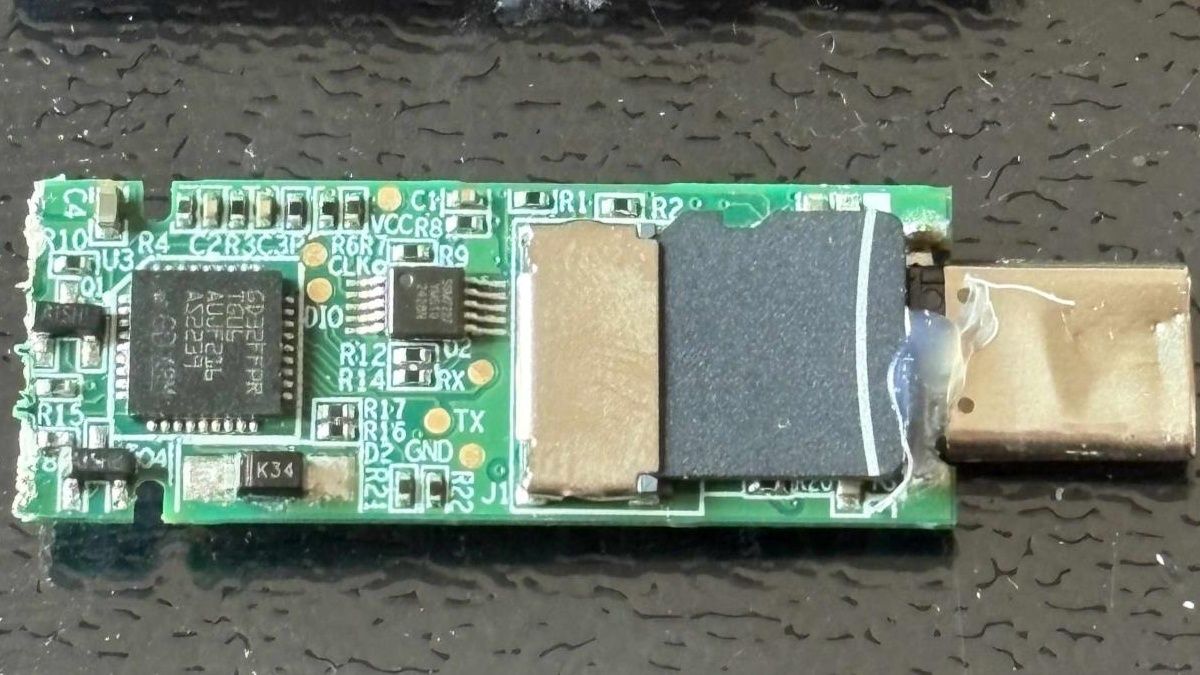
The Lenovo ThinkPlus FU100 story, as Tom's Hardware reported, is the clearest illustration of the pattern. A product sold as an "encrypted" fingerprint USB drive contained an unencrypted SD card inside a fancy case. The fingerprint reader was, functionally, a lock on a door with no wall around it. Anyone who removed the card bypassed the biometric check entirely. This is not a subtle cryptographic flaw or an edge case in an otherwise sound design; it is the absence of the thing the product claimed to sell. US consumers buy these devices precisely because they want a simple answer to a hard problem, and the market rewards the appearance of that answer over the substance.
The follow-up problem is now automated
The most consequential part of the Tom's Hardware report is that an AI-assisted follow-up found a backdoor and hardcoded keys in other "secure" USB products. Two things follow from that. First, the original failure was not isolated; the same design shortcuts appear across a category of devices marketed on security. Second, the economics of auditing have shifted. A single journalist working with an AI coding tool could probe multiple products and find fixed keys, which suggests the barrier to discovering these flaws has fallen sharply. That is good for disclosure and bad for vendors who assumed obscurity was protection. For US buyers, it means the odds that a weak product will be publicly dissected are rising, and the reputational cost of shipping theater is rising with them.