Two funding announcements logged this week point in the same direction. Opentrons Labworks raised $40 million to scale robotics and software for laboratory automation, and Wabi, an AI app now describing itself as a "personal agent," raised $55 million at a $1.25 billion valuation, per TechCrunch. Strip away the size and sector differences and a single investment thread remains: capital is flowing toward automation that executes bounded, repeatable tasks rather than toward tools that generate open-ended output. That is a meaningful shift in how US investors are pricing applied artificial intelligence.
The common thread is work, not chat
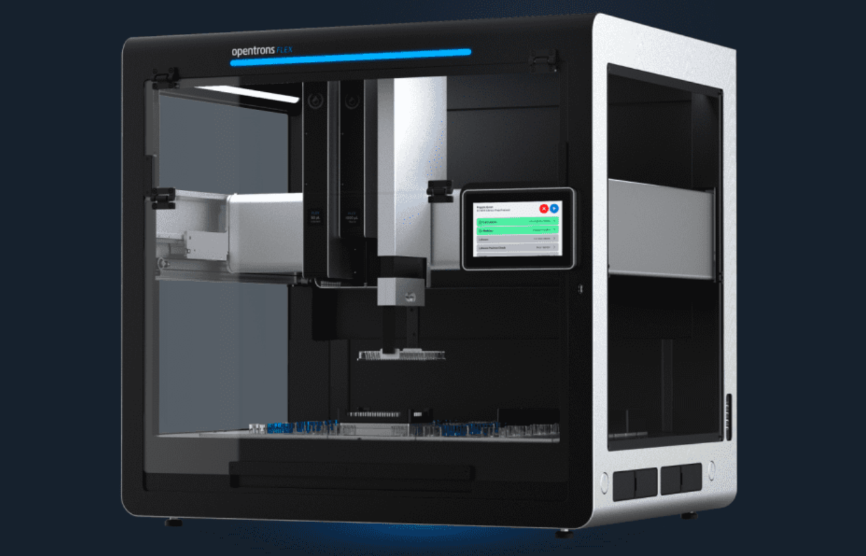
Opentrons makes benchtop robots that automate repetitive laboratory tasks, according to SiliconANGLE, and its new money is earmarked for robotics, software and data infrastructure tools. Wabi, as TechCrunch reported, is an AI agent that builds mini apps and now calls itself a personal agent. One is physical, the other is software, but both are pitched at the same buyer problem: taking a defined task off a person's hands and completing it. Neither is sold as a general-purpose reasoning engine. Each is sold as something that does a job.
For most of the recent AI investment cycle, the headline multiples went to model builders and horizontal platforms. This week's raises suggest a different test is gaining weight among funders: can the product point to a specific task, a specific user, and a measurable reduction in effort? The Opentrons Series E and Wabi's round are different sizes and different risk profiles, but they answer that question in the affirmative.
Hardware is back in the funding conversation
The Opentrons round is the more striking data point for anyone who assumed venture appetite for hardware had permanently thinned. The company, founded in 2014, builds motorized benchtop robots, per SiliconANGLE, and its Series E was led by healthcare investor Avego alongside BroadOak Capital Partners. A twelve-year-old hardware business raising growth capital in this climate is not the pattern most US investors have been chasing.
What makes it legible to funders is the standardization argument. The stated purpose of the round is to scale robotics, software and data infrastructure tools, which frames the business as a platform play rather than a one-off instrument sale. Hardware that standardizes a workflow becomes more valuable as the installed base grows, because the software and data layers compound. That is an argument US investors understand from enterprise software, and it is now being applied to laboratory equipment.
Agents get priced on usefulness
Wabi's $1.25 billion valuation, reported by TechCrunch, is the kind of number that invites skepticism. But the detail that matters for the funding beat is the repositioning. An app that builds mini apps is a tool with a narrow surface area; a "personal agent" is a broader claim on a user's time. The valuation is a bet that the broader claim is the durable one.
For US consumers and small businesses, that framing matters. Mini apps built by an agent lower the cost of getting a specific piece of software made, which puts custom tooling within reach of operators who would never have hired a developer. Whether the valuation holds is a separate question from whether the demand is real. The round itself is evidence that at least one set of funders believes the demand is.