The processor story of late 2026 is no longer about raw compute throughput. It is about feeding and powering that compute, and three recent items on this beat point the same direction: Nvidia's standalone Vera CPU reaching general availability at Oracle, a decommissioned 300-rack AI supercomputer listed on eBay, and FuriosaAI raising $620 million for energy-efficient inference chips. Each is a different expression of one constraint. Memory bandwidth per watt, and the electricity bill attached to it, now determines what gets built and what gets retired.
Vera's Standalone Debut
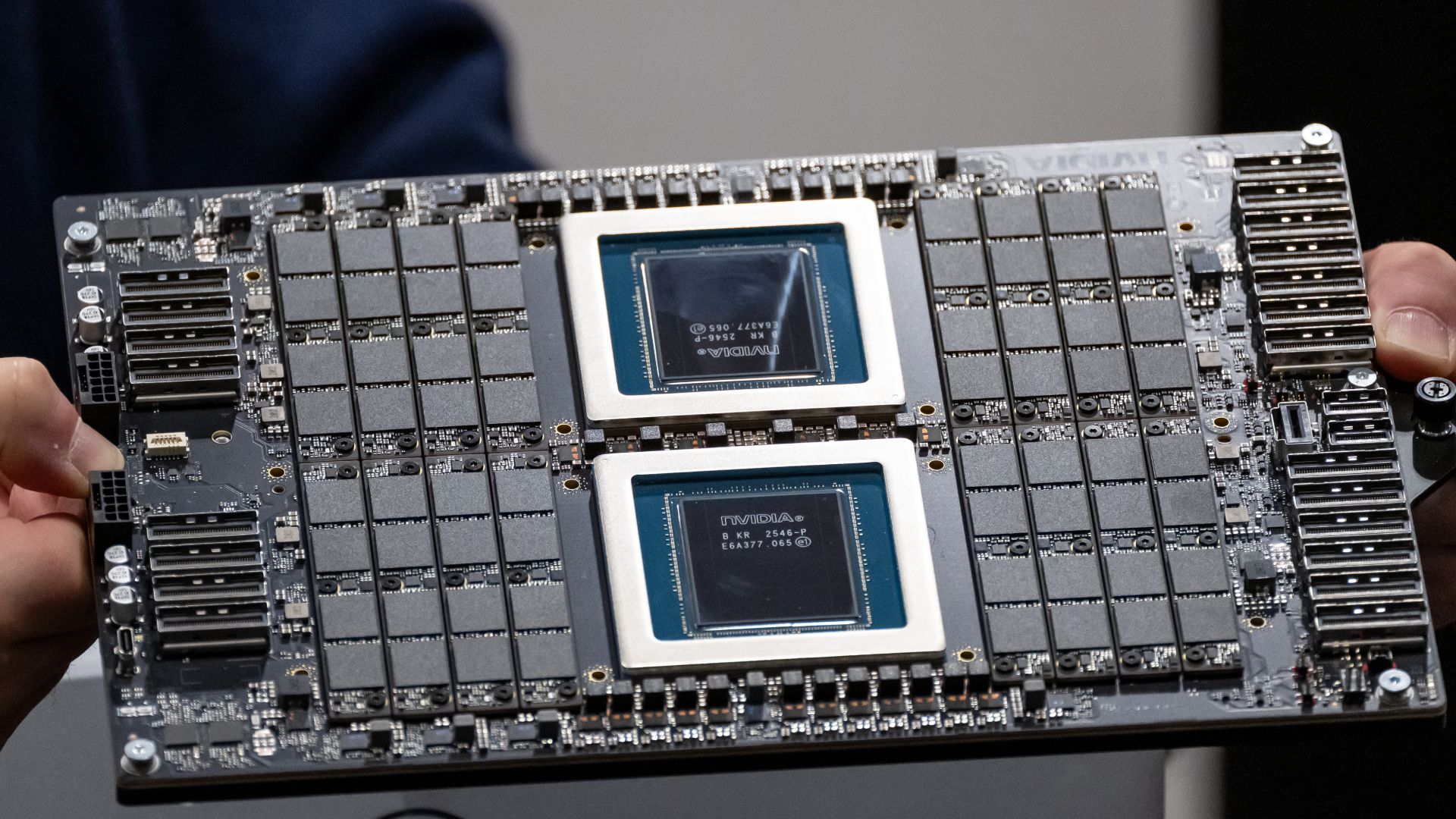
Nvidia's Vera CPU is now generally available on Oracle's OCI Superclusters, as Tom's Hardware reported, marking a shift for Nvidia from NVL72-style rack-scale systems toward a standalone Vera deployment at a major hyperscaler. Tom's Hardware also carried independent benchmarking of a local server showing Vera's substantial memory bandwidth lead over a dual Xeon 6 server. That detail matters more than the availability announcement itself. For years, x86 server CPUs from Intel and AMD set the terms of general-purpose data center compute, and Nvidia's role was the accelerator hanging off them. A standalone Nvidia CPU with a bandwidth advantage changes the comparison buyers make. If the workload is bottlenecked on moving data to and from memory rather than on arithmetic, the CPU choice starts to look like the deciding variable, and Nvidia can sell the host processor as a performance product rather than a necessary companion.
The Secondhand Supercomputer
The eBay listing is the same argument seen from the depreciation side. Someone put a 300-rack AI supercomputer up for $59.7 million, according to Tom's Hardware, packed with 9,600 A100 GPUs and 4,200 EPYC CPUs and shipping free. The machines are decommissioned. A system of that scale reaching the resale market in one lot is a signal about generational turnover: operators are not waiting for hardware to fail, they are replacing it because newer silicon does more useful work per unit of power and per dollar of operating cost. Note the CPU count as well. Thousands of EPYC processors sit alongside the GPUs, a reminder that every accelerator fleet is also a processor fleet, and that retiring one retires the other. For US buyers and operators, the practical question is whether secondary-market capacity this large depresses prices for older AI infrastructure or simply moves it to buyers who can absorb the power draw. The listing alone does not answer that.
FuriosaAI and the Power Bottleneck
The third story makes the constraint explicit. South Korean inference chip startup FuriosaAI raised $620 million to scale production of energy-efficient AI processors, SiliconANGLE reported, bringing its valuation to $2.9 billion. The company framed the round around the data center power bottleneck, and it is positioning itself as a challenge to Nvidia. The size of the round suggests investors believe efficiency, not peak performance, is where the next opening lies. Inference runs continuously, so its electricity consumption compounds in a way that training bursts do not. A chip that does slightly less work per second but far more work per watt can win on total cost of ownership. That logic applies to CPUs as much as to accelerators, and it is why bandwidth-per-watt has become the number vendors lead with.