๐Ÿ“ฃ

Advertisement

Google Ad - 970ร—90 Leaderboard ย TOP_LEADERBOARD_4

Platform Guardians Tinker While Users Move On
Article

Platform Guardians Tinker While Users Move On

Three stories this week show platforms polishing control of their own ecosystems while users increasingly treat operating systems as interchangeable utilities.

Arjun NairSeptember 10, 20264 min read

Photo: TechCrunch

๐Ÿ“ฃ

Advertisement

Google Ad - 970ร—90 Leaderboard ย TOP_LEADERBOARD_4

The dominant platforms are spending this week fixing edges of their own ecosystems, and the edges they chose are revealing. Google is simplifying password manager migration on Android, Microsoft is repairing a bug that wiped Windows desktop settings, and a developer used Claude to stand up a working Windows 3.1 Program Manager clone in an hour. Read together, the stories describe a market in which the software Americans depend on is increasingly treated less as a fortress to be defended and more as a surface that can be swapped, emulated, or repaired without fanfare. The platforms still own the plumbing, but the loyalty they once commanded in the desktop and mobile eras is thinning into utility.

The Switch Costs Are Coming Down

For years, the practical lock-in of a smartphone platform lived less in the operating system than in the passwords and passkeys stored inside it. Exporting a password vault has always been possible; moving passkeys, which are cryptographically bound to a device or ecosystem, was not. As TechCrunch reported, Google's new Android feature is meant to ease switching between password managers and to transfer passkeys in the process. That is a meaningful concession to the idea that account credentials should belong to the user rather than to whichever platform happens to hold them. It is also, candidly, a defensive move. Android competes for users who increasingly treat an iPhone or a Pixel as a choice renewed on price, camera, and carrier promotion rather than on the pain of losing a decade of stored logins. Reducing the friction of leaving does not help Android keep users; it helps Android argue that staying is a preference rather than a trap.

The Bug That Ate the Desktop

On the Windows side, the news is less strategic and more embarrassing. Microsoft said the September 2026 Patch Tuesday updates fix a known issue that caused desktop settings to be lost or reset on some Windows devices, according to BleepingComputer. For an operating system that underpins the majority of American office and home computing, a desktop that forgets its own layout is a small thing that lands as a large thing. It interrupts muscle memory, forces reconfiguration, and reminds users that the layer they think of as their computer is a managed product subject to remote change. That is normal now. It was not normal in the era whose interface a developer just recreated in an hour.

Vibe Coding Meets 1992

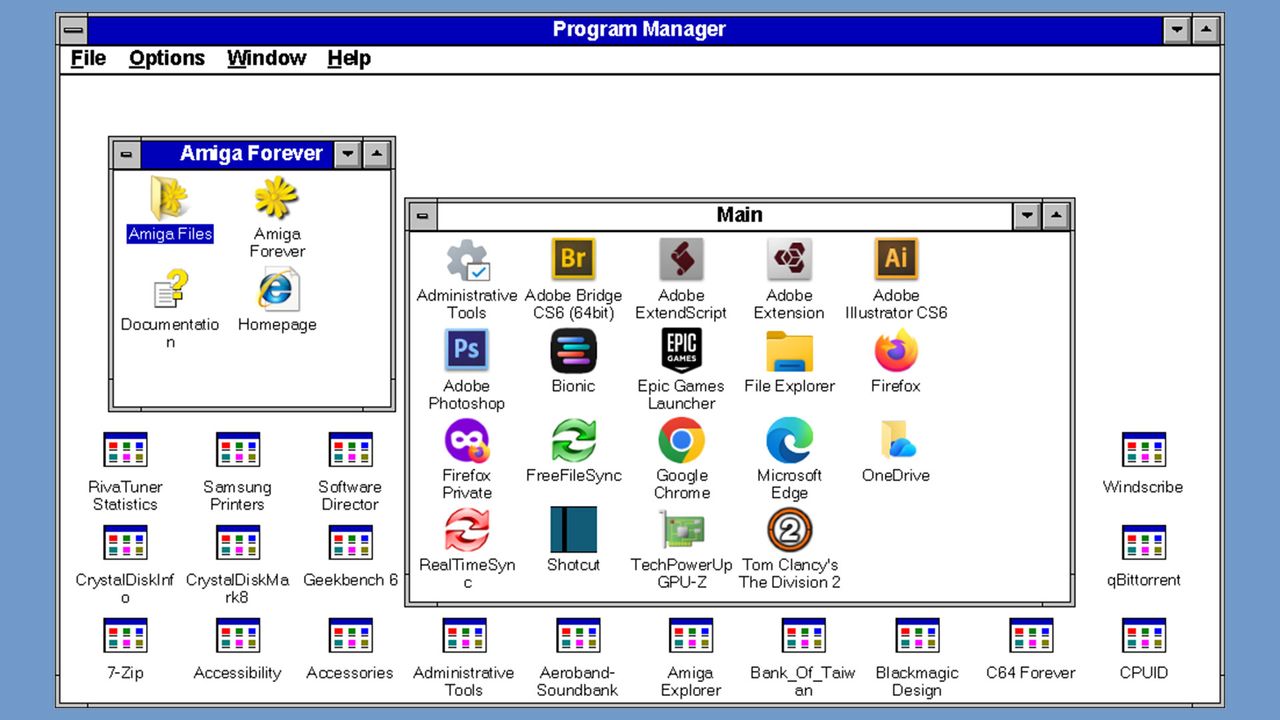
Tom's Hardware reported that a developer used Claude to vibe code a clone of the Windows 3.1 Program Manager, producing a 12MB retro launcher that runs on both Windows 11 and Apple Silicon. The significance is not nostalgia. It is the collapse in the cost of rebuilding a familiar interface. When a capable model can draft the shell of a 1990s desktop in an hour, the distance between an operating system's identity and any particular implementation of it narrows. The Program Manager is a piece of computing history, but it is also a demonstration that the visual grammar of a platform is reproducible by anyone with a model and a weekend. If the interface is reproducible, the operating system's hold on users rests more heavily on services, security, and hardware than on the shape of its windows and menus.

Advertisement

๐Ÿ“ฃ

728x90

MID_CONTENT_2

What Lock-In Still Buys the Platforms

None of this means the platforms are fragile. Apple's control of silicon and integration, Microsoft's enterprise agreements, and Google's services reach remain formidable. What the week's stories show is that the moats are being narrowed to the specific things users cannot recreate or carry: passkey ecosystems, security patching, hardware, and the cloud accounts that tie them together. Google's passkey transfer feature and Microsoft's settings fix are both acknowledgements of the same principle. The parts of the platform users resent are the parts that generate switching costs, and the parts users tolerate are the parts that work without their attention. A password manager migration tool and a desktop settings repair are small, almost bureaucratic items, but they sit exactly at the boundary where platform loyalty is now won and lost.

Why This Matters to the US Market

American consumers and businesses have spent two decades consolidating their digital lives inside a handful of ecosystems. That consolidation created real value in convenience and security, and it created real inertia. The stories above suggest inertia is being eroded from both directions. Policy pressure and competitive necessity are pushing platforms to make exits less painful, as Android's passkey transfer illustrates. Cheap generative tooling is making the software layer itself less proprietary, as the Claude-built Windows 3.1 shell illustrates. Meanwhile, the operational basics still matter enormously, which is why a desktop settings bug at Microsoft is worth reporting rather than dismissing. The American software market is not becoming a frictionless commons. It is becoming a place where users increasingly expect to move their credentials, recreate their interfaces, and demand that the basics simply work, and where the platforms that resist all three will look out of step with the people paying for them.

What to Watch

Watch whether passkey portability, once offered on Android, becomes a baseline expectation that other platforms match, and whether the technical and policy details of that transfer satisfy security researchers. Watch how Microsoft's September 2026 Patch Tuesday update performs in the field, since the company has already named the issue it intends to fix. Watch whether vibe-coded recreations of familiar system software remain curiosities or start to influence how developers think about porting and interface design. And watch whether the next round of platform announcements competes on how easy it is to leave, not just how hard.

Sources: TechCrunch, The Verge, Tom's Hardware, BleepingComputer.

More on this beat: Software on TechManNews.

Advertisement

๐Ÿ“ฃ

728x90

IN_ARTICLE_5

#platform lock-in#passkeys#Windows#retro computing#vibe coding#consumer software

Newsletter

Get Tech News in Your Inbox

The latest AI, gadgets, software and startup stories from TechManNews, delivered every morning - free.