Platform owners are discovering that the control they sell to users and regulators is harder to keep than to claim. In four unrelated stories this week, Microsoft, Apple and Google are each being forced to answer for decisions made years ago, and in each case the company is giving ground rather than holding it. The thread is not nostalgia or antitrust alone: it is that the mechanisms platforms built to manage their own ecosystems are aging faster than the ecosystems themselves.
The key that aged into folklore
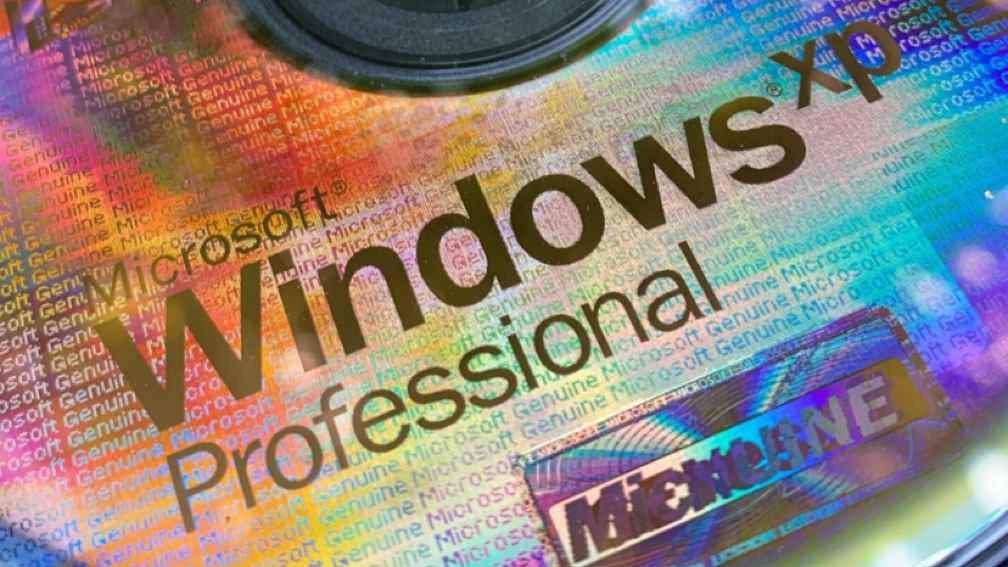
Tom's Hardware carried the story of a retired Microsoft engineer explaining the leaked FCKGW Windows XP volume-licence key. The detail that makes the story more than trivia is the mechanism: copy protection leaned on roughly 10MB of encrypted Microsoft Bob data to validate the key. That is a remarkable thing to find inside an activation system. Microsoft Bob was a consumer interface experiment that had already failed commercially by the time XP shipped, yet its encrypted payload became part of the chain that decided whether a copy of Windows was genuine.
For US technology companies, the lesson is uncomfortable. Copy protection is not a permanent property of a product; it is a pile of dependencies that outlive the teams that chose them. A validation path built on an abandoned product line kept working, kept being relied on, and eventually kept being remembered, long after anyone at the company had a reason to think about it. The key itself became a cultural artifact precisely because the protection was good enough to matter and leaky enough to spread. There is no patch that undoes twenty-five years of that.
Support clocks run out on schedule
BleepingComputer reported that Microsoft reminded customers this week that Windows 11 24H2 Home and Pro reach end of support in October. The reminder is routine. What is not routine is the cadence. A release that many US households and small businesses are still settling into is now months from losing security updates, and the upgrade that follows is not free of hardware conditions.
The XP story and the 24H2 reminder sit at opposite ends of the same curve. One shows what happens when a platform's internal validation machinery is left to run unattended for decades. The other shows what happens when a platform's support machinery is run on a strict schedule regardless of who is still standing on the previous step. Microsoft is not doing anything wrong in either case, but both cases put the maintenance burden on people outside Redmond. For US consumers, the practical effect is a recurring, involuntary upgrade tax: new hardware, new migration work, new compatibility checks, on a timetable set elsewhere.
Consent screens get quieter in Europe
TechCrunch reported that Apple is changing its App Tracking Transparency prompts in parts of Europe, after competition regulators said the system favored Apple over third-party apps. The change gives developers more flexibility in how they ask users for tracking consent.
This is the clearest example of a platform losing the ability to set terms unilaterally. App Tracking Transparency was framed as a privacy feature, and for many users it functioned as one. But regulators looked at the same interface and saw a competitive instrument: the party writing the prompt also competes in the market the prompt governs. Apple's adjustment does not repeal the feature, and it does not hand developers a free pass. It narrows the gap between how Apple's own apps and third-party apps can ask.
US developers should read this carefully. The change applies in parts of Europe, not in the United States, which means American users may continue to see the more uniform prompt while European users see variation. That divergence is itself a competitive fact. A US developer building a consent flow now has to decide whether to build one experience or several, and whether the European version is worth the engineering time given that it does not travel home. Regulators in Washington have shown interest in the same questions, but nothing in the reporting suggests a US change is imminent.