Nvidia's Real Product Is the Blueprint, Not the Chip
Article

Nvidia's Real Product Is the Blueprint, Not the Chip

Across legal, architectural and software news, the same pattern holds: Nvidia's moat is shifting from silicon to the reference designs and partnerships built around it.

BhavyaOctober 22, 20264 min read

Photo: Ars Technica

Nvidia's most consequential announcements are increasingly not chips but the scaffolding around them. Three recent stories on this beat - a court ruling touching a data center buildout, a set of reference architectures unveiled at GTC Berlin, and an expanded Red Hat partnership - all point at the same shift. The company's competitive position now depends as much on the blueprints, controls and legal footing that surround its hardware as on the hardware itself.

The Announcement That Wasn't a Chip

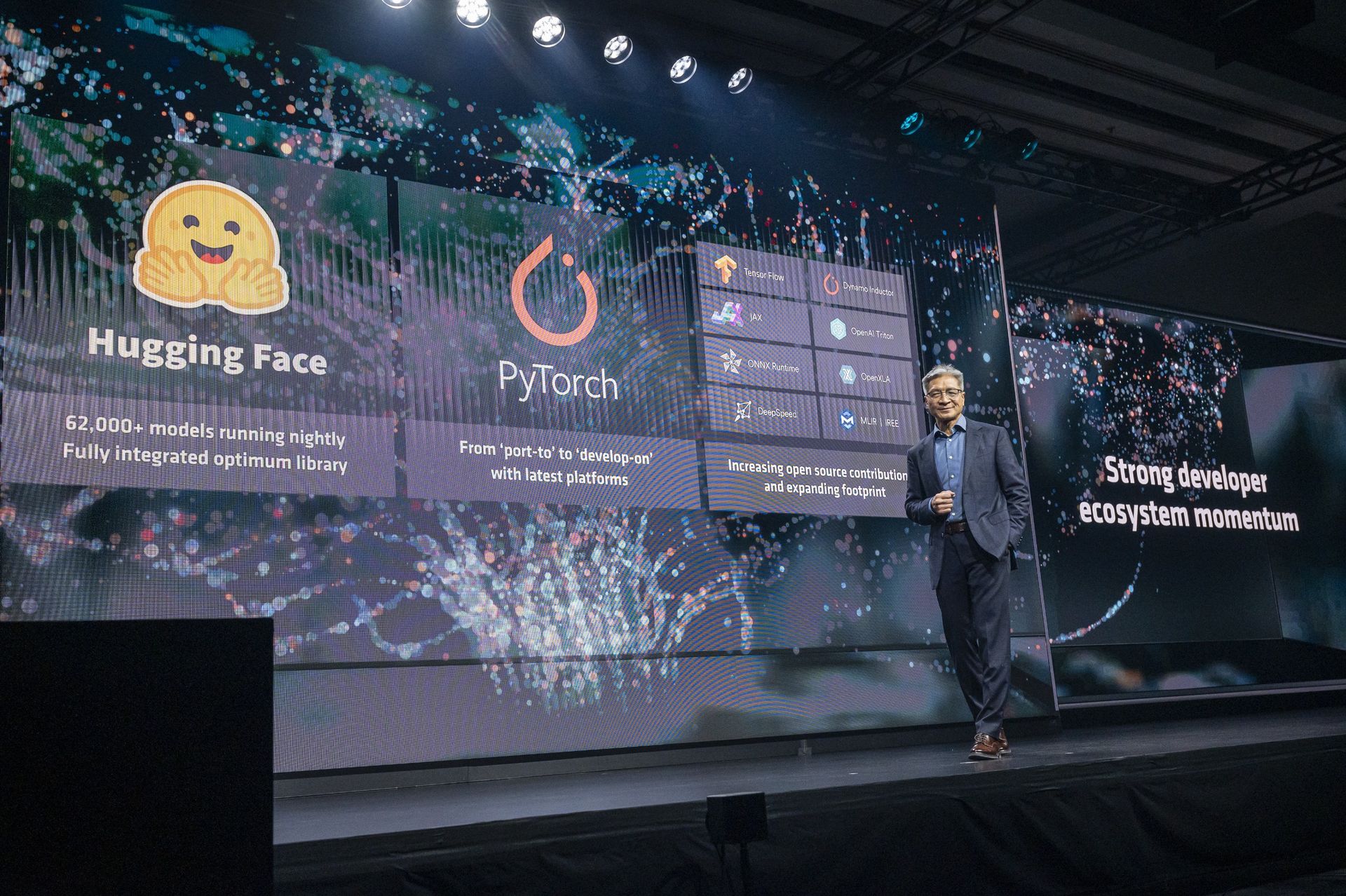
At its annual GTC Berlin event, Nvidia debuted a set of technologies intended to make it easier for customers to build data centers and robots using its chips, as SiliconANGLE reported. Chief Executive Officer Jensen Huang detailed the offerings. The first addition to the data center portfolio, DSX POD, is a reference architecture.

That framing matters. A reference architecture is a recipe: a documented, repeatable way to assemble systems around Nvidia silicon. It is not a faster GPU. It is a template that tells customers, integrators and partners how to build. For a US market where enterprises are under pressure to stand up AI capacity quickly, a validated design can shorten the path from procurement to deployment - and, just as importantly, keep that path inside Nvidia's ecosystem.

Reference Designs as a Form of Lock-In

Reference architectures are an old hardware-industry tool, but their role changes when the underlying systems are as complex and as expensive as AI data centers. When a vendor publishes the blueprint, it sets the defaults: which components interoperate, how systems are laid out, what "correct" looks like. Customers gain speed and reduced integration risk. The vendor gains gravity.

The DSX POD announcement, as reported by SiliconANGLE, sits alongside development tools in the same disclosure - a pairing that suggests Nvidia is packaging guidance for both physical buildout and the software that runs on it. For US technology companies buying or reselling these systems, the practical effect is that competitive differentiation migrates away from assembling hardware and toward what is built on top of a standardized base. That is a comfortable position for the vendor that wrote the standard.

Software Partnerships Extend the Same Logic

The Red Hat and Nvidia expansion, also announced at GTC Berlin and reported by SiliconANGLE, follows the pattern. The two companies expanded their collaboration to help enterprises secure autonomous artificial intelligence agents, govern access to AI models and deploy workloads on Nvidia's upcoming Vera Rubin data center infrastructure. The updates center on Red Hat AI Factory with Nvidia, combining agent runtime controls and related capabilities.

The details here are about control rather than compute: securing agents, governing model access, targeting forthcoming infrastructure. In other words, the partnership is aimed at the layer where enterprises decide how AI systems are permitted to act. For US enterprises, that is the layer that determines whether autonomous agents can be trusted in production. For Nvidia, it is another place where its roadmap - in this case Vera Rubin - becomes the reference point that partners build against before the hardware even arrives.

The Legal Footing Underneath the Buildout

The third story is the reminder that this stack rests on physical facilities with real regulatory exposure. A judge rejected a claim that the Environmental Protection Agency could unilaterally dismiss data center pollution lawsuits, as Ars Technica reported, ruling against the position advanced around a SpaceXAI pollution lawsuit.

The connection to GPUs and AI hardware is direct: the reference architectures and software partnerships above only matter if the data centers get built and operated. Litigation over pollution from those facilities is now a variable in the deployment timeline. For US technology companies, the ruling means environmental challenges to data center projects are not easily waved away by agency action - a procedural fact that can affect siting, construction schedules and community relations. For US consumers, it means the infrastructure behind AI services remains subject to ordinary legal contest, which is a governance question as much as an environmental one. What the ruling does not do, based on the material available, is resolve the underlying dispute; it addresses whether the agency could dismiss the suits.

Why This Matters for the US Market

Taken together, the three stories describe a company competing on the shape of the ecosystem rather than on any single part number. The reference architecture sets the physical template. The Red Hat collaboration sets the controls for agents and model access. The Vera Rubin roadmap gives partners something to build toward. And the courts determine whether the buildings that house all of it proceed on schedule.

For US buyers, the upside is real: standardized designs and integrated security tooling can reduce the friction of deploying AI infrastructure, and partnerships between established vendors can make governance less of a bespoke project. The trade-off is dependence. When the blueprint, the security layer and the next-generation hardware roadmap all point to one vendor, switching costs rise quietly, one integration at a time.

What to Watch

The material points to a few concrete things worth tracking. First, whether the DSX POD reference architecture is taken up by systems builders and customers, which would show the blueprint approach working as intended. Second, how the Red Hat AI Factory with Nvidia offering develops around agent runtime controls and model access governance, and whether deployment on Vera Rubin arrives in step with the infrastructure itself. Third, how the data center litigation referenced by Ars Technica proceeds, since siting and legal exposure sit upstream of every chip shipment. None of these is settled by the announcements; each is a place where the pattern will either hold or strain.

More on this beat: Hardware on TechManNews.

#Nvidia#AI data centers#reference architectures#Red Hat#GPUs#data center regulation

Newsletter

Get Tech News in Your Inbox

The latest AI, gadgets, software and startup stories from TechManNews, delivered every morning - free.