The funding stories logged on this beat today share one thread: US investors are writing very large checks into hard, capital-intensive technology, and they are doing it across several stages at once. Isomorphic Labs is reportedly chasing a valuation of $40 billion to $50 billion, Oxide Computer has raised $445 million in a single round, and Ultra Robotics has pulled in $62 million across two rounds. The common pattern is not sector enthusiasm for its own sake, but a funding market that has reorganized around scale, follow-on conviction and buyers who can absorb the cost of building physical infrastructure.
Scale Is the Entry Ticket
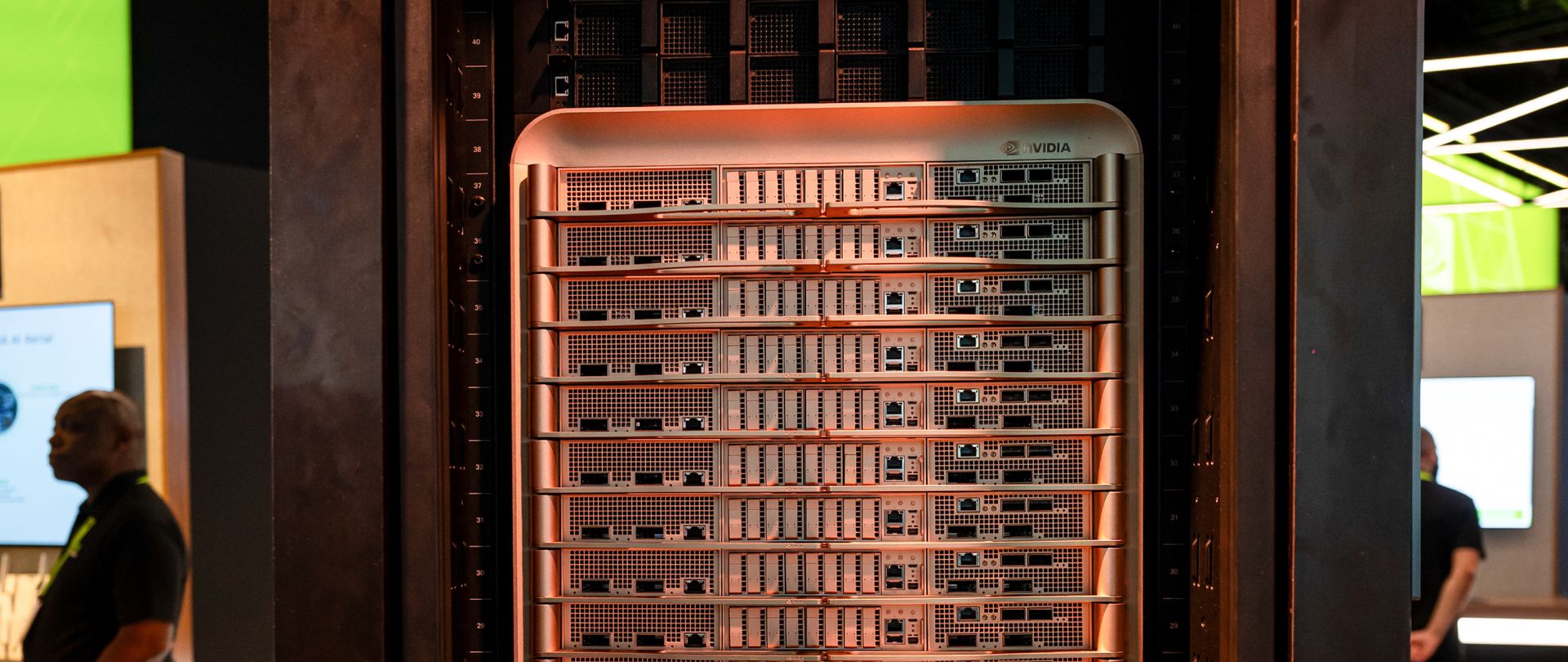
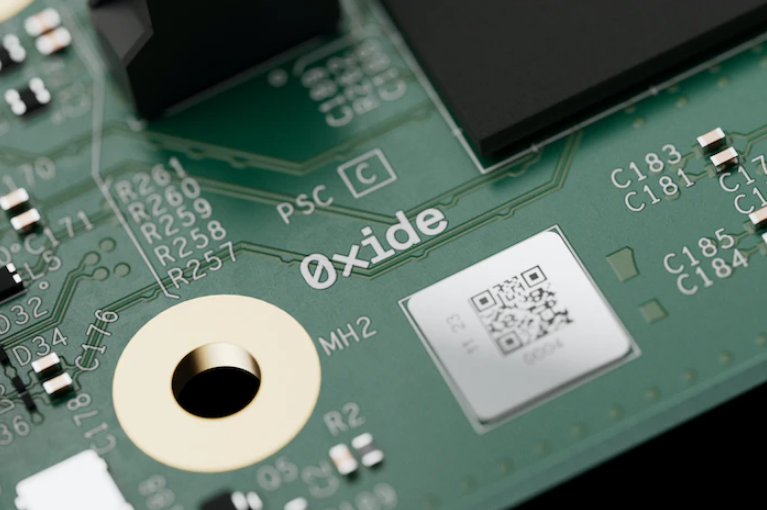
The size of these deals is the story. As SiliconANGLE reported, Oxide Computer's $445 million Series D was led by returning backer Eclipse Capital and joined by AMD Ventures, Riot Ventures, Jane Street, Atreides Management and USIT, the same firm that led its previous $200 million raise in February. That sequence matters more than the headline number. A backer leading two consecutive rounds of that size is not making a momentum bet; it is funding production capacity. Oxide sells a data center rack product, which means the capital goes into manufacturing, supply chain and inventory rather than into software distribution that scales at near-zero marginal cost. The same logic applies to Isomorphic Labs, which is reportedly in discussions for a round that Bloomberg, as covered by SiliconANGLE, did not size, though sources indicated a valuation of between $40 billion and $50 billion. For a drug discovery company built on computational methods, that valuation range implies investors are pricing platform potential, not a single pipeline asset.
Two Rounds, One Company, Two Investor Types
Ultra Robotics offers the clearest view of how the market is tiering. As SiliconANGLE reported, the warehouse robot maker raised $62 million over two rounds, with $50 million arriving through a Series A led by Framework Ventures, while its seed round was jointly led by Y Combinator and NextView Ventures. The structure is familiar: early-stage backers with a venture and accelerator profile get a company to a demonstrable product, and a later, larger fund writes the check that pays for deployment. What is notable is how quickly the second check arrived and how much larger it was than the first. That is a funding environment where hardware and robotics companies no longer have to prove profitability before they can raise at scale; they have to prove a deployable unit. The $50 million Series A, reported by Fortune and covered by SiliconANGLE, is the kind of number that would have been a growth round a few years ago. Now it is early-stage capital for a company with a product to install.
What It Means for US Companies
The immediate consequence for US technology companies is that the cost of competing in physical infrastructure has risen. Oxide's raise is explicitly aimed at stepping up data center rack production, which puts it in the same capital race as established server vendors and hyperscaler supply chains. For US buyers of data center capacity, more funded challengers could mean more choice in rack-scale systems, though it also means those vendors will be under pressure to convert manufacturing spend into delivered units quickly. AMD Ventures' participation in Oxide's round is a reminder that chipmakers now invest directly in the companies that package and deploy their silicon, which ties funding decisions to supply relationships.
For US consumers, the effects are indirect but real. Drug discovery platforms at Isomorphic's reported valuation are ultimately funded on the expectation of faster pipelines and, eventually, treatments; the funding market is effectively pre-paying for medical outcomes that have not yet been demonstrated. Warehouse robotics funded at Ultra's pace feed into logistics costs, which feed into delivery times and prices. Neither connection is immediate, and neither is guaranteed, but the direction of capital tells you which costs US companies expect to attack next.