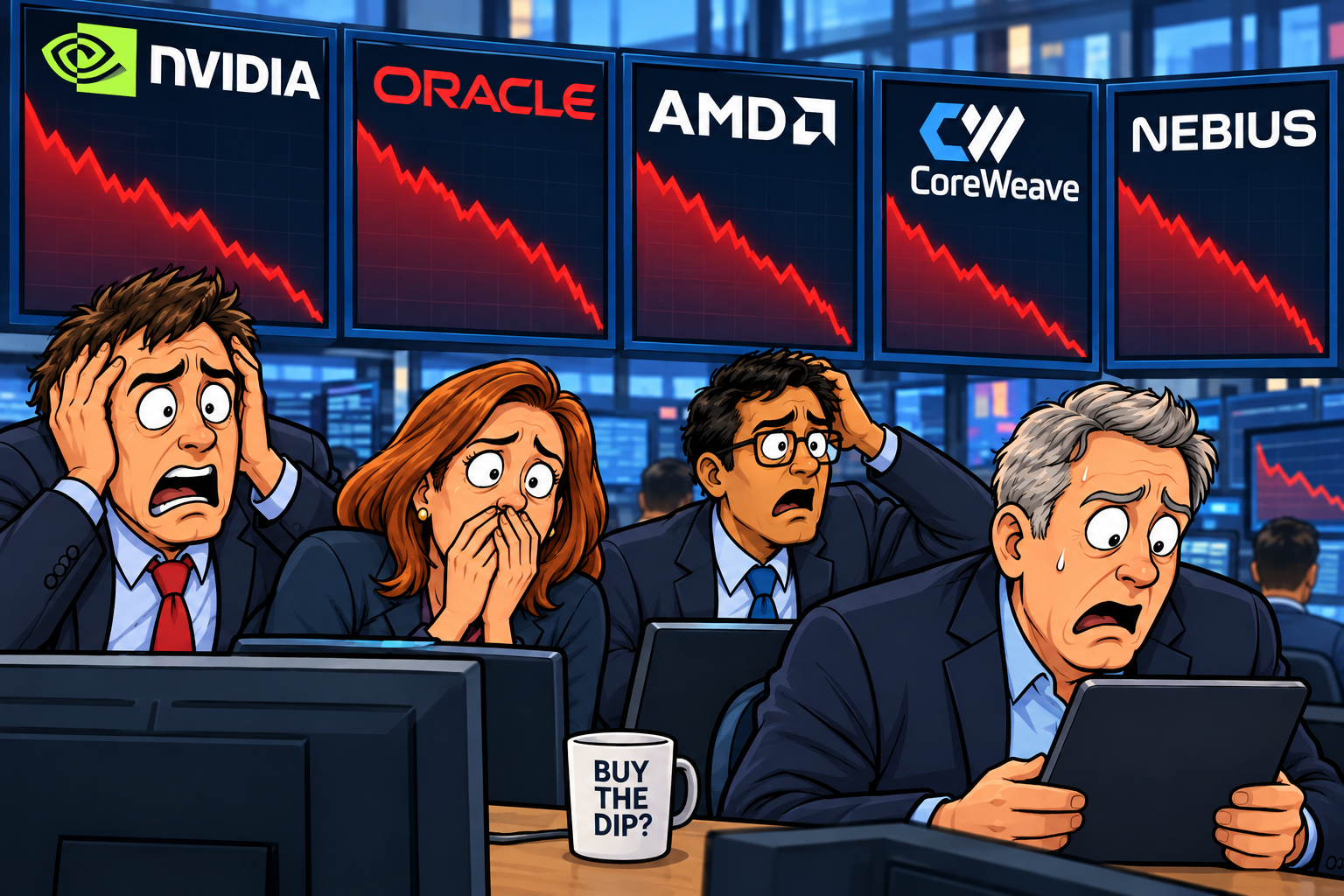
The thread running through this week's Big Tech coverage is that artificial intelligence has moved from a story about promise to a story about consequences. Revenue expectations are being tested, regulators are circling the workplace, and the industry's own scandals are becoming entertainment. For US technology companies, the shift means the easy money and easy narrative are both getting harder.
The Revenue Cushion Gets Thinner
The clearest signal comes from OpenAI, which told investors this week that it actually had $18 billion less revenue than the $68 billion figure in play, as SiliconANGLE reported. That is not a rounding error. It is the kind of gap that forces a re-examination of how much of the AI boom is booked revenue versus booked hope. The same SiliconANGLE report noted that models are playing hopscotch and that the Trump administration is cracking down on tech green cards, a combination that hits both the product and the talent pipeline at once.
None of this amounts to a declaration that the artificial intelligence bubble has burst. Money is still pouring into every hardware and software company with AI in its pitch deck. But the OpenAI shortfall is a taste of what happens when the story outruns the numbers. For US tech companies, the practical effect is a tighter boardroom conversation: if the largest pure-play AI name can miss by that much, every smaller vendor's forecast deserves the same scrutiny.
Talent Flows Face a New Friction
The green card crackdown mentioned in the SiliconANGLE report belongs in the same frame. US tech has long relied on immigration to staff its most technical roles, and a harder line on tech green cards raises the cost and complexity of doing that. The timing is awkward. If revenue is softer than advertised, companies cannot simply buy their way out of a talent shortage. They have to make do with who they can hire and keep, or they have to offshore work that they would rather keep close to core teams.
That matters for US consumers too, though indirectly. A constrained talent pipeline tends to slow product cycles and push up costs, and those costs eventually show up in enterprise pricing. The green card story is not just an immigration story; on this beat it is a competitive story about whether American firms can staff the roadmaps they have already sold to Wall Street.
Regulators Target the AI Boss
ZDNET reported that regulators are trying to protect workers from being fired by AI, and that the effort is happening slowly and remains stuck at the state level. This is the second edge of the same trend. During the build-out phase, AI vendors sold efficiency. Now that efficiency is being applied to employment decisions, the political system is beginning to respond.
The state-level focus is significant for Big Tech. A patchwork of rules is harder to manage than a single federal standard, and it raises the compliance burden for companies operating nationally. It also creates uneven protection for US workers: an employee in one state may have more recourse than an employee in another for the same algorithmic decision. For the companies, the near-term risk is not a sweeping federal law but a slow accretion of state requirements, each adding disclosure, audit or appeal obligations.
