Advanced semiconductors have crossed a threshold: they are now strategic assets whose value is measured not only in dollars but in intelligence and geopolitical leverage. Three recent stories logged on this beat - a multi-million-dollar GPU cargo heist in California, an alleged Chinese intelligence operation targeting Nvidia's CEO, and Tesla's expanded custom accelerator roadmap - point to the same underlying shift. The chip itself has become the object of theft, espionage and sovereign ambition, and that changes how US companies must think about protecting, selling and building silicon.
Theft Follows Scarcity
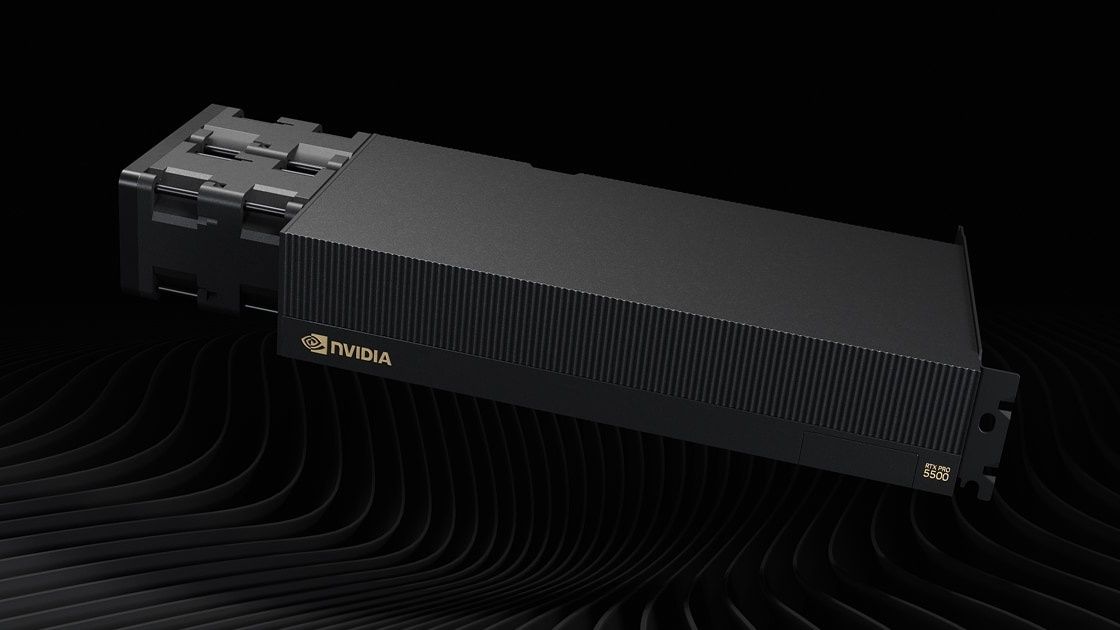
The most tangible signal came from California, where six pallets of Nvidia GPUs worth $11.4 million were stolen in a cargo heist, as Tom's Hardware reported. That is not a random crime statistic; it is a market signal. Experts cited in that report warn that advanced Nvidia chips can command significantly higher prices abroad and could end up in black-market channels. When a product's resale value outside legitimate distribution is high enough, physical logistics become a security perimeter. For US technology companies, this means the supply chain is no longer just a cost center but a vulnerability surface. A stolen GPU is not merely lost inventory; it is compute capacity that can be resold, repurposed or reverse-engineered outside the reach of US export controls and corporate governance.
Espionage Targets the Decision-Maker
The second story moves the threat from the loading dock to the boardroom. According to The New York Times, as summarized by The Verge, China's Ministry of State Security recruited Megaspeed executive Alice Huang to spy on Nvidia CEO Jensen Huang. The reported aim was to glean information about American AI chips and potentially influence the company to push for its most advanced chips to be made available to China. This is a notable escalation in the pattern. Espionage against chip companies has historically focused on designs, process nodes and trade secrets. Here the alleged target is the executive who sets product strategy and export posture. That suggests foreign intelligence services see corporate decision-making about chip availability as a lever worth influencing directly. For US firms, the implication is that executive travel, communications and lobbying contacts around export-sensitive products now sit inside a counterintelligence frame, not just a compliance one.
Custom Silicon as Sovereign Ambition
The third story comes from the opposite direction: Tesla unveiling an AI accelerator roadmap and adopting new "SI" branding in a "Super Intelligence" push, as Tom's Hardware reported. Tesla is ramping up custom silicon ambitions with a training-oriented Dojo D3 that can eventually go to orbital data centers, alongside a massive SI6 inference accelerator. Tesla is a US company, but the pattern is the same one driving theft and espionage: the conviction that owning compute hardware is a strategic necessity rather than a procurement choice. When a carmaker concludes it needs its own training and inference accelerators - and contemplates orbital data centers - the demand signal for advanced chips widens beyond the traditional cloud and chip vendors. That widens the pool of firms with valuable IP and physical assets to protect, and it deepens US dependence on a narrow set of fabrication and packaging resources.