The three stories logged on this beat point to a single thread: the semiconductor industry's center of gravity has shifted from speed and scale to trust and control. Nvidia's leadership turmoil, Google's expanding custom TPU lineup, and a cryptographic camera prototype all hinge on the same question of who can be trusted with the silicon that increasingly mediates AI. For US chipmakers, cloud providers and consumers, the competitive edge is now as much about provenance, governance and supply security as about benchmark numbers.
Leadership Risk Becomes a Silicon Story
The most immediate signal comes from Wired's report on Jensen Huang. The story says Nvidia's CEO had built enormous influence over AI through a big checkbook and sought-after chips, and that an extramarital affair with a suspected Chinese spy may put that at risk. On this beat, the point is not the personal scandal but the concentration it exposes: a single executive's judgment has been woven into the supply chain for the most demanded AI accelerators. When one company's chips are the scarce input for AI developers, reputational or geopolitical risk at the top becomes a risk to the silicon roadmap itself. For US technology companies, that means procurement strategies built around any single vendor carry a governance dimension they may not have priced in. For the US market, the episode raises questions about how much of the AI buildout depends on the continuity and trustworthiness of one leadership team.
Custom Silicon as the Hedge
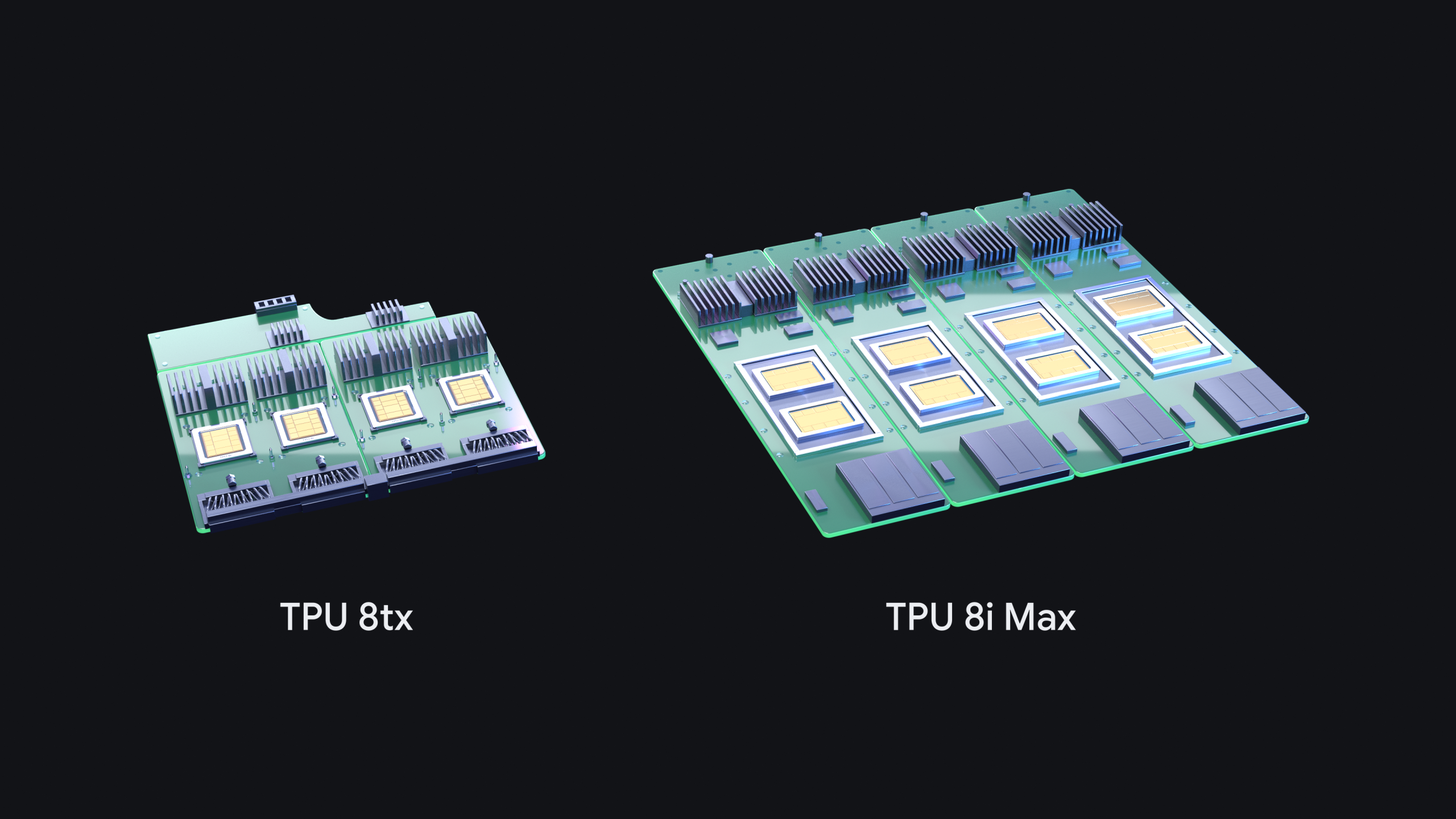
Google's move, as reported by SiliconANGLE, reads as the structural response. Google introduced two new specialized chips for AI to its eighth-generation Tensor Processing Unit family, the 8tx and 8i Max, aimed at higher compute density and secure inference. The report notes that at Google Cloud Next 2026 in April, Google had introduced the 8t for large-scale training and the 8i for real-time reasoning. The pattern is vertical integration: a large US cloud provider designing its own silicon to reduce dependence on merchant accelerators and to tune hardware for specific workloads. The emphasis on secure inference in the new parts is telling. It ties directly to the trust thread, because inference is where models meet users and where verification matters most. For US cloud customers, more custom silicon can mean more choice and potentially better cost control, but it also deepens reliance on a single provider's hardware and software stack.
Verification Moves Into the Silicon
Engadget's report on a prototype camera adds the consumer-facing end of the same thread. The camera embeds cryptographic proof of every photo's origin, described as a silicon fingerprint, to push back against an onslaught of deep fakes. This is chip-level trust made tangible: a hardware root of authenticity rather than a software add-on. The implications for the US market are practical. If provenance is anchored in silicon, then the credibility of digital media becomes a semiconductor feature, and device makers will have to decide whether to build it in. For US consumers, the promise is a way to distinguish authentic images from synthetic ones, but only if such hardware becomes common rather than a prototype.