📣

Advertisement

Google Ad - 970×90 Leaderboard  TOP_LEADERBOARD_4

Cheap Gaming CPUs Meet a Hardening AI Supply Chain
Article

Cheap Gaming CPUs Meet a Hardening AI Supply Chain

Two deep discounts on gaming processors and Huawei's accelerated NPU roadmap point to the same split: consumer CPU pricing is softening while AI silicon tightens.

HemeswariSeptember 22, 20265 min read

Photo: Tom's Hardware

📣

Advertisement

Google Ad - 970×90 Leaderboard  TOP_LEADERBOARD_4

The CPU market in late September 2026 is pulling in two directions at once. On the consumer side, two of the most desirable gaming processors on the market are being discounted hard enough to reset the cost of entry. On the AI side, Huawei is compressing its accelerator roadmap and pulling next-generation Ascend NPUs forward by several quarters. Both stories are about processors, and together they describe a market where desktop gaming silicon is being priced for volume while AI silicon is being paced for a race.

Discounts Are Doing the Work

As Tom's Hardware reported, Newegg is offering a two-item combo that pairs an AMD Ryzen 7 9800X3D with an MSI X870E Gaming Max Wifi motherboard for $578, a $149 saving that the outlet describes as the cheapest way into the AM5 platform with one of the fastest gaming CPUs around. Notably, the processor itself is listed at only $320 within that bundle. This is not a clearance of obsolete inventory. The 9800X3D has been the reference point for gaming performance on the AM5 socket, and a board-plus-chip package under $600 is an unusually aggressive position for a platform that has not been replaced.

A second deal points the same way. Tom's Hardware also flagged an MSI Codex R2 gaming PC at $1,429, down $270, built around an Intel Core i5-14400F with an Nvidia GeForce RTX 5060, 32GB of DDR5, and a 2TB SSD. The CPU here is a 10-core part, and the surrounding memory and storage are generous for the price. The discount is applied to a complete system, not a bare chip, which means the pressure is showing up across the whole build, not just at the processor line item.

Why Gaming CPUs Are Getting Cheaper

The obvious reading is competition, and there is plenty of it. AMD has an established gaming flagship in the 9800X3D, Intel is fielding mainstream parts like the i5-14400F into system builds, and both are competing for the same buyer. That buyer has become harder to move. A $578 board-and-chip bundle and a sub-$1,430 machine with 32GB of DDR5 and a 2TB SSD suggest that the constraint is no longer silicon supply but demand at the high end of the consumer market.

There is a structural element too. Each generation of X3D and Core parts has to justify itself against the previous one, and when the previous one is still fast enough for most games, the newest products have to compete on price rather than on benchmarks. The result is that the entry cost to a genuinely high-end gaming PC keeps falling, even as the underlying components improve. For US consumers, that is close to unambiguously good news in the short term.

Huawei Moves the AI Goalposts

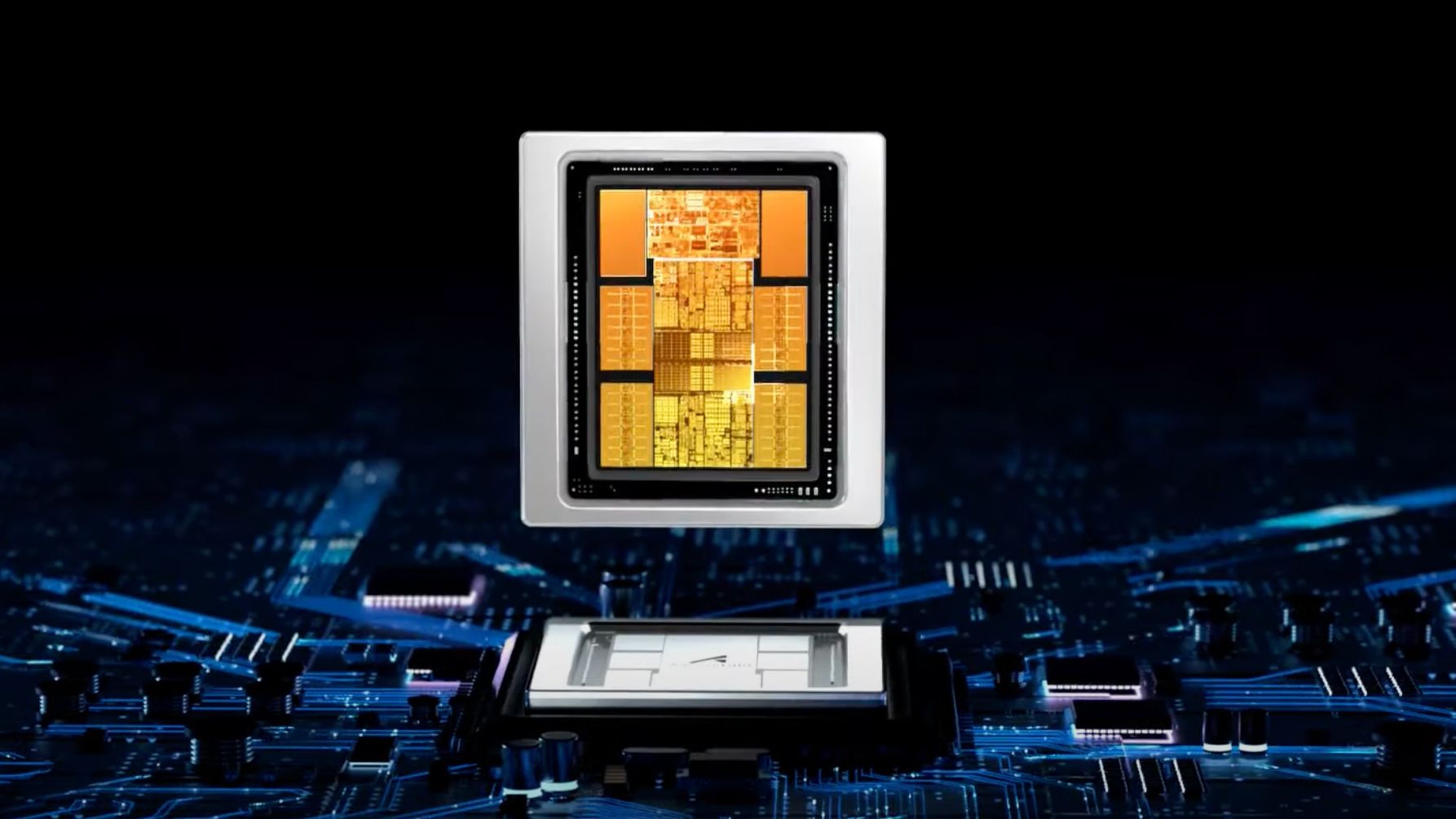
On the same beat, the AI accelerator story runs in the opposite direction. As Tom's Hardware reported, Huawei detailed its AI accelerator roadmap and pulled its next-generation Ascend NPUs in by several quarters, with FP4 performance on the Ascend 960PR doubling expectations. The company also outlined its approach to AI factories, alongside details on Kunpeng CPUs and scale-up and scale-out connectivity. The roadmap mirrors the structure Nvidia has used to sell complete AI systems rather than standalone chips.

The phrase to hold onto is "by several quarters." A roadmap acceleration of that size is not a marketing adjustment. It implies that Huawei believes it can move silicon into deployment faster than previously signalled, and it suggests the company is treating the accelerator cycle as a timing problem to be solved rather than a capacity problem to be waited out. The mention of Kunpeng CPUs within the same disclosure matters as well: this is a pitch for a full stack, not a single part.
Advertisement

📣

728x90

MID_CONTENT_2

Two Speeds of Silicon

The through-line between these stories is not that processors are getting cheaper or that AI is getting faster. It is that the two halves of the processor market have stopped responding to the same signals. In gaming, performance is abundant, differentiation is narrow, and price is the lever. In AI accelerators, performance is scarce relative to demand, differentiation is enormous, and time to deployment is the lever. Huawei pulling its NPU schedule forward is a time-to-deployment move. Newegg pricing an X3D chip and board at $578 is a price move.

That split has consequences for how US chipmakers allocate attention. Consumer CPUs still generate revenue and brand loyalty, but the pricing environment described by these two deals suggests the margins there are being competed away. The AI accelerator business, by contrast, is where a company can still win on schedule and specifications rather than on discounts. Intel and AMD both sit on both sides of that line, which means both are managing a soft consumer pricing environment and a tight AI roadmap calendar at the same time.

What It Means in the US

For US consumers, the immediate effect is straightforward. A gaming PC with an RTX 5060, 32GB of DDR5, and a 2TB SSD for under $1,430, or an AM5 bundle with one of the fastest gaming CPUs for $578, are better entry points than the market has offered recently. Buyers who were waiting on price have more reason to move now, and system builders have cheaper baseline configurations to work from.

For US technology companies, the picture is less comfortable. If consumer processor pricing keeps softening while AI accelerator roadmaps keep compressing, the strategic emphasis inside these firms will continue to tilt toward data center silicon. That does not mean consumer CPUs are abandoned, but it does mean the consumer line is more likely to be used to defend share than to expand margins. Huawei's roadmap acceleration adds a further wrinkle: a faster Ascend cadence raises the competitive bar for anyone selling AI accelerators into markets where Huawei is a factor, and it reinforces the idea that the AI silicon race is being run on schedule, not on discount.

What to Watch

The stories above point to a few concrete things to track. Watch whether the $320 Ryzen 7 9800X3D and the $578 board-and-chip combo remain available or prove to be short promotional windows, since a persistent price at that level would signal a durable shift in AM5 platform economics rather than a temporary sale. Watch the $1,429 MSI Codex R2 configuration, and whether comparable 32GB DDR5 and 2TB SSD builds from other vendors follow it down. And watch whether Huawei's pulled-in Ascend timeline shows up in further roadmap disclosures, particularly around the Kunpeng CPUs and the connectivity components that accompany the NPUs, since a full-stack cadence is harder to accelerate than a single part.

None of these are predictions. They are the next data points that would confirm or complicate the split this month's processor news describes: cheap gaming silicon on one side, fast-moving AI silicon on the other.

More on this beat: Hardware on TechManNews.

Advertisement

📣

728x90

IN_ARTICLE_5

#CPUs#AMD Ryzen#Intel Core#Huawei Ascend#AI accelerators#PC pricing

Newsletter

Get Tech News in Your Inbox

The latest AI, gadgets, software and startup stories from TechManNews, delivered every morning - free.