Big Tech's Next Platform War Is the Sales Workflow

Photo: SiliconANGLE

Article

Big Tech's Next Platform War Is the Sales Workflow

Gong, Apollo and Meta are all pushing agents that execute work rather than advise on it, and that shift defines the current enterprise AI race.

BhavyaSeptember 30, 20265 min read

The thread running through this week's enterprise AI news is not better models. It is the relocation of software from advising people to executing work. Gong is adding agents that carry out sales workflows, Apollo is consolidating a revenue team's daily tasks onto one platform, and Meta is handing Instagram creators an assistant that tells them what to do next. Each move points at the same prize: owning the step where a recommendation becomes an action, because that is where switching costs and pricing power now live.

From Insight To Execution

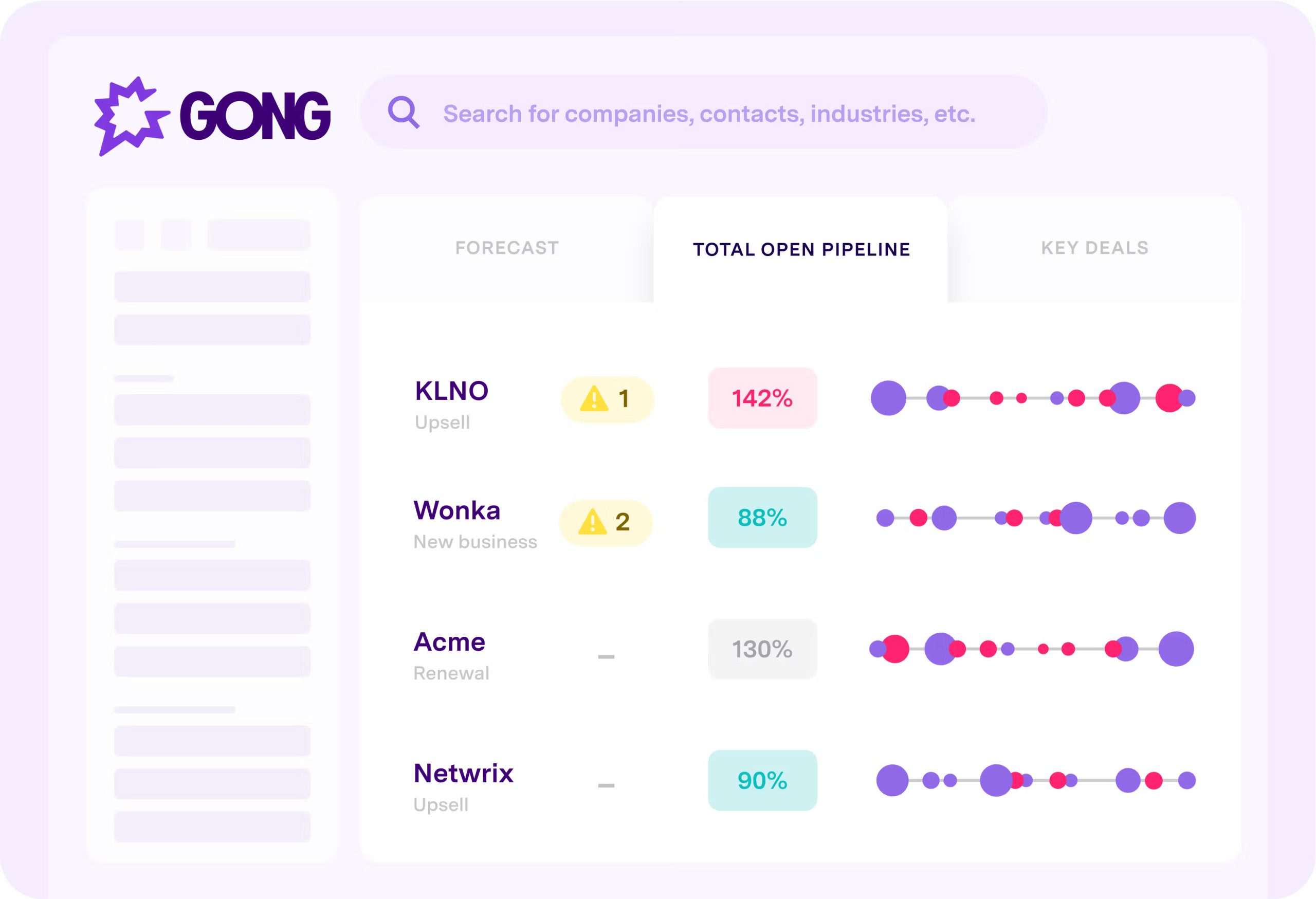
Revenue intelligence tools were built to listen. They recorded calls, scored them, and told a sales manager which deals were at risk. That was a reporting layer sitting beside the systems of record, and it was easy to rip out. Gong's launch of Mission Callisto, part of its Gong Enrich data enrichment platform, moves the company in the other direction, according to SiliconANGLE. Mission Callisto pulls third-party account and contact data into its Revenue Graph, and the broader platform update adds event-driven agents that automatically execute sales workflows. The distinction matters. A tool that flags a stalled deal competes on dashboard quality. A tool that writes the follow-up, updates the record and triggers the next step competes on whether removing it would break the process.

Apollo Attacks The Same Problem From The Bundle Side

Apollo's launch, also covered by SiliconANGLE, is framed around tool sprawl. Its argument is that sales organizations assembled software one product at a time and ended up with a different vendor for each function. Apollo's answer is an AI app builder, an intelligence layer and a signal-based outreach system, all positioned as a way to move more of a revenue team's daily work onto a single platform. Read next to Gong's announcement, the two companies are converging from opposite ends. Gong starts with data and adds execution. Apollo starts with a bundle and adds intelligence. Both conclude that the durable position is the one where the work actually happens.

Meta Makes The Same Bet For Creators

Meta's new Edits assistant for Instagram creators, as Engadget reported, offers personalized guidance based on a creator's audience and best-performing content. The surface is consumer, not enterprise, but the logic is identical. Instagram already hosts the audience, the distribution and the analytics. Adding an assistant that recommends what to post next turns a passive dashboard into a directing layer. If creators begin treating those recommendations as the default starting point for their output, Meta gains influence over what gets made, not just what gets shown. That is the same jump Gong and Apollo are attempting, executed on a different population.

Why This Is Happening Now

The common enabler is that the data needed to trigger an action already sits inside these platforms. Gong has call recordings, email and now third-party enrichment feeding a Revenue Graph. Apollo has the contact and account records its customers already keep there. Meta has engagement data on an enormous scale. For years that data powered retrospective reports. What changed is that models can now generate the next step directly from it and route that step into an existing workflow. The vendors do not need new distribution. They need the action to feel native, and each of this week's announcements is an attempt to make it so.

What It Means For US Technology Companies

The strategic consequence is that the boundary between analytics, automation and the system of record is collapsing in the enterprise. US buyers have spent a decade assembling best-of-breed stacks, and the vendors are now arguing that the assembly itself was the mistake. Apollo says so explicitly in its framing of tool sprawl. Gong implies it by adding the execution layer on top of data it already holds. For American software companies, this raises the stakes on owning the workflow rather than the insight, because insight alone is becoming a commodity that a competitor's agent can reproduce from the same underlying records.

There is also a consolidation pressure that cuts against the smaller vendors in these stacks. If a platform can enrich its own data, analyze it and then act on it, the case for a separate enrichment provider, a separate analytics tool and a separate sequencing tool weakens. That is a direct threat to the mid-market SaaS companies that built businesses on one slice of the revenue workflow. The counterargument is that buyers distrust single-vendor dependence, particularly when the vendor is also the one executing customer-facing communication. How that tension resolves will shape which of these companies are still independent in a few years.

For US consumers, the Meta example is the more visible one. An assistant that recommends what to post is helpful in the same way a recommendation feed is helpful, and it carries the same structural effect: it steers behavior toward whatever the platform's model favors. Creators gain guidance and lose some latitude over what they try. That trade is familiar from every recommendation system deployed at scale, but it becomes more consequential when the system is suggesting the creative work itself rather than merely ranking it after the fact.

The Trust Problem Nobody Has Solved

Agents that execute carry a different failure mode than dashboards that inform. A bad risk score irritates a sales manager. A bad automated outreach sequence emails the wrong contact, or the right contact with the wrong message, and the customer sees it. Gong's event-driven agents and Apollo's signal-based outreach both put software in a position to speak on a company's behalf without a human approving each message. Neither announcement, as described, settles how errors are caught, how actions are attributed, or who is accountable when an automated sequence damages a relationship. Those questions are the practical limit on how far this shift can run.

What To Watch

The next signal is whether these agents ship with meaningful controls or as default-on automation, because that choice reveals how confident the vendors are in the reliability of the underlying models. Watch whether Gong's enrichment and agent layer gets sold as an upgrade to existing seats or as a separate product, which would indicate how the company expects to price execution versus insight. Watch whether Apollo's app builder attracts customers who were not already using its outreach tools, since that is the real test of the anti-sprawl argument. And watch how Meta describes the Edits assistant over time, specifically whether it remains advisory or begins to shape what creators publish by default. Each of these is a concrete indicator of whether the platform war has genuinely moved to the point of execution, or whether this week's launches were positioning ahead of demand that has not yet arrived.

More on this beat: Companies on TechManNews.

#Enterprise AI#Sales Software#AI Agents#Gong#Apollo#Meta

Newsletter

Get Tech News in Your Inbox

The latest AI, gadgets, software and startup stories from TechManNews, delivered every morning - free.