📣

Advertisement

Google Ad - 970×90 Leaderboard  TOP_LEADERBOARD_4

Big Software's Small Bets Are Coming Back as Hand-Me-Downs
Article

Big Software's Small Bets Are Coming Back as Hand-Me-Downs

Adobe, Microsoft, Google and a solo developer all moved the same way this week: toward narrower tools, open code and platforms they no longer fully control.

BhavyaSeptember 22, 20265 min read

Photo: Wired

📣

Advertisement

Google Ad - 970×90 Leaderboard  TOP_LEADERBOARD_4

The Thread

The software industry's biggest players spent the last two days making smaller, more portable versions of things they already own. Adobe put Premiere on Android, Microsoft began retiring three Microsoft 365 companion apps, Google's Intrinsic unit open-sourced its robotics foundation, and the original author of Windows Task Manager shipped a macOS and Linux rewrite. The common thread is retreat from the walled garden: distribution is widening, ownership is loosening, and the value is moving to the core tool rather than the surrounding ecosystem.

Adobe Stops Treating iPhone as the Frontier

Adobe's Premiere launch on Android, reported by Wired, is framed as a mobile expansion, and it is. But the detail that matters is the layout work: the Android version has unique layouts for candy bar phones and foldable devices, and it is free to use, available today. A free, form-factor-aware Premiere on Android is not a premium upsell. It is Adobe conceding that casual video editing on phones is a market it must defend on the platform's terms rather than a funnel into its subscription desktop suite.

For US consumers, the practical effect is that a capable editor now ships free on the phone they already own, on the platform that used to be Adobe's second priority. For US technology companies, the signal is sharper. When the incumbent's mobile strategy shifts from porting a paid product to shipping a free one with bespoke layouts, the monetisation has moved elsewhere, likely to cloud services, storage or AI features that the launch material does not describe. The headline is the app; the business model is the question the announcement leaves open.

Microsoft Retires the Glue Around the Suite

Microsoft's decision to retire the Calendar, People and Files Microsoft 365 companion apps on December 16, and to ask administrators to remove them from managed devices, is the mirror image of Adobe's move. Reported by BleepingComputer, it removes three narrow, single-purpose applications from the managed-device surface. Each one existed to make Microsoft 365 feel like a coherent system rather than a collection of services. Microsoft is now willing to let that glue go.

There are two readings, and the material does not settle between them. Either these apps duplicated functions already delivered through Outlook, Teams or the web, or Microsoft has concluded that IT administrators no longer want small companion binaries on managed endpoints. Both point the same direction: fewer installed artifacts, more browser and service delivery. For US enterprises, the immediate work is administrative, since the company has explicitly told admins to remove the apps from managed devices. The longer-term effect is a Microsoft 365 installation that looks less like an office suite and more like a set of authenticated web endpoints, which changes both the deployment model and the competitive surface for third-party tools that plugged into those companions.

Intrinsic Gives Away the Foundation

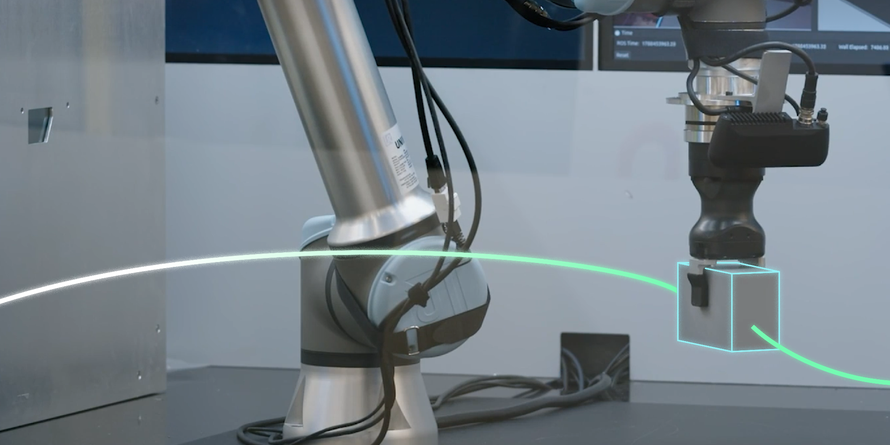
The most consequential item on this desk is Google's Intrinsic open-sourcing the core components of its industrial robotics platform under the permissive Apache 2.0 licence, announced at ROSCon 2026 in Toronto, as SiliconANGLE reported. Intrinsic Innovation LLC is owned by Alphabet, and the offering is called Intrinsic Core. Giving away foundational infrastructure under a permissive licence is a deliberate choice about where value accrues: not in the base layer, which becomes a commodity that everyone can build on, but in whatever runs above it, where Google can still compete.

Advertisement

📣

728x90

MID_CONTENT_2

For the US robotics market, permissive licensing lowers the cost of starting an industrial robotics company, because the foundation is no longer a licence negotiation. It also makes Intrinsic Core a candidate standard, and standards shape which vendors US manufacturers choose. The caveat is that permissive licences let competitors build closed products on top of open foundations without contributing back, so the arrangement is generous and strategic at once. Google is trading control of the substrate for influence over the ecosystem that sits on it, a trade that only makes sense if the company expects the substrate to stop being a differentiator.

The Task Manager Rewrite Shows the Same Logic From Below

Dave Plummer, who wrote the original Windows Task Manager at Microsoft three decades ago, has built a new version that runs on macOS and Linux as well as Windows, according to Engadget, and has described it as vibe coded. This is the smallest story here and the cleanest illustration of the pattern. A Microsoft-authored utility that was once a Windows landmark is now a cross-platform tool written by its original author outside Microsoft.

The detail that a thirty-year-old utility is worth rebuilding for three platforms says something about how durable the underlying task remains, and how little the platform boundary matters to it. It also illustrates what the other stories show at scale: competence that used to require an operating system vendor can now be reproduced by one person, targeting every major platform at once. For US developers, that is an argument for building portable tools rather than platform-specific ones. For platform vendors, it is a reminder that the utilities they once bundled as lock-in are now table stakes that anyone can supply.

What It Means in the United States

The through-line for US technology companies is that defensive moats built from bundled, platform-specific software are getting thinner. Adobe is giving away a mobile editor with hardware-specific layouts. Microsoft is deleting companion apps rather than defending them. Google is publishing robotics infrastructure under a licence that permits almost anything. None of these are retreats from the market; they are relocations of where each company expects to be paid.

For US consumers, the near-term effects are mostly positive and mostly free. A capable Android video editor costs nothing, and the number of small, unwanted Microsoft 365 binaries on corporate laptops is going down. The cost is subtler: when the base layer is free or open, the paid layer moves up the stack, and up-stack pricing is harder to compare across vendors. For US enterprises, the practical consequences are concentrated in device management and procurement, where the retirement notice and the open-source release both create decisions that administrators and engineering leads have to make on their own timelines.

What to Watch

The dates and deliverables in these stories are the places to look next. Microsoft's December 16 retirement of the Calendar, People and Files companion apps is a fixed deadline, and the removal of those apps from managed devices will show whether administrators treat them as redundant or as functions that need replacement. Adobe's free Premiere build for Android will be measured by what Adobe charges for elsewhere in the product, since the announcement does not describe the paid layer. Intrinsic Core's Apache 2.0 release will be measured by adoption at ROSCon 2026 and afterward, and by whether US robotics firms build products on it or merely evaluate it. And Plummer's cross-platform Task Manager is a small test of whether a single developer can hold the attention that a platform vendor once held by default. Each is a case of a company giving ground on the layer it used to own, and each will show how much that ground was worth.

More on this beat: Software on TechManNews.

Advertisement

📣

728x90

IN_ARTICLE_5

#Software Strategy#Open Source#Mobile Apps#Enterprise IT#Robotics#Platform Economics

Newsletter

Get Tech News in Your Inbox

The latest AI, gadgets, software and startup stories from TechManNews, delivered every morning - free.