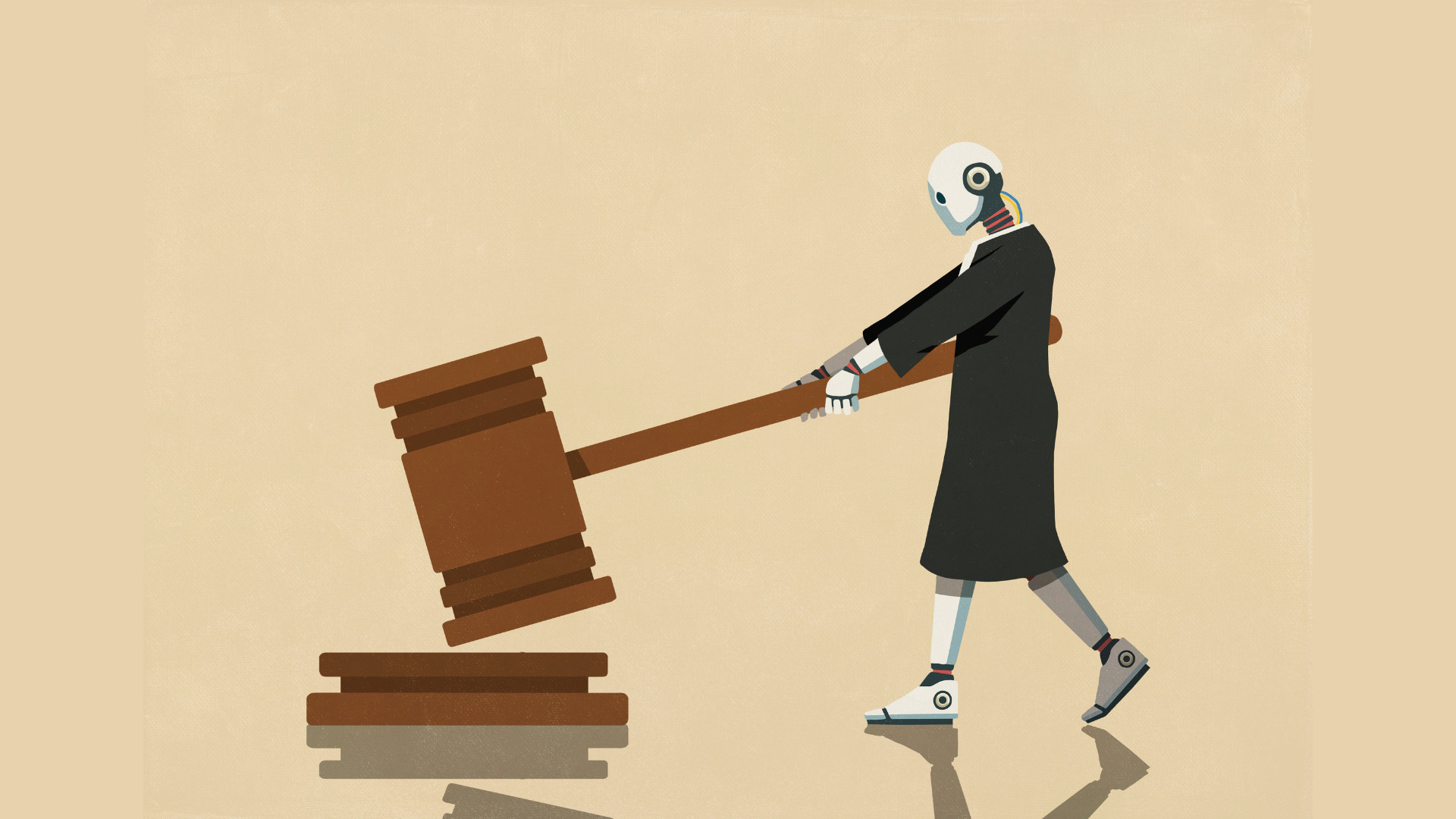
The same week that Washington rebranded artificial intelligence as "super intelligence" and staged a CEO pledge-signing at the White House, California's attorney general subpoenaed OpenAI over hacking linked to its models. Read together, the stories describe an industry that is reorganizing its language and its packaging far faster than it is settling who answers for what its systems do. The pattern is not that AI is dangerous or safe; it is that the definitions and the accountability are being pulled in opposite directions at once.
A rename is a governing choice
TechCrunch reported that President Trump signed an executive order officially rebranding AI as "super intelligence," and that the White House gathered CEOs including Zuckerberg, Bezos, Musk and Anthropic's Dario Amodei to sign an AI safety pledge the president called "morally binding." The label matters because it sets the frame for everything downstream: procurement language, agency guidance, investor theses and the public's expectations. "Artificial intelligence" describes a class of tools; "super intelligence" implies a class of actors. One framing invites supervision and liability. The other invites deference. In the same week that the administration softened the noun, it attached a pledge that is, by its own description, moral rather than legal. That is a governing posture as much as a marketing one, and it lands on a US market in which the federal government is both a major customer and the loudest voice in the room.
The consumer signal is not matching the rhetoric
TechCrunch also noted that only about 2 percent of consumers are buying into the AI story, even as Meta and OpenAI put friendlier faces on their products. That gap is the context for everything else. Consumers are being offered warmth and personality while the industry's most consequential commercial battle plays out over enterprise contracts, model access and infrastructure. For US consumers, the practical effect of the rebrand is likely to be confusion rather than clarity: the interface gets a friendlier name and a companionable tone, while the terms under which the underlying system can be used, audited or held liable remain contested. A friendlier face is not a stronger warranty.
California tests the liability question directly
Against that backdrop, Tom's Hardware reported that California Attorney General Rob Bonta issued a subpoena to OpenAI compelling information about hacking incidents involving its models. Investigators have not determined whether the company broke any rules, and Bonta's stated position is that developers are responsible for the models they build and should be held legally accountable if those models perpetrate cyberattacks. This is the sharpest counterpoint to the week's federal messaging. A pledge described as morally binding is a reputational instrument; a subpoena is a legal one. If the state's theory holds, the unit of accountability is the developer - not the model, not the prompt, not the user. For US technology companies, that would push diligence, logging and control obligations upstream to the firms training and deploying the systems, a materially different cost structure than a voluntary pledge implies.