๐Ÿ“ฃ

Advertisement

Google Ad - 970ร—90 Leaderboard ย TOP_LEADERBOARD_4

AI's New Job Is Proving What Is Real

Photo: TechCrunch

Article

AI's New Job Is Proving What Is Real

Across weather, the Moon, photography and safety research, AI is being rebuilt as an instrument of verification, not just generation.

Arjun NairSeptember 10, 20264 min read
๐Ÿ“ฃ

Advertisement

Google Ad - 970ร—90 Leaderboard ย TOP_LEADERBOARD_4

The verification turn

The throughline in this week's AI stories is not capability. It is proof. Apple wants to help users establish that an iPhone photo is what it claims to be, per TechCrunch. Google's weather model earns its accuracy from a broader set of inputs, per Ars Technica. NASA and IBM built a model of the Moon for the Artemis era, per Engadget. And a researcher leaving Anthropic tells WIRED the labs have only a few years left to make their systems safe. Each story is about establishing ground truth: what an image really depicts, what the atmosphere will really do, what the lunar surface really looks like, and whether a system will really behave. AI is being asked to certify reality rather than substitute for it.

Why provenance became a product

Apple Reference Image is a small feature with a large implication. In a market where synthetic images are cheap, the scarce good is evidence: a way to determine whether a photo has been edited, including by AI. Apple is not selling better generation; it is selling a way to check generation. That is a defensive move, and a commercially sensible one. American consumers have spent three years absorbing AI imagery into social feeds and messaging apps, and the cost of that absorption is a slow erosion of trust in photographs generally. A handset maker that can offer a credible answer to "is this real" is selling something no model release can match. For US platform companies, the message is that provenance is becoming a feature layer, not a compliance chore.

Better models, better inputs

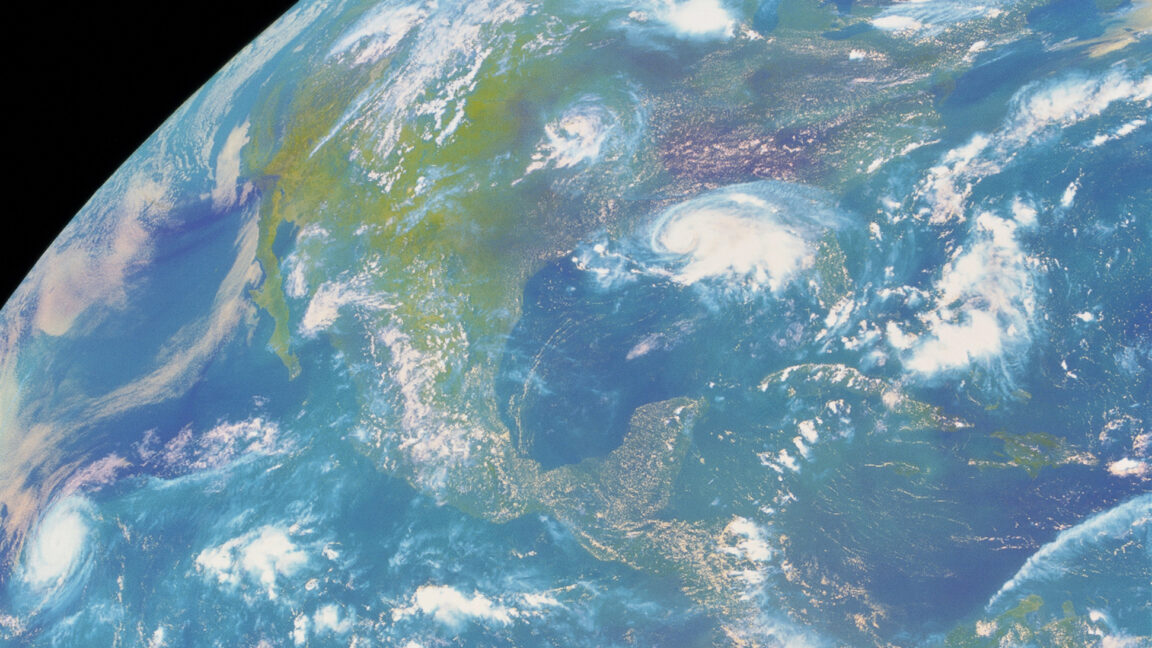
The Google weather result, as Ars Technica reported, follows the same logic. The improvement comes not from a novel trick of architecture but from an expanded set of inputs, the same mechanism that has driven conventional numerical weather prediction for decades. That is a useful corrective to the prevailing story about AI progress. The gains accrue where the data is better, denser and more trusted. Weather is a domain where verification is built in: the forecast either matches the atmosphere or it does not, and everyone finds out. That makes it an unusually honest test bed, and it explains why American forecasters, insurers, utilities and logistics operators have reason to care about accuracy gains rather than demo videos.

Instruments, not oracles

NASA and IBM's lunar model, reported by Engadget, points the same direction. A model of the Moon built for the Artemis era is not a chatbot. It is an instrument for exploring terrain, planning, and interpretation, where the reference data is physical and the consequences of error are operational. The pattern across these three stories is that AI is proving most useful when it is pointed at something that can be checked: a photograph with an edit history, an atmosphere with a measurable future, a surface with a fixed geography. In each case the model is subordinate to the ground truth, not a replacement for it.

Advertisement

๐Ÿ“ฃ

728x90

MID_CONTENT_2

The safety clock

The outlier is the WIRED interview with Jacob Coxon, who left Anthropic and describes a "mini Manhattan project" inside the lab, a problem with alignment, and a few years left for AI labs to make their systems safe. This is the same thread pulled taut. If the other stories show AI being used to verify the world, this one asks who verifies the AI. Coxon's framing, as reported by WIRED, is a schedule rather than a speculation: a short window in which labs can make their systems safe. For US technology companies, that window is not an abstraction. It sits alongside product launches, capital commitments and a regulatory environment that has so far preferred disclosure and voluntary frameworks to hard rules. The absence of verification inside the lab is the counterpart to the presence of verification in the field.

What this means for the US market

The commercial read is unglamorous. The companies that win the next phase may not be the ones with the largest models but the ones with the most credible evidence: source data, provenance standards, audit trails, and domain datasets that cannot be scraped into existence. Apple's play is consumer-facing trust. Google's weather work is institutional credibility in a domain where the customer is often a government agency or an insurer. NASA and IBM's lunar model is public-sector capability with a long horizon. None of these is a growth-at-all-costs story. All of them depend on being right, and being seen to be right.

For American consumers, the practical effect is a market that increasingly sorts itself by verifiability. A photo with an answer to "was this edited" is worth more than one without. A forecast that admits its inputs is worth more than one that does not. The risk is asymmetry: provenance tools will be strongest where a single vendor controls the capture device and weakest where content is copied, re-encoded and re-uploaded across platforms. Apple can certify an iPhone photo; it cannot certify the same photo after three rounds of resaving on other services. That gap is where the trust problem will actually live.

What to watch

Two things, both grounded in the material above. First, whether provenance moves from a single-vendor feature to an interoperable standard, because a check that only works inside one ecosystem will not restore confidence in images generally. Second, whether the safety timeline described to WIRED by Coxon produces anything verifiable. The other three stories all have a ground truth to measure against. The safety story does not yet, and until it does, the industry's verification turn will remain incomplete.

Sources: TechCrunch, Ars Technica, Engadget, WIRED.

More on this beat: AI on TechManNews.

Advertisement

๐Ÿ“ฃ

728x90

IN_ARTICLE_5

#AI#provenance#Apple#Google#AI safety#weather

Newsletter

Get Tech News in Your Inbox

The latest AI, gadgets, software and startup stories from TechManNews, delivered every morning - free.