AI Hardware's Cost Is Moving From the Chip to the Community
Article

AI Hardware's Cost Is Moving From the Chip to the Community

Three stories about GPUs, data centers and quiet companies point to one shift: the AI hardware bill is being renegotiated in public.

SuryaOctober 4, 20265 min read

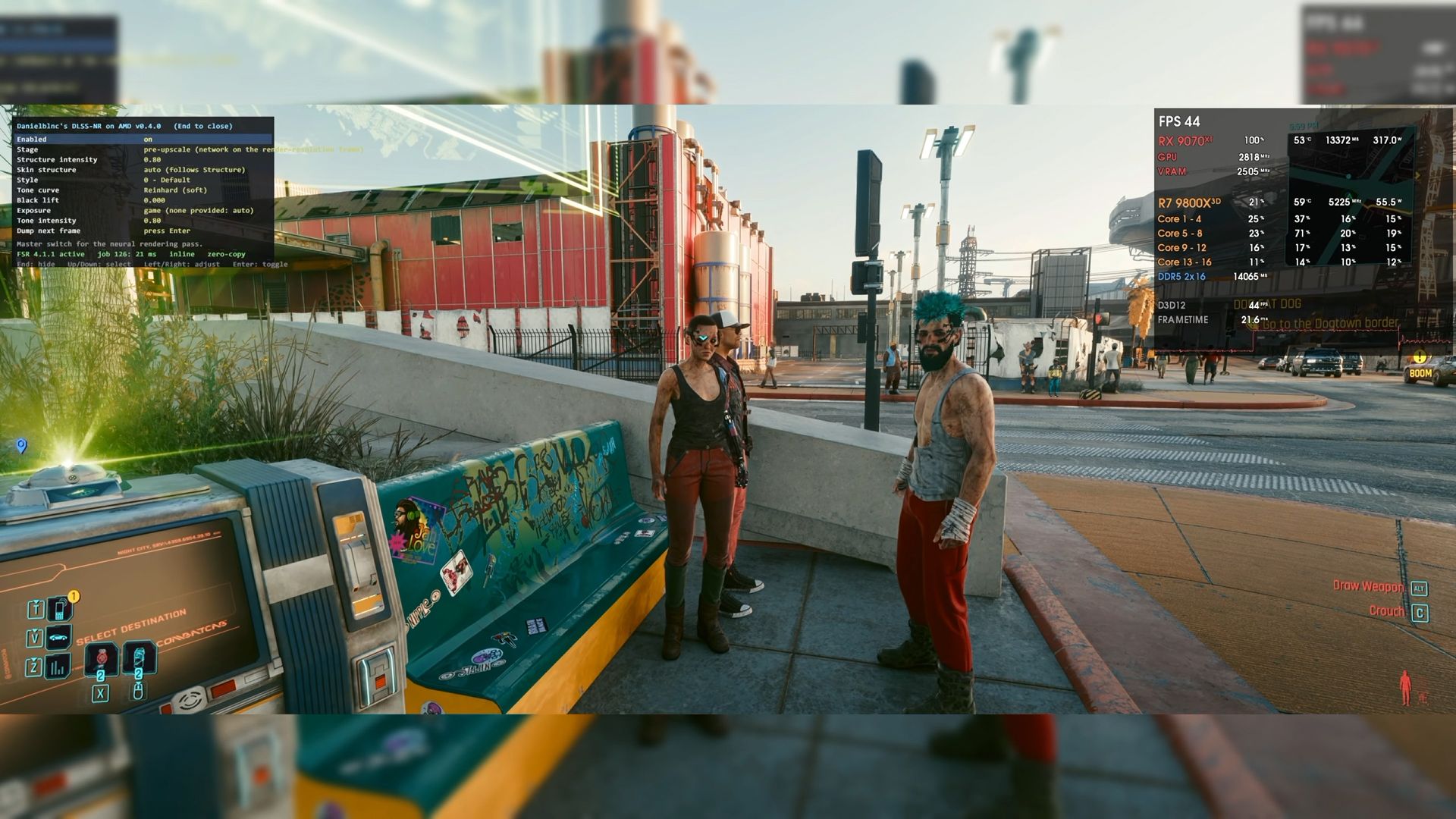
Photo: Tom's Hardware

The GPU story is no longer only about silicon. Three recent items on this beat - an unofficial port of Nvidia's DLSS 5 to AMD Radeon cards, church groups pressing Microsoft over data center costs, and climate groups trying to attach themselves to the data center backlash - describe the same movement: the costs of AI hardware are migrating outward, from the chip to the grid, the neighborhood and the operating system, and the companies that own that stack are being asked to account for it in public.

The Card Is No Longer the Whole Product

Tom's Hardware reported that an unofficial project has brought Nvidia's DLSS 5 neural rendering to AMD Radeon GPUs, with early testing showing performance in Cyberpunk 2077 climbing from around 30 FPS to 50 FPS after rapid optimization. That is a striking result, and it is striking precisely because it happened outside the vendor's own stack. Neural rendering was marketed as a reason to buy into a particular GPU family. When it can be ported to a rival's hardware by outsiders, the feature stops being a moat and starts being a layer.

For US buyers, that changes the calculus. A radeon owner who was told the best upscaling was exclusive to the other camp now has evidence, admittedly unofficial and early, that the gap is partly software policy rather than physics. For US GPU makers, the implication is less comfortable. If the headline capability of a generation can be reproduced by volunteers, then the durable differentiator is not the feature itself but the support, validation and driver work that surrounds it - the unglamorous part that does not show up in a launch keynote.

That is a cost shift. The burden of keeping a card useful over its lifetime moves from the buyer, who used to accept that a card ages out, to the vendor, who now has to compete against community work that never ships a bill.

Data Centers Are Now a Local Issue

Ars Technica reported that Microsoft went quiet after church groups asked for 1% of data center costs, with one line of criticism capturing the mood: "Microsoft claims to want to be a good neighbor, but the jury is still out." The specific figure matters less than the mechanism. A community group has stopped treating a data center as a remote industrial facility and started treating it as a line item in its own budget - power, water, road wear, noise, land.

This is the same migration of cost seen in the GPU story, one layer up. The compute that trains and serves AI models is not free to the place it sits. It draws from the same grid that heats homes and runs hospitals, and it competes for the same municipal attention. When church groups, of all constituencies, are the ones doing the arithmetic, the argument has escaped the tech press and entered the civic one.

For US technology companies, the practical consequence is that a data center is no longer a permit and a power purchase agreement. It is a negotiation with people who can attend a zoning meeting. For US consumers, the consequence is that the price of AI is partly decided locally - in rate cases and town halls - rather than only in a chipmaker's pricing sheet.

The Climate Argument Has Not Landed Yet

Wired reported that climate groups are latching onto the data center opposition movement, but that it remains to be seen whether they can get people to care about the facilities' impact on the atmosphere. That is an honest read of where the politics stands. The opposition that exists is real but its drivers are local and immediate - cost, noise, land - while the climate frame is global and slow.

The gap matters for the hardware beat because it determines which costs become enforceable. A neighborhood worried about its electricity bill can win a concession. A movement worried about emissions has to convert that concern into the same kind of local arithmetic, or it stays a press release. Until that conversion happens, the data center backlash will shape where facilities go and what they pay, but not necessarily how much carbon they emit.

Why the Three Stories Are One Story

The unofficial DLSS 5 port, the church groups' 1% request and the climate groups' search for traction are usually filed under different desks: enthusiast software, local politics, environment. On this beat they are the same event. Each describes a party outside the AI hardware supply chain asserting a claim on it - users claiming the right to features they were told were exclusive, towns claiming a share of the revenue, climate advocates claiming a stake in the externalities.

What unites them is that none of these claims can be settled by shipping a faster chip. They are claims about distribution: who gets the performance, who gets the money, who absorbs the cost. The AI hardware industry spent several years answering only the first question. The three stories suggest the other two are now on the table.

What This Means for US Companies and Buyers

For US GPU vendors, the lesson from the DLSS port is that software locks are contestable and that community work can undermine a premium tier without any competitor lifting a finger. The rational response is to compete on the quality and longevity of support rather than on exclusivity, because exclusivity is the part outsiders can copy.

For the hyperscalers building in the United States, the Microsoft episode is a warning about silence. Ars Technica's account is notable less for the demand than for the response: a company that had positioned itself as a good neighbor declining to engage. In a permitting environment where local groups now do their own math, quiet is read as an answer.

For US consumers, the through-line is that the AI buildout is starting to appear on bills and ballots they can see. The performance they get from a graphics card is increasingly a function of unofficial work and vendor policy. The power that card's workloads consume is increasingly a function of local negotiation. Neither of those is a spec sheet number.

What to Watch

Watch whether the DLSS 5 port to Radeon matures from a test case into a maintained project, since that determines whether neural rendering becomes a commodity layer or remains a vendor lever. Watch whether Microsoft responds to the church groups' request for 1% of data center costs, and whether other operators face the same question, given that Ars Technica reported the company has so far gone quiet. Watch whether climate groups find a way to fold emissions into the local cost arguments that are already winning concessions, which Wired reported they have not yet managed. And watch whether any of this shows up in how US GPU and data center companies talk about their products - as performance alone, or as performance plus what it costs the places it lands.

More on this beat: Hardware on TechManNews.

#GPUs#AI Hardware#Data Centers#Nvidia#AMD

Newsletter

Get Tech News in Your Inbox

The latest AI, gadgets, software and startup stories from TechManNews, delivered every morning - free.