AI Hardware Value Has Outrun Its Physical Reality

Photo: Engadget

Article

AI Hardware Value Has Outrun Its Physical Reality

Three recent stories show that the AI hardware boom now runs on perceived value, not physical scarcity - and that gap is reshaping the US market.

NagiOctober 2, 20264 min read

The AI hardware boom has reached a point where the value of a product is determined less by what it physically is than by what buyers believe it to be. Three recent stories on this beat - a $16,000 workstation GPU that consumers cannot practically buy, a failed 40,000-acre data center project, and thieves who stole trailers expecting GPUs and found sand - all point to the same underlying condition. The market is pricing AI hardware on narrative and scarcity, and that pricing is increasingly detached from the physical reality of the goods themselves.

The Workstation GPU That Is Not For You

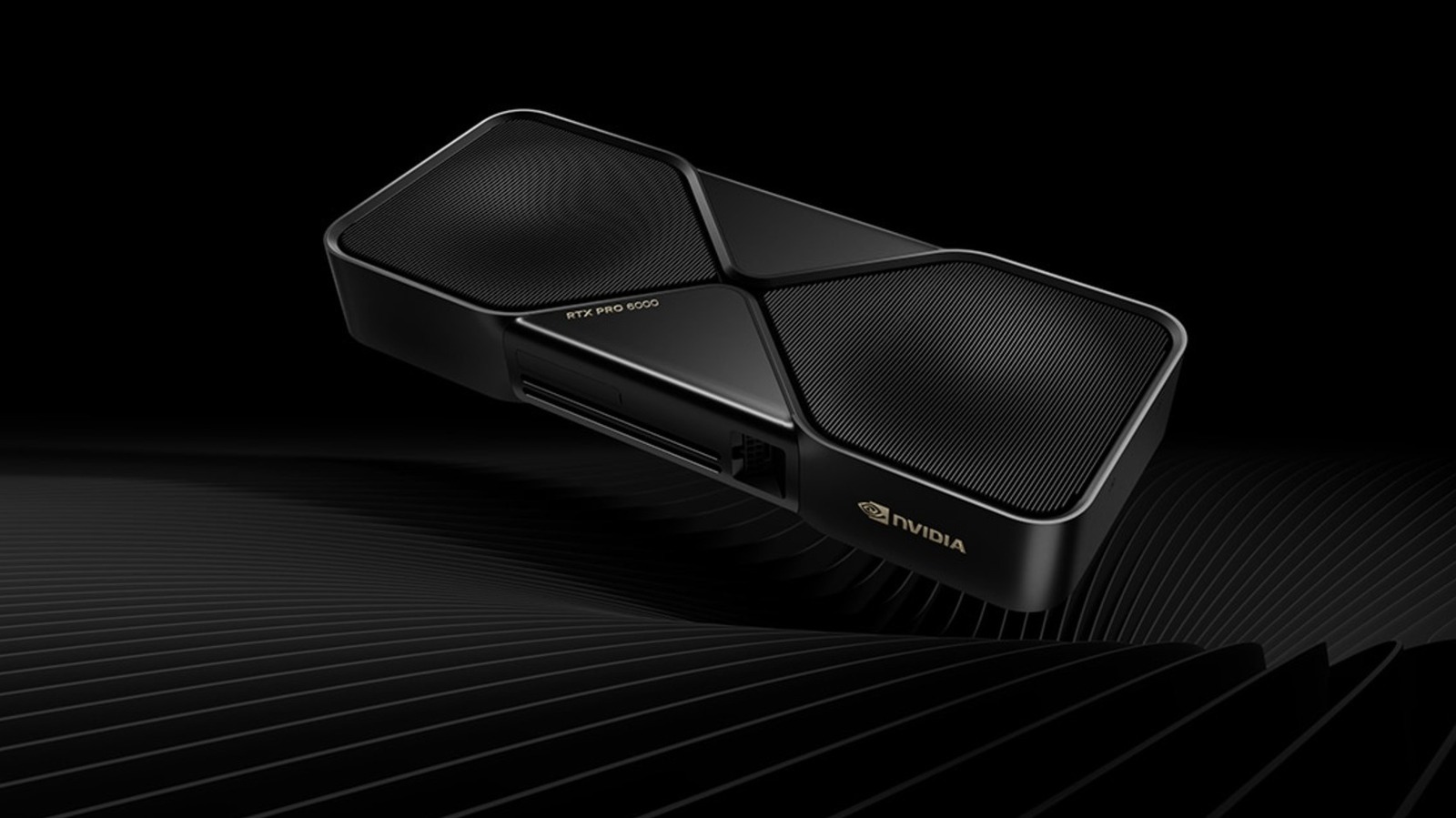
Engadget recently reported that NVIDIA's $16,000 RTX PRO 6000 can outperform the RTX 5090, yet it is rarely sold to consumers, because gamers are not who it is built for. That single fact is a compact statement of how the AI hardware market now allocates its best silicon. The most capable chips do not flow to the largest addressable consumer audience. They flow to the buyers whose economics justify the price - enterprises, research labs, and AI infrastructure operators. For US consumers, the practical consequence is a two-tier hardware market in which the flagship product on a spec sheet is not the flagship product on a store shelf. The gap is not a supply accident. It is a deliberate allocation decision, and it tells consumers that their position in the queue is structurally lower than they might assume.

When Infrastructure Ambition Outpaces Infrastructure

The Verge published a months-long investigation into Kevin O'Leary's Utah data center debacle, examining plans for what was pitched as the world's biggest data center - a 40,000-acre AI campus with nine gigawatts of power, or more than double the average power usage of a comparable facility. The scale of the ambition is the point. A nine-gigawatt campus is not a data center in any conventional sense; it is a piece of national infrastructure, and it depends on land, power, water, permits, and local tolerance that no single company controls. The investigation's framing - a debacle - suggests the gap between the announcement and the delivery. For US technology companies, the lesson is that the constraint on AI capacity has shifted away from chips and toward the physical and political preconditions of building at that scale. For US consumers and ratepayers in host regions, the same projects raise questions about who absorbs the cost of the power and land involved.

Sand In The Shape Of A GPU

The third story is the most literal illustration. Tom's Hardware reported that thieves stole two PlusAI trailers bearing Nvidia-partner markings, expecting a massive AI GPU payday, and instead made off with 40,000 pounds of sand. The trailers had been deliberately left outside the startup's warehouse as a target, and they contained sand used to simulate real-world truck loads. The criminals were not responding to a manifest. They were responding to a logo and a category. That is the cleanest available evidence that in 2026, the marker of AI hardware value - the Nvidia name on the side of a trailer - has become sufficiently powerful that it generates criminal behavior on its own, independent of the cargo. The markup carried more signal than the contents.

The Common Thread

Read together, the three stories describe a market where the signifier and the substance have separated. Engadget's workstation GPU shows that the best hardware is real but not distributed to consumers. The Verge's Utah investigation shows that the promised scale of AI infrastructure can be announced long before it is deliverable. Tom's Hardware's sand heist shows that the perceived value of AI hardware is now strong enough to motivate theft regardless of what is inside the box. In each case, the expectation outruns the object. That is not a temporary glitch. It is a structural feature of a market where demand is driven by AI capability claims, and where the hardware itself is scarce, expensive, and unevenly allocated.

Why This Matters For The US Market

For US technology companies, the pattern cuts two ways. It confirms pricing power for the firms that control scarce AI silicon, but it also raises the cost of credibility. A market that prices on narrative invites overpromising, and the Utah project shows what happens when the narrative meets land, power, and local opposition. Companies that announce gigawatt-scale campuses now carry a higher burden of proof than they did when AI capacity was a simpler story.

For US consumers, the effects are more concrete. The best consumer-adjacent GPUs are being diverted to commercial buyers at prices that individual purchasers cannot match, as the RTX PRO 6000 example shows. Power and land commitments made for AI campuses can affect regional electricity costs and land use, which is why the Utah investigation matters beyond its protagonist. And the sand heist, while almost comic, reflects a real secondary effect: when a brand becomes a proxy for value, fraud and theft follow the brand rather than the product.

What To Watch

Three indicators follow directly from the stories above. First, whether the allocation gap between workstation-class GPUs like the RTX PRO 6000 and consumer cards like the RTX 5090 narrows or widens - the answer determines whether US consumers ever see the top of the stack. Second, whether large AI campus announcements in the US continue to outpace their power, land, and permitting realities, as the Utah case suggests. Third, whether cargo theft and fraud continue to target AI branding rather than verified AI inventory, which would confirm that the market's pricing signal has permanently decoupled from the physical good.

The through-line is not that AI hardware is overhyped. It is that the hardware's value now travels ahead of the hardware itself, and the institutions - chipmakers, developers, buyers, and law enforcement - are still catching up.

More on this beat: Hardware on TechManNews.

#NVIDIA#AI Hardware#GPUs#Data Centers#US Tech Market#Supply Chain

Newsletter

Get Tech News in Your Inbox

The latest AI, gadgets, software and startup stories from TechManNews, delivered every morning - free.