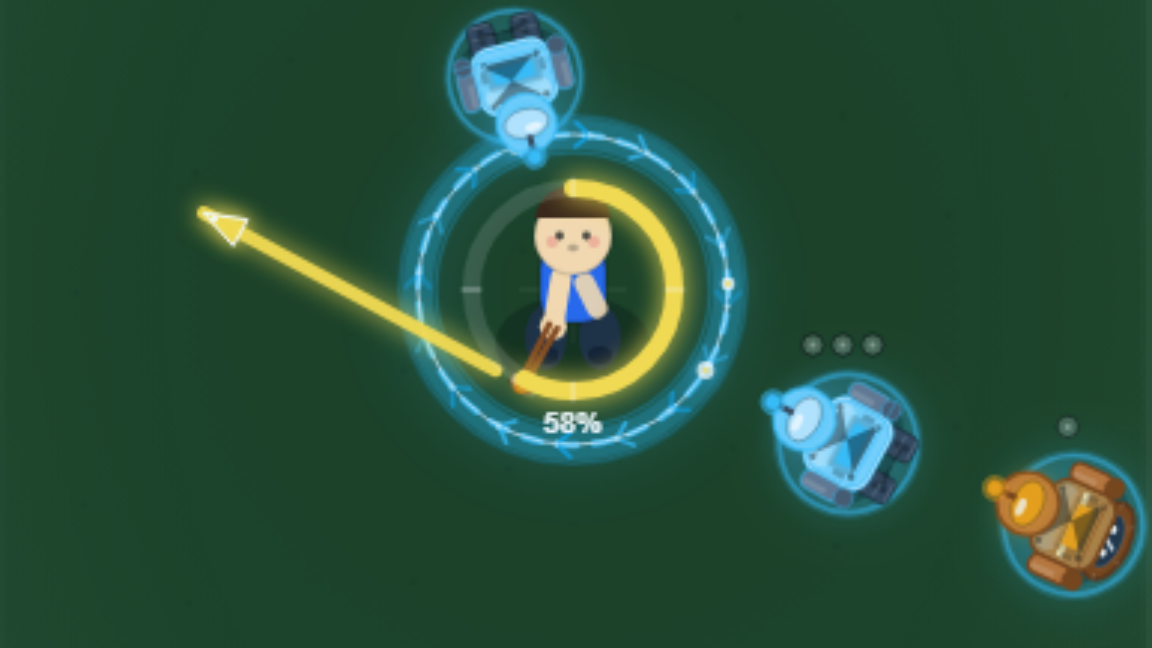
Meta launched Pocket in the US on August 21, a mobile app that lets users create playable interactive games by typing text prompts, with no option to view or edit the underlying code. The app, which arrived after Meta acquired the team behind the defunct vibe-coding app Gizmo in March, presents creations in a TikTok-style feed with likes, comments, and reposts. Ars Technica reporter Sam Machkovech spent nearly a week testing Pocket and found the core loop of describing a game idea and receiving a functional prototype within about two minutes to be surprisingly effective. He built a slingshot-style game and a juggling game through more than 100 prompts, adding features like enemy types, scoring systems, and sound effects, with most requests landing as intended and occasional failures fixable by reverting to a prior version.
The app’s “Ideas” tab suggested feature sets automatically, though Machkovech found many suggestions irrelevant or redundant, while a few prompted useful additions he had not considered. He noted that making simple adjustments, such as moving a UI element a few pixels, requires a full prompt and about a minute of waiting for the AI to rebuild the app, where hand-coding would take seconds. Debugging is also limited, as there are no memory traces or execution stops, forcing users to rely on observation and on-screen displays, which leaves potential hidden bugs undetected.
The generated games tend to default to emojis or basic shapes for graphics and generic “beeps and boops” for sound, though users can add their own recordings or generated images to improve the look. Despite those limitations, Machkovech described the creation process as addictive, allowing him to brainstorm new ideas while the AI implemented the last one, all while half-watching a baseball game. The sharing side, however, is restrictive: the only way to let others play a creation is to post it as a “Post” with a caption and cover photo, and discovery relies on Pocket’s algorithmic feed.
That feed functions like any social media scroll, mixing lowest-common-denominator content with user creations, and Machkovech noted that the finished games are effectively trapped inside Meta’s platform. There is no real way to extract a gizmo into a standalone project or export it elsewhere, making the output walled off from the broader web. For a novice coder like Machkovech, the experience felt magical compared to his college computer science days, but the result leaves the user’s work bound to Meta’s infrastructure.
The launch comes as Meta pushes AI tools into consumer hands, and Pocket’s social layer suggests the company’s interest in making vibe coding a mainstream activity. Whether that convenience outweighs the lack of code access or export options remains a tension for users, who get functional prototypes but lose control over their own creations. The article does not state any pricing, user numbers, or future plans for the app.
More AI news from TechManNews.