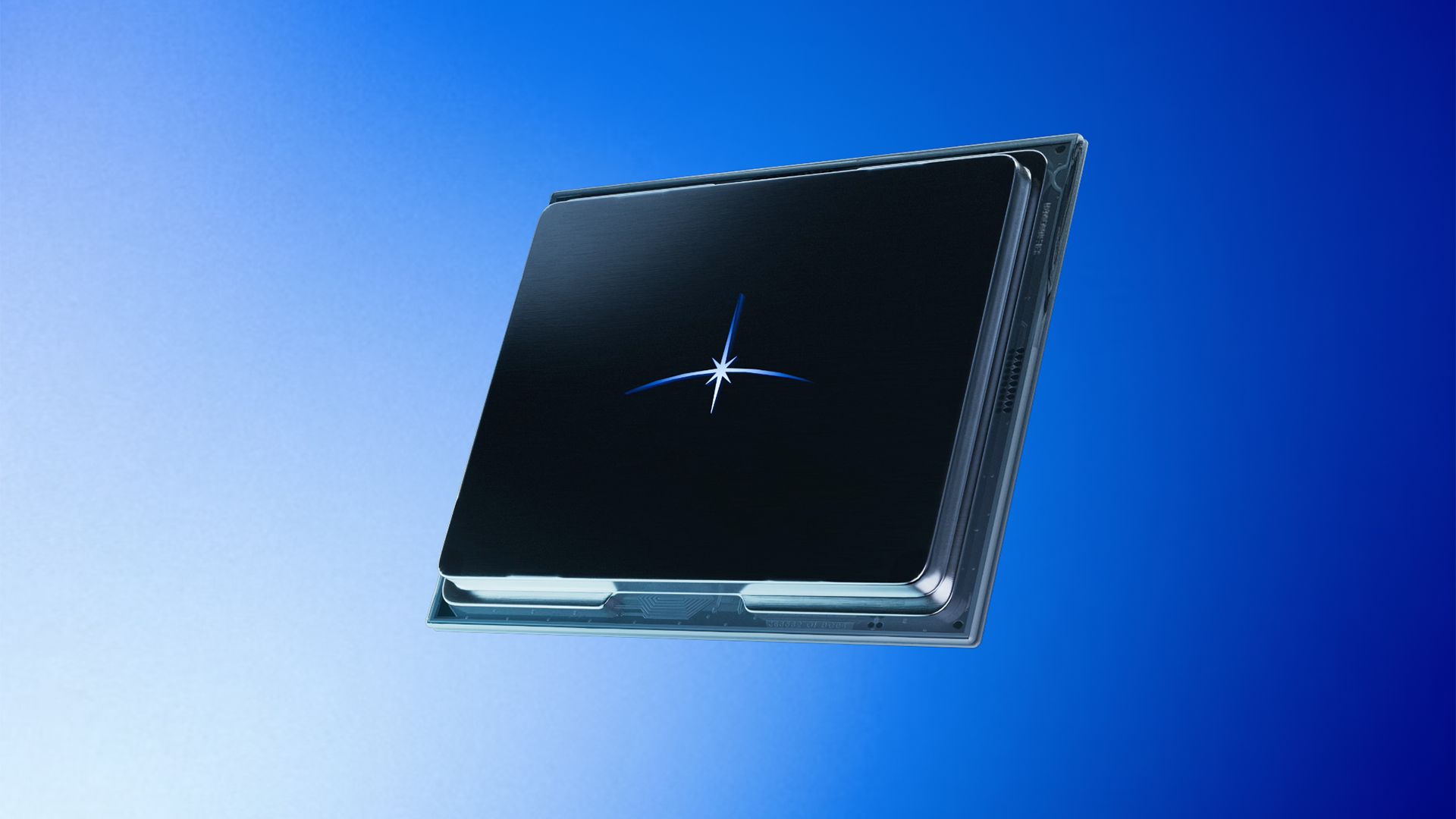
Nuvacore has disclosed an unusual development strategy for its WarpCore processor, saying it is building much of the foundational CPU IP without committing first to an instruction set architecture. The company describes the effort as a Core First approach, reversing the traditional order in which a CPU project begins with a choice such as Arm, RISC-V or x86 already made. Nuvacore said its engineers are starting with the core itself rather than the constraints of an existing architecture, arguing that this lets them concentrate on optimizing the microarchitecture for performance and power efficiency. The company has not named an ISA, a schedule, a configuration, a manufacturing process or power and performance targets for the project.
The disclosure affects how the startup's technology might eventually be used, and potentially which customers could find it valuable. By keeping WarpCore free of ISA-specific decisions for as long as possible, Nuvacore could adapt the design to a future customer or partner. An Arm licensee could build an Arm implementation on the underlying core technology, while another customer could choose RISC-V or another ISA. An established x86 vendor could in principle acquire or license the microarchitecture and build its own x86 CPUs, though Nuvacore has not said such a transaction is its goal.
Nuvacore's stated target for WarpCore is demanding computing environments. The company describes it as a new class of general-purpose CPU designed specifically for the sustained performance and power-efficiency requirements of AI infrastructure and contemporary data centers. Even with the ISA question settled later, the eventual choice will shape front-end logic such as instruction decoding and will inevitably affect other parts of the processor. Still, Nuvacore's position is that large components of a modern CPU, including execution units, branch-prediction units, data paths, caches and portions of the memory subsystem, can be developed and evaluated before those ISA-related decisions are final.
The company likened its method to developing a car around its engine rather than fitting an engine into an already developed platform. In its statement, Nuvacore said that instead of starting from the constraints of an existing architecture and iterating, it is beginning with the core itself.
Nuvacore's approach has partial precedent in past industry efforts. Under chief executives Rory Read and Lisa Su, AMD pursued an ambidextrous strategy in the 2010s meant to serve both x86 and Arm customers by sharing substantial processor and platform IP. AMD announced the SkyBridge platform in 2014, envisioning pin-compatible 64-bit Arm and x86 systems-on-chips that would use AMD's Puma+ x86 cores and Arm's Cortex-A57 cores with common platform infrastructure. AMD also developed the custom 64-bit Arm K12 core under Jim Keller, which was supposed to share microarchitecture features with Zen, but SkyBridge was scrapped, K12 never became a commercial product, and AMD pursued only x86 Zen cores.
Because Nuvacore is a startup, the question of whether its business plan includes selling CPUs at all remains open. Nuvia, also founded by Williams and Bruno along with Manu Gulati, was acquired by Qualcomm and ultimately shaped its Snapdragon X Elite SoCs. Nuvacore has not indicated that a similar transaction is its objective, but an ISA-agnostic WarpCore could broaden the range of companies for which its CPU technology might hold value. For now, the Core First announcement says more about how Nuvacore intends to develop WarpCore than about what the finished processor will look like.
More hardware news from TechManNews.