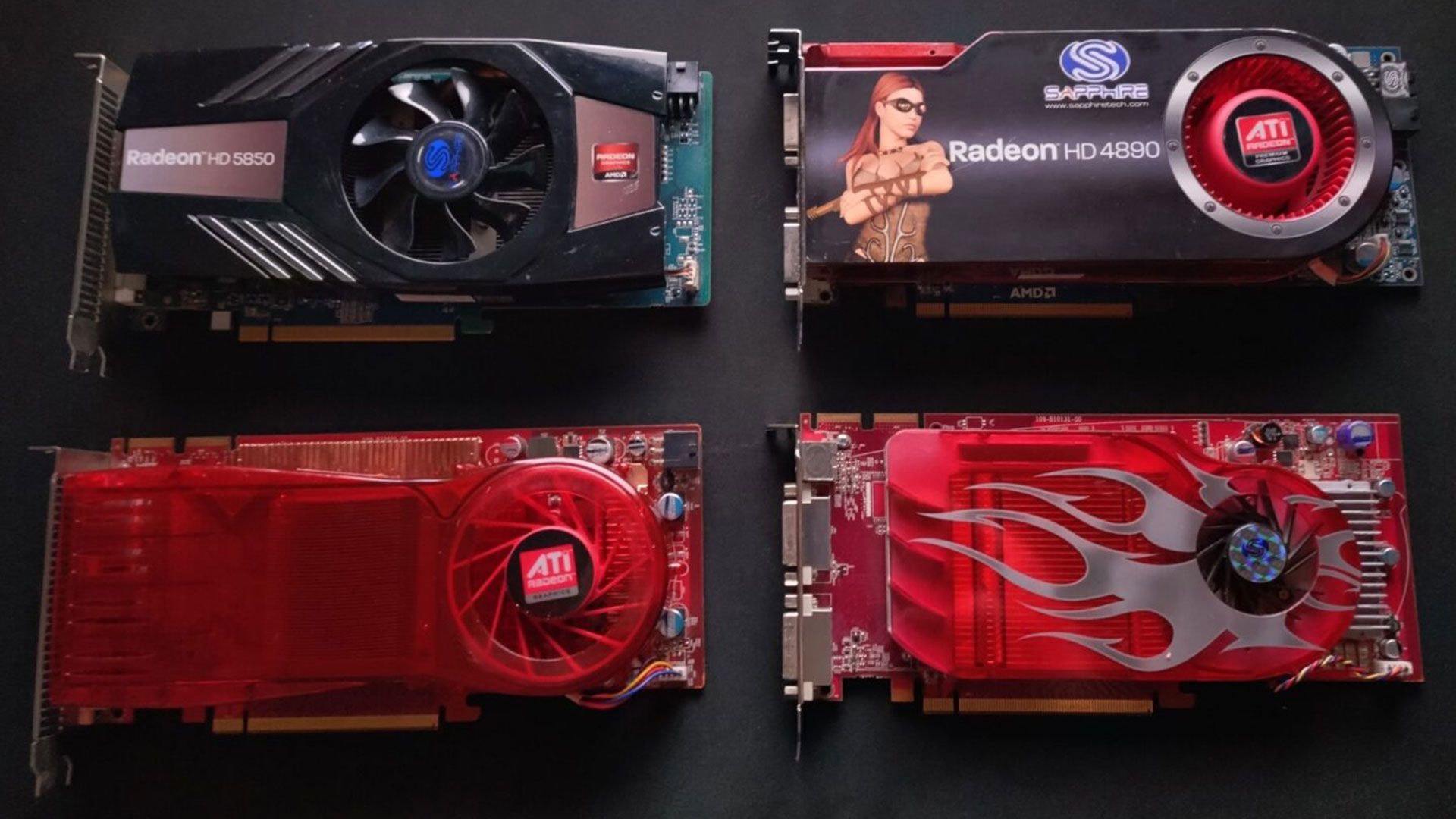
A proposed Linux kernel patch would resolve corrupted video playback on several nearly two-decade-old AMD Radeon GPUs by keeping decoder input buffers in dedicated video memory. The fix targets the Radeon HD 2000 and 3000 series, hardware that launched in 2007 and that proprietary Windows drivers stopped supporting more than a decade ago. The work covers the RV610, RV620, RV630, RV635 and RV670 chips, which share the RV6xx decoder path and legacy R600 firmware.
The investigation began with an iMac7,1 equipped with an RV610, also identified as M74 with device ID 1002:94c8, where video frames became corrupted whenever the decoder read compressed video from system memory while the GPU was drawing. Moving the input into VRAM let frames decode correctly, and disabling graphics draws also stopped the corruption. The contributor concluded the driver was not consistently pinning UVD input buffers inside dedicated VRAM, so competing graphics draw calls disrupted decoding. The proposed patch forces those buffers to remain in VRAM, a behavior the Radeon kernel driver already applies to some other chip families.
Testing was done on Debian, and the contributor used OpenAI's Codex to assist with the investigation, testing and patch development. Because the other covered chips share the same decoder path and firmware, the contributor expects they have the same hardware requirements but noted that someone with that hardware would need to verify it. The submission came not from a longtime open-source graphics developer but from a newcomer working through the legacy driver path with AI assistance.
The R600 generation holds a notable place in graphics history. It arrived in 2007 as the first desktop GPU lineup sold under the AMD banner after the company acquired ATI Technologies, and it moved desktop parts from separate pixel and vertex pipelines to a unified shader architecture alongside DirectX 10 and Windows Vista, after the technology first appeared in the Xbox 360. The flagship Radeon HD 2900 XT struggled against Nvidia's GeForce 8800 GTX in rasterization and power draw, but the family brought the first-generation Unified Video Decoder to the mainstream RV610 and RV630 chips, with the refined RV670 later powering the Radeon HD 3850 and 3870.
That decoder let budget PCs offload H.264 and VC-1 Blu-ray decoding from the CPU, making smooth 1080p playback without maxing out a dual-core processor a selling point, particularly for home theater PC builders. Few users run TeraScale 1 graphics in 2026, and the contributor wants the patches for the Core 2 Duo-based iMac. Still, mainline Linux keeps supporting hardware that Windows abandoned, and combined with recent AI-assisted cleanup work across the Mesa R600 user-space driver, vintage Radeon cards are arguably in better software shape now than during their retail lifespan.
More hardware news from TechManNews.