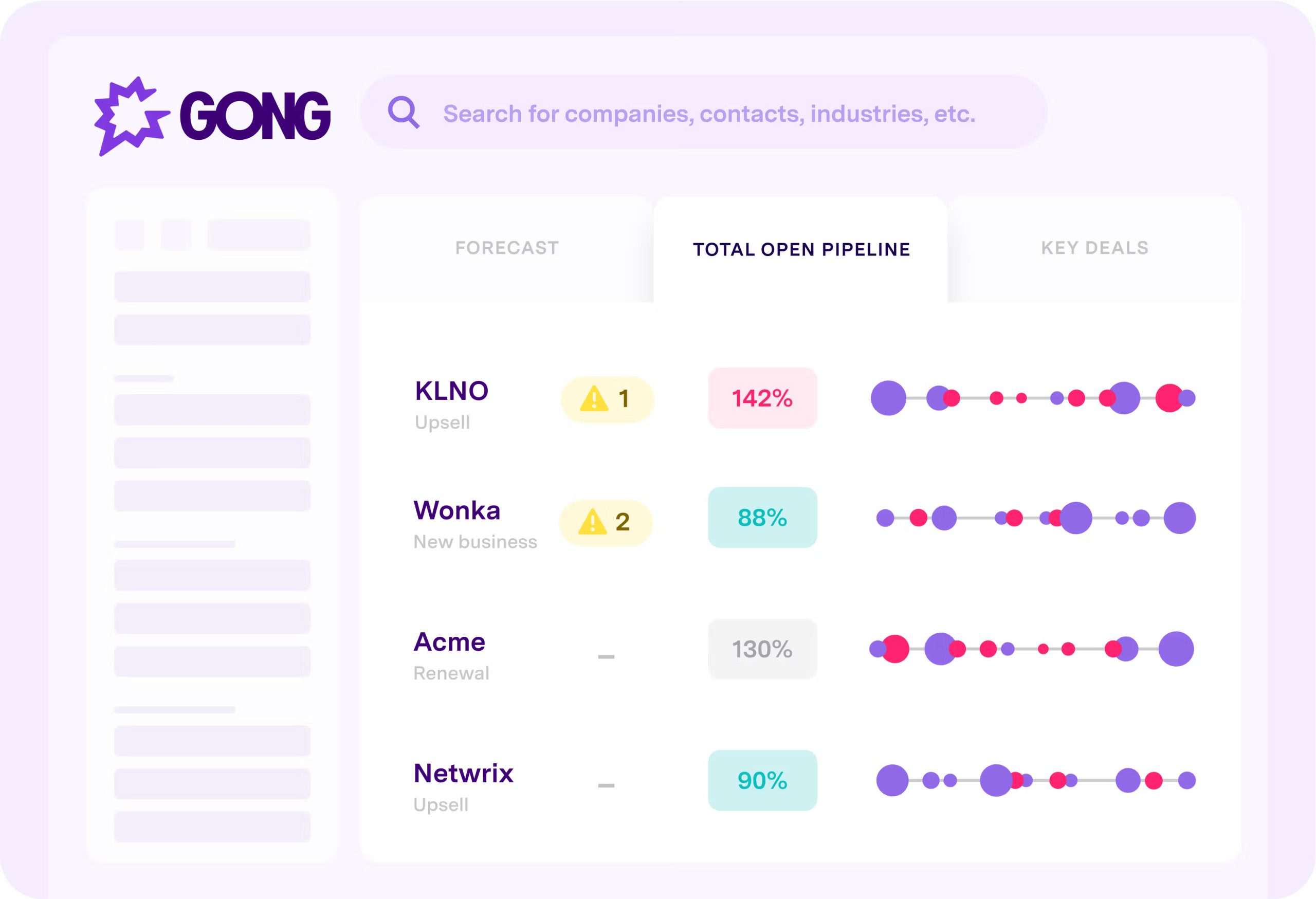
Gong, the revenue intelligence company formally known as Gong.io Ltd., introduced a set of platform updates that bring third-party account and contact data into its analytics engine, add deeper research capabilities to its artificial intelligence assistant and let customers build agents that run sales workflows automatically. The centerpiece is Mission Callisto, a new feature of the company's Gong Enrich data enrichment offering.
Gong said the changes target a persistent problem for revenue teams: sales conversations and activity records carry useful context but often lack current contact information and account details needed to reach prospects. Outdated or missing records also constrain what AI assistants and agents can draw on, the company said. Gong Enrich pulls information from outside providers into the Revenue Graph analytical and reporting engine as well as CRM records, according to co-founder and Chief Product Officer Eilon Reshef, who said the combination gives Gong's AI and agents a fuller view of each account and contact.
Customers can link supported data providers and specify the sequence in which Gong queries them, moving to the next provider when one cannot supply the requested information. Existing subscriptions and credits can be used, and customers can spend Gong Credits to close remaining gaps. Named partners include Apollo, the business name of ZenLeads, Inc., along with LeadIQ Inc., Lusha Systems Inc., RocketReach LLC and ZoomInfo Technologies Inc. Sellers can fill missing contact details with a click, and teams can automate enrichment when set conditions occur, such as a bounced email prompting a search for updated information.
Administrators control which data partners are used, which geographies are excluded and whether incoming data fills empty CRM fields or overwrites existing values. Gong identifies the source for most contact details and can pass that information into the CRM. Reshef said the company relies on providers' representations regarding opt-out and suppression requirements, does not independently verify each contact's opt-out status and does not guarantee the accuracy of every data point. Customers remain responsible for how they use the information, including outreach.
Gong also added automatic triggers to custom agents, distinguishing Agent Builder, for customer-specific workflows, from Agent Studio, where customers configure Gong's prebuilt agents. Reshef described the shift to event-driven agents, rather than manual triggering, as the biggest change. An agent could react to a status change on an enterprise deal by analyzing relevant calls against risk criteria, summarizing findings and writing next steps to the CRM. Triggers, conditions and actions can be defined through a visual editor or natural-language instructions.
Deep Mode addresses strategic questions requiring broader investigation than Gong Assistant's Quick Mode. A revenue leader might ask what is driving enterprise deal risk in a quarter and what the team should change. The feature can clarify scope, plan an investigation and examine deals, conversations, accounts and other signals over time, potentially identifying recurring security concerns in stalled deals and surfacing supporting conversations. Reshef said Deep Mode is intended for larger strategic questions requiring analysis and synthesis across multiple signals into a sourced report.
The dashboard expansion lets teams define metrics once in Gong Data Studio and reuse them across views. Other Assistant updates embed it in deal and account boards and let users create Gong Engage Flows through natural-language requests. Gong Enrich, Deep Mode and the expanded dashboards are generally available, while automatically triggered custom agents and the other Assistant enhancements are slated to roll out later this year.
More company and startup news from TechManNews.