The recent run of wearables coverage points to a single, unglamorous problem: the industry has gotten very good at adding capability and very bad at letting people reach it. Across an Apple Watch feature explainer, a contactless sleep tracker review, and a smart glasses review, the bottleneck is not sensors, battery, or design. It is the interface layer between the wearer and the thing the device is supposed to do. That gap has direct consequences for US consumers, who are being asked to pay more for devices whose best features are buried behind modes, menus, and controls that demand more attention than the task itself.
Modes as a substitute for design
Engadget's explainer on Theater Mode for the Apple Watch is instructive precisely because it is necessary. The piece walks through the various ways to silence the watch and notes that Theater Mode does not go as far as Do Not Disturb but remains useful. That a mainstream outlet has to publish a guide to which of several silencing modes to use, and when, is a small admission that the software has accumulated layers faster than it has been simplified. Theater Mode is a good feature. But a feature that requires explanation before use is a feature with a discovery cost, and discovery costs are paid by the customer.
This is not a knock on Apple specifically. It is a pattern in the category. Wrist-worn devices have absorbed notifications, fitness tracking, payments, sleep data, and more, and each capability tends to arrive with its own state, its own toggle, and its own set of exceptions. The result is a device whose behavior depends on which mode it is in, which is a problem when the wearer glances at it for two seconds. US buyers in particular have adopted the smartwatch as a notification and health device, which makes predictability more valuable than another setting.
The wearable people take off at night
Wired's review of the Hatch Sleep Clock, a contactless sleep tracker, opens with a revealing premise: the reviewer is obsessed with sleep data but does not love wearing a smartwatch to bed. That sentence contains the whole strategic problem. The most personal data a wearable can collect is sleep data, and a meaningful share of users do not want the wearable on their wrist while they sleep. So they buy a second device, and then a second app, and then a second set of controls to learn.
The Hatch review is framed around whether the clock can give the best of both worlds at an affordable price. That framing is the tell. Consumers are not asking for more sensors. They are asking for the benefit of the sensor without the burden of the device. The contactless tracker exists because the wrist wearable, for all its capability, has not solved the comfort and compliance problem at night. Every product that exists to work around another product's friction is a signal that the friction is real and that someone is monetizing it.
Smart glasses and the cost of bad controls
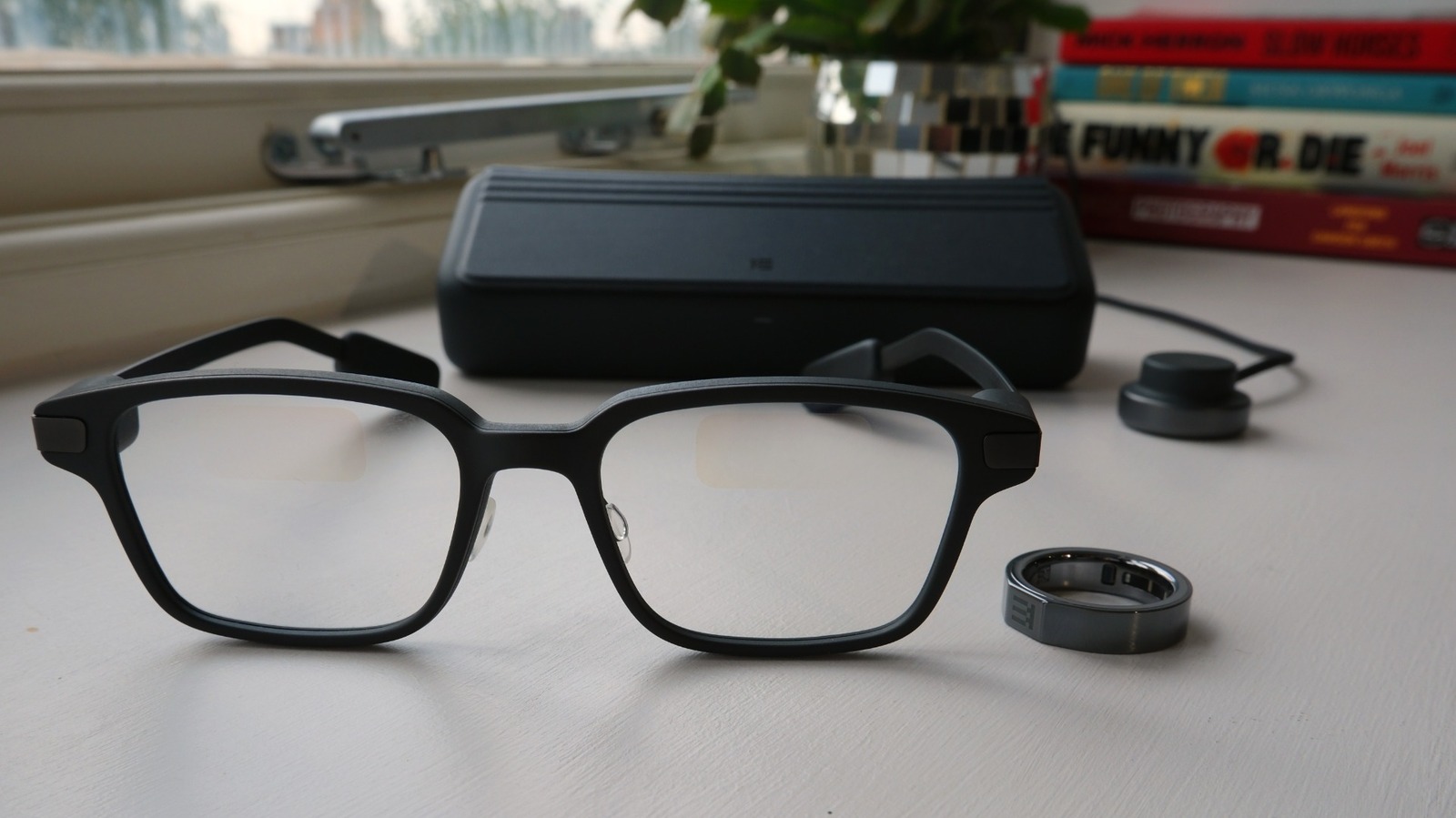
Engadget's review of the Even Realities G2 is the sharpest version of the argument. The outlet describes the glasses as among the best smart glasses on the market while concluding that controlling the growing feature set is harder than it should be. That is a remarkable combination to publish: excellent hardware, poor controls. It is also the most common failure mode in wearables right now.
Smart glasses make the stakes obvious because the interaction budget is so small. There is no room for a settings app on a pair of glasses, and there is no patience for a multi-step gesture when the device is on your face. When a product adds features faster than it adds a coherent way to reach them, the features stop being features and become homework. The G2 review shows that even a well-regarded device can be held back by the layer the user actually touches.