The GPU Crunch Is Now a Physical Supply Problem
Article

The GPU Crunch Is Now a Physical Supply Problem

Consumer GPUs are being torn apart for AI servers, data center permits are being pulled in Texas, and neoclouds are leaning on hardware partners to keep capacity alive. The bottleneck has moved from silicon to the physical world.

NagiOctober 24, 20265 min read

Photo: Tom's Hardware

The GPU shortage is no longer a story about wafer starts or allocation letters. It is a story about what happens to physical hardware once it exists: cards being stripped out of consumer packaging and rebuilt into servers, construction permits being pulled before a data center can be built, and operators discovering that a live cluster is a maintenance burden rather than a finish line. Three separate threads on this beat point at one conclusion: the constraint on AI compute in the United States has migrated from chip fabrication into logistics, permitting, and field service. That shift favors whoever controls hardware after it ships.

The consumer card becomes a component

The most vivid evidence comes from Tom's Hardware, which reported on leaked video showing industrial-scale Chinese factories dismantling RTX 5090s by the thousands to feed AI servers. The footage reportedly includes Founders Editions, the boards Nvidia sells directly to consumers, being torn apart rather than resold as retail product. The framing of the Tom's Hardware report is deliberately blunt: this is offered as an explanation for why RTX 5090s are so hard to find.

It is worth being precise about what that means. A consumer graphics card is a finished good with a retail box, a warranty, a support chain, and a price set by a consumer market. A GPU inside an AI server is a capital input. When the spread between those two valuations grows wide enough, the retail product stops being a retail product. The card is worth more as a donor of compute than as a box on a shelf.

For US buyers, the immediate effect is scarcity at the top of the consumer stack, and the second-order effects are familiar from previous crunches: prices that drift above list, thin availability at launch, and a resale market that rewards anyone who can get allocation. The distinction this time is the mechanism. This is not mining demand bidding up used cards. This is the deliberate disassembly of new ones.

The permitting layer is now a compute layer

The second thread comes from Texas, where Tom's Hardware reported that the state has suspended 17 data center construction permits and shut down an automated portal that had been used to approve projects. Seventeen is not a catastrophic number on its own. The suspended portal is the more interesting detail.

An automated approval pipeline implies a state that had decided data center construction was routine enough to process at machine speed. Shutting that pipeline down is a statement that it no longer is. Any US operator planning capacity in Texas now faces a scheduling risk that sits entirely outside the semiconductor supply chain. A GPU allocation letter is worthless if the building that would house the racks cannot be permitted.

The practical consequence for US technology companies is that capacity planning has to absorb regulatory variance. Teams that modeled delivery dates around fab output now have to model them around state and local process. That is a slower, less predictable, and far less consolidated bottleneck than a foundry queue, and it is much harder to hedge with prepayment.

Neoclouds discover the post-launch problem

The third thread, from SiliconANGLE, is about what happens after the hardware arrives. The report notes that neoclouds are multiplying as AI labs and enterprises hunt for dedicated GPU capacity, and that standing up a cluster is only the start. For smaller providers, managed services support from hardware partners increasingly decides whether that capacity stays healthy and profitable after go-live.

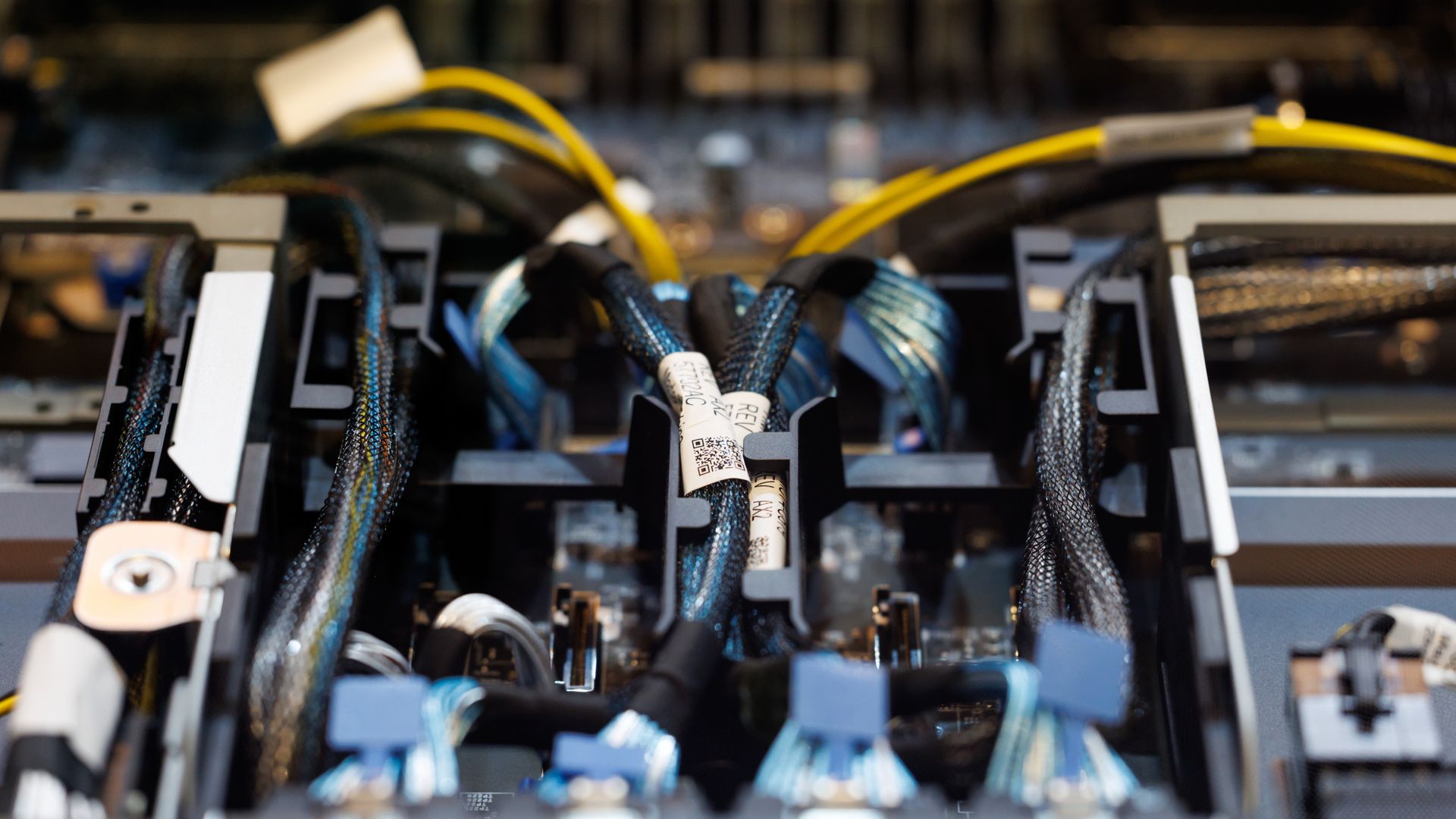
That is the same insight as the other two stories, expressed in business rather than physical terms. A GPU is not a self-sustaining asset. It requires cooling that works, firmware that is current, failures that are diagnosed quickly, and spares that are actually in stock. A specialist cloud that can procure racks but cannot service them is holding a depreciating asset with an operational tail it did not budget for.

The mention of specialized AI clouds carving out a role alongside hyperscalers is the competitive frame. Hyperscalers can absorb field service as a line item. Neoclouds cannot, which is why they are leaning on hardware partners. That dependence has a strategic cost: it gives the hardware vendor leverage well past the point of sale, in a market where the sale itself is already constrained.

Why these three stories are one story

Line them up and the pattern is not subtle. In China, GPUs are being removed from the consumer channel and repurposed. In Texas, the buildings meant to hold GPUs are being held up at the permit stage. In the neocloud market, operators are discovering that owning GPUs is a service obligation rather than a purchase. Each story is about a different stage of the same pipeline, and in each case the constraint is not the chip itself.

That matters for how US companies should read the current shortage. If the binding constraint were fabrication, the answer would be time and capacity, and both would eventually arrive. But scarcity created by disassembly, by suspended permits, and by under-supported deployments does not resolve on a fab timeline. It resolves when the surrounding system, logistics, regulation, and service, catches up. That is a slower and less legible process.

There is also a market-structure point. The RTX 5090 disassembly story shows that a consumer product line can be quietly converted into an industrial input when the price signal is strong enough. That conversion is not announced and not regulated; it shows up as empty shelves. US consumers experience the result without ever seeing the cause, and the standard explanations, launch supply, retailer allocation, scalping, will not fully account for it if thousands of boards are leaving the retail channel at the factory gate.

What to watch

Three concrete things, all grounded in what has been reported. First, whether the RTX 5090 shortage persists in a way that retail supply explanations cannot cover, which would suggest the disassembly channel described by Tom's Hardware is a durable feature rather than a one-off. Second, what Texas does after suspending those 17 permits and closing the automated portal, since any replacement process will set the pace for data center construction in a major market. Third, whether hardware vendors formalize managed services offerings aimed at neoclouds, as SiliconANGLE's reporting implies they are already doing, because that would confirm service and support as a competitive layer in AI compute rather than an afterthought.

The common thread to hold onto is that the AI hardware story has moved past the chip. Supply now runs through factory floors in China, permitting offices in Texas, and support contracts signed by specialist cloud operators. Anyone modeling US compute capacity on silicon alone is modeling the wrong bottleneck.

More on this beat: Hardware on TechManNews.

#GPUs#AI hardware#RTX 5090#data centers#neoclouds#supply chain

Newsletter

Get Tech News in Your Inbox

The latest AI, gadgets, software and startup stories from TechManNews, delivered every morning - free.