📣

Advertisement

Google Ad - 970×90 Leaderboard  TOP_LEADERBOARD_4

The Foldable Future Is a Privacy Problem Waiting to Unfold

Photo: The Verge

Article

The Foldable Future Is a Privacy Problem Waiting to Unfold

Arjun NairSeptember 8, 20267 min read

This week's gadget stories show a single thread: as devices become more powerful and ubiquitous, they also become more intrusive - and the market's response is fragmented.

📣

Advertisement

Google Ad - 970×90 Leaderboard  TOP_LEADERBOARD_4

The Thread

This week's gadget news is not really about foldable screens, smart speakers, or even TV firmware. Read together, the stories from The Verge, Wired, and Engadget reveal a more uncomfortable pattern: the consumer electronics industry is racing to make devices more capable, more connected, and more personal, while simultaneously failing to address the privacy and trust costs that come with those gains. The LG TV surveillance report is the most direct alarm, but the same tension runs through every other headline - from Apple's long-delayed foldable to Xiaomi's aggressive new competitor to the perennial question of which smart assistant to invite into your home. For American consumers, the takeaway is not that any single product is dangerous, but that the entire category's trajectory - more sensors, more microphones, more data - is pushing against a wall of user skepticism that no amount of screen flexibility can bend.

The LG Revelation Is Not an Outlier

The most concrete fact on this desk is the Gamers Nexus report, as covered by The Verge: LG smart TVs are logging and uploading data about owners and their homes even when offline or on standby. The TVs scan Wi-Fi networks, record audio logs, and use audio and video sampling. That is not a bug. It is the logical endpoint of a business model where hardware is sold at a margin, but the real product is the behavioral data. American consumers have grown accustomed to this trade-off on their phones and laptops, but televisions occupy a different trust category. A TV sits in the living room, a shared and semi-public space. It is 'off' in a way a phone is never off. To learn that it listens while ostensibly dead is to learn that the concept of standby has been redefined - not as a low-power state, but as a low-visibility state for data collection.

This matters because LG is not a fringe brand; it is one of the largest TV makers in the US market. The Verge's coverage does not state that other manufacturers are clean, only that LG was caught. The implication for US consumers is that the default assumption - that an offline device is a silent device - is no longer safe. And while the Federal Communications Commission and Federal Trade Commission have periodically examined smart TV privacy, no major enforcement action has emerged from this specific report as of this writing. The pattern is not that one company is bad; it is that the entire smart TV category has been built on a foundation of ambient data collection that consumers cannot easily audit.

Foldables Amplify the Same Tension

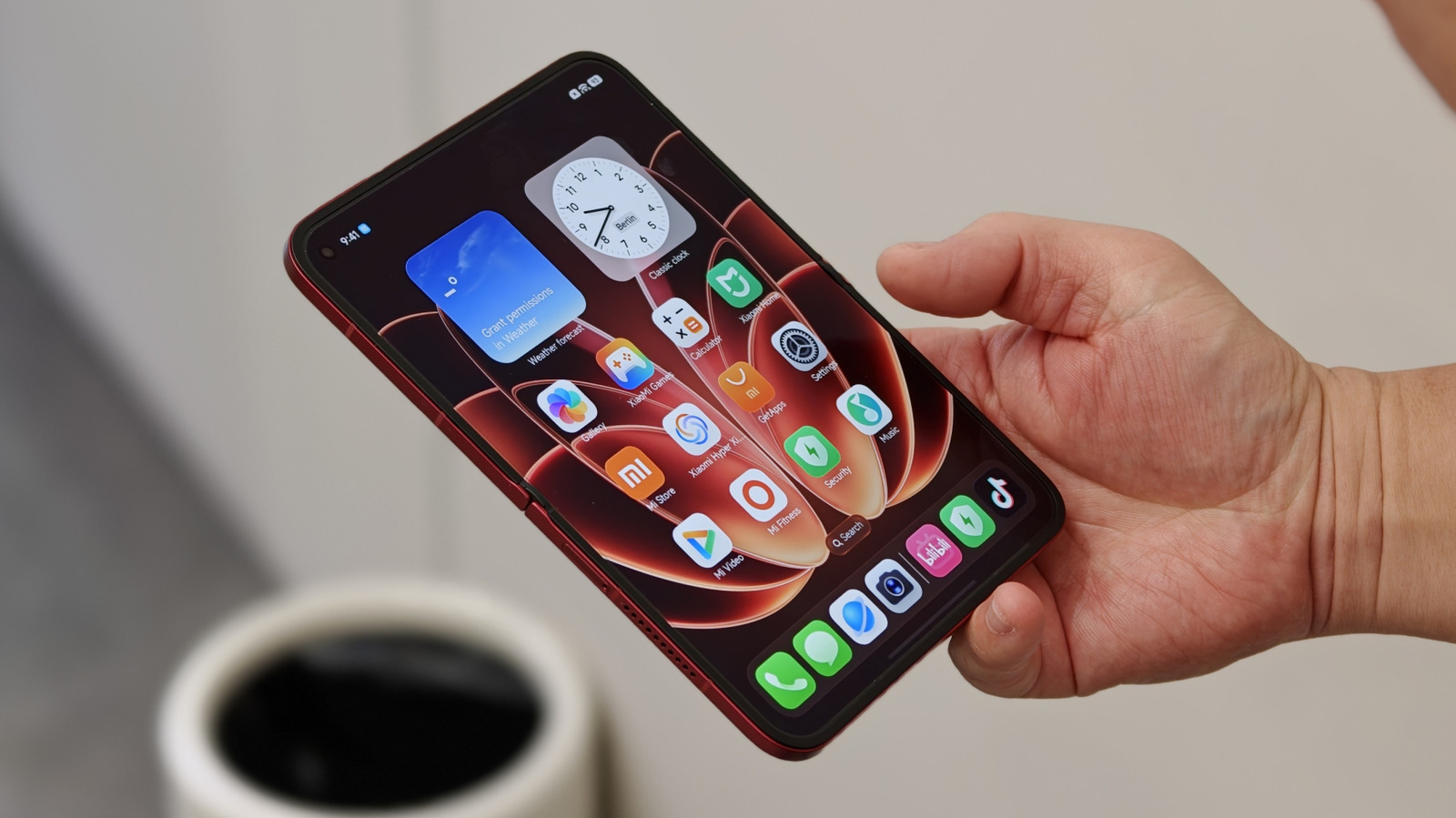
The other major stories this week are about form factors, not data. Apple is set to launch its first foldable iPhone tomorrow, as The Verge reports, seven years after Samsung's Galaxy Fold. Engadget gives a hands-on to Xiaomi's 18 Fold, which it calls an attractive mid-size foldable with powerful specs, arriving on the eve of Apple's event. The Verge notes that new CEO John Ternus has inherited a company that remains as influential as ever. On the surface, these are stories about hinges, glass, and battery life. But underneath, they are stories about increasing device intimacy. A foldable phone is larger when open, which means more screen area for apps, which means more time spent with the device, which means more opportunities for the sensors embedded in it - cameras, microphones, accelerometers, location services - to gather data.

Apple's late entry is telling. The company has spent years marketing itself as the privacy-first alternative in the US smartphone market. Its delay into foldables was not about technology; it was about waiting until the form factor could meet its design and ecosystem standards, as The Verge implies. But the same tension applies: a foldable iPhone, no matter how well engineered, is still a phone with a microphone and a camera that sits in your pocket, on your nightstand, and now opens into a mini-tablet in your living room. The privacy calculus does not change because the screen bends. What changes is the surface area for interaction - and thus the surface area for data capture, whether by Apple, by third-party apps, or by the kind of always-on logging that LG's TVs were caught doing.

Xiaomi's device, arriving just before Apple's event, shows that the competitive pressure in this category is not about privacy but about specs and size. Engadget calls it attractive and powerful - not private or transparent. That is not a criticism of Xiaomi specifically; it is a statement about the market's priorities. In the US, where Xiaomi has a limited but growing presence, the arrival of yet another capable foldable means American consumers will have more choices for hardware but no additional choices for data governance. Every foldable will come with a terms-of-service agreement that few will read and that most will accept as the price of entry.
Advertisement

📣

728x90

MID_CONTENT_2

The Smart Speaker Market Reveals the Acceptable Compromise

The Wired story on the five best smart speakers of 2026 is the most consumer-facing of this week's items. It asks which assistant you prefer - Alexa, Google, or Siri - and then recommends accordingly. What the story does not say, because it is a buying guide, is that the choice of assistant is also a choice of data ecosystem. An Alexa speaker sends audio clips to Amazon's cloud. A Google speaker does the same for Google. An Apple HomePod ties into Siri and Apple's privacy-focused architecture. The fact that Wired frames the decision purely on assistant preference is itself a sign of how normalized ambient microphones have become in US homes. The LG TV story reminds us that these microphones are always on, even when the device is 'off.' A smart speaker, by design, is always listening for a wake word. The difference is that consumers know that. With TVs, they do not.

That gap between known and unknown monitoring is the crux of the trust problem. American consumers have been trained to accept the trade-off for devices whose primary function is explicitly a digital assistant. But they have not accepted that trade-off for a television, which is a piece of furniture that happens to display streaming content. When LG's TVs are found to be logging audio and scanning Wi-Fi networks on standby, it violates an implicit social contract. The smart speaker market, by contrast, has made that contract explicit - and Wired's guide treats it as a non-issue, which suggests that at least a large segment of US consumers have made peace with it.

What This Means for US Companies and Regulators

For US technology companies, the pattern is a warning that innovation and data collection are now inseparable, and that consumers are beginning to notice. Apple's marketing has leaned heavily on privacy as a differentiator, which is why the foldable launch tomorrow will be scrutinized not just for its hinge mechanism but for what the device collects and how it reports it. US companies that sell smart TVs, speakers, or phones operate in a legal environment where the Federal Trade Commission can act against deceptive practices but where there is no comprehensive federal privacy law. That means the burden falls on consumers to police device behavior - which is all but impossible when a TV logs data on standby and the user has no way to see the log.

The Xiaomi and LG stories also highlight the global nature of this issue. LG is a South Korean company, Xiaomi is Chinese, and Apple is American. US consumers will buy all three. But US regulators have little direct leverage over foreign firmware, and US companies face a competitive disadvantage if they unilaterally reduce data collection while rivals do not. The pattern suggests that privacy is becoming a feature, like a bigger battery or a better camera - something companies tout when it helps, but quietly abandon when it hurts sales.

What to Watch

The immediate thing to watch is Apple's event tomorrow. The Verge reports that the foldable iPhone is 'almost certain' to launch. The question is not whether it folds well, but what Apple says about how it handles data - and whether that messaging changes the conversation. If Apple positions the foldable as the most private large-screen device yet, it will put pressure on LG, Xiaomi, and Google to respond. If Apple stays quiet on privacy, that will be an answer too.

The second thing to watch is how LG responds to the Gamers Nexus report. If LG issues a firmware update that stops standby data collection, it will set a new baseline. If it stays silent, the report will fade - but the underlying capability remains, and other manufacturers will assume they can continue operating the same way. For US consumers, the practical takeaway is not to throw away a TV or trade a speaker for a dumb one. It is to treat every connected device as a potential microphone, even when it is off. That is not paranoia. It is now a documented fact, as The Verge's coverage of the LG story shows.

Finally, watch the smart speaker market. Wired's guide proves that consumers still buy these products in large numbers, and that the major assistants - Alexa, Google, Siri - remain entrenched. The LG revelation is a reminder that the same ambient listening that makes a speaker useful can be repurposed in a device you never thought of as a listener. That realization, once it spreads, is the kind of thing that changes buying decisions over time - not in a single quarter, but in the slow erosion of trust that follows any surveillance report. The foldable race will continue, the speakers will keep selling, and the data will keep flowing. The only question is whether the industry will wait for regulators to force a change, or whether a company like Apple will decide that privacy is the one feature that actually makes a device worth folding for.

More on this beat: Gadgets on TechManNews.

Advertisement

📣

728x90

IN_ARTICLE_5

#wi-fi#devices#data#networks#iphone#apple

Newsletter

Get Tech News in Your Inbox

The latest AI, gadgets, software and startup stories from TechManNews, delivered every morning - free.

The Foldable Future Is a Privacy Problem Waiting to Unfold | TechManNews