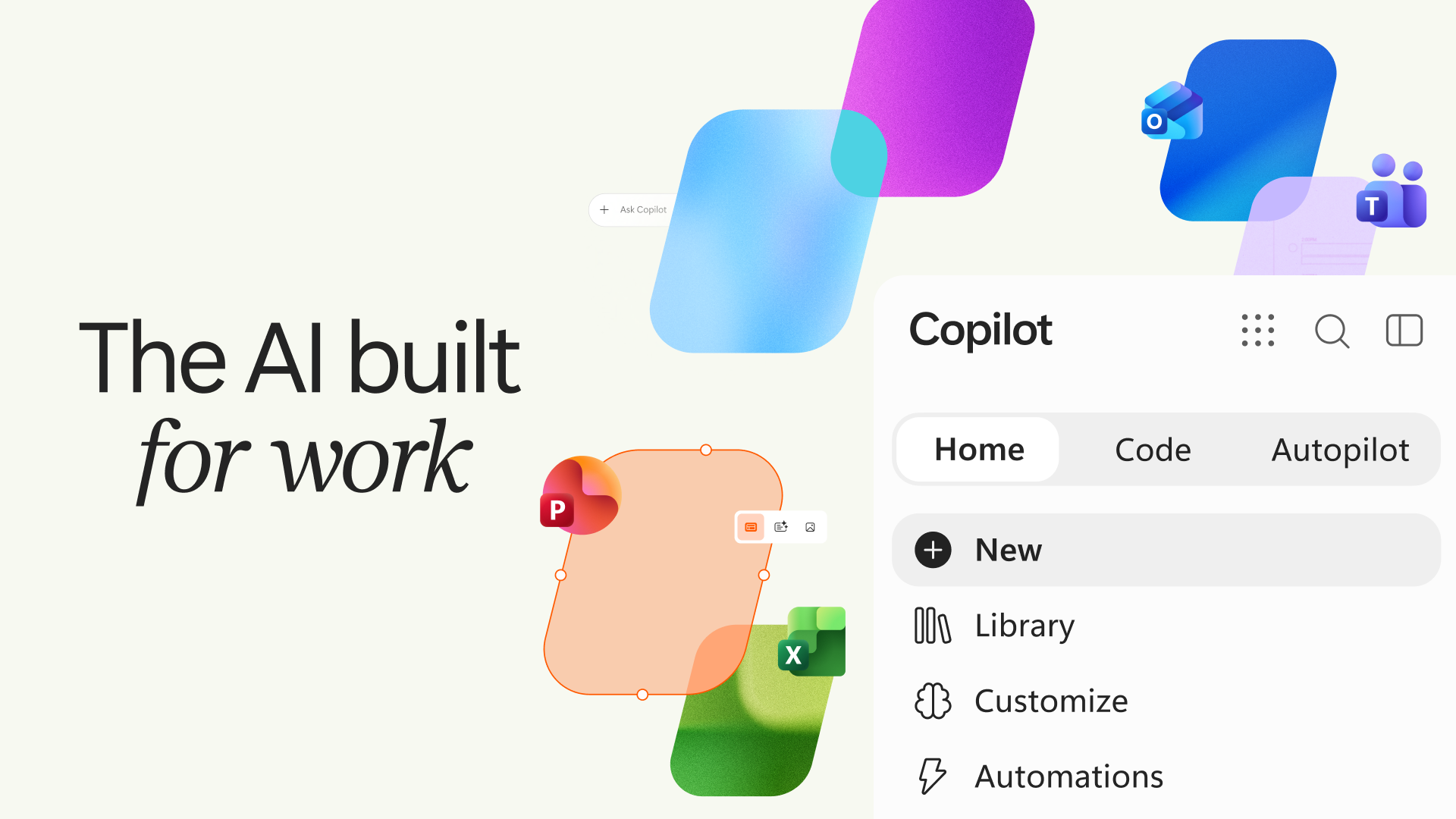
Microsoft's Copilot overhaul and Stravito's new Model Context Protocol server point at the same structural shift in how AI assists software work. The assistant is no longer a single model answering prompts from a single vendor's cloud. It is becoming a hub that routes work across frontier models, agent frameworks and third-party data sources. That change looks like a feature update, but it is really a reordering of where lock-in, pricing power and developer leverage sit in the AI coding stack.
The Single-Vendor Stack Is Unwinding
For most of the past three years, using an AI coding assistant meant choosing a model family and living inside it. Copilot, as Tom's Hardware reported, is being revamped into a singular AI workspace that mixes projects and agents together and will support third-party frontier models. That is a meaningful admission. The assistant layer and the model layer are separating. Microsoft is positioning Copilot as the workspace where work happens, even when the underlying reasoning comes from somewhere other than Microsoft's own models. For developers, that decoupling matters more than any individual capability. It means the tool they build muscle memory around does not have to be the tool that wins every model benchmark.
Pricing Becomes the Unsettled Question
The reason this matters commercially is that Microsoft is not committing to a stable price. As ZDNET reported, the new Copilot app consolidates everything in one place, the company says Copilot has gotten "actually really good," and the app includes AI agents and can write code. But the price is described as evolving. That word is doing a lot of work. When a vendor supports third-party frontier models inside its own workspace, its cost base is no longer fully under its control, because it is paying other labs for inference. Pass-through pricing, usage tiers and per-agent metering become live questions for any US engineering organization trying to budget AI tooling for the next planning cycle. A tool that writes code is straightforward to evaluate. A tool whose cost curve is unsettled is much harder to defend in a procurement review.
Context Is the Real Battleground
Stravito's move, reported by SiliconANGLE, is the quieter half of the same story. The knowledge management startup introduced an MCP server that lets people reach its consumer and market research from AI tools including ChatGPT, Claude and Copilot. The specifics are less important than the shape: a data holder is exposing its corpus to whichever assistant the user already prefers, rather than forcing a choice between the research and the assistant. For developers building internal tooling, MCP has become the seam that lets assistants reach proprietary context without bespoke integrations per model. The coding assistant that can see your market research, your internal docs or your ticketing history is more useful than the one that reasons marginally better in isolation. Context, not raw model quality, is where the differentiation is migrating.