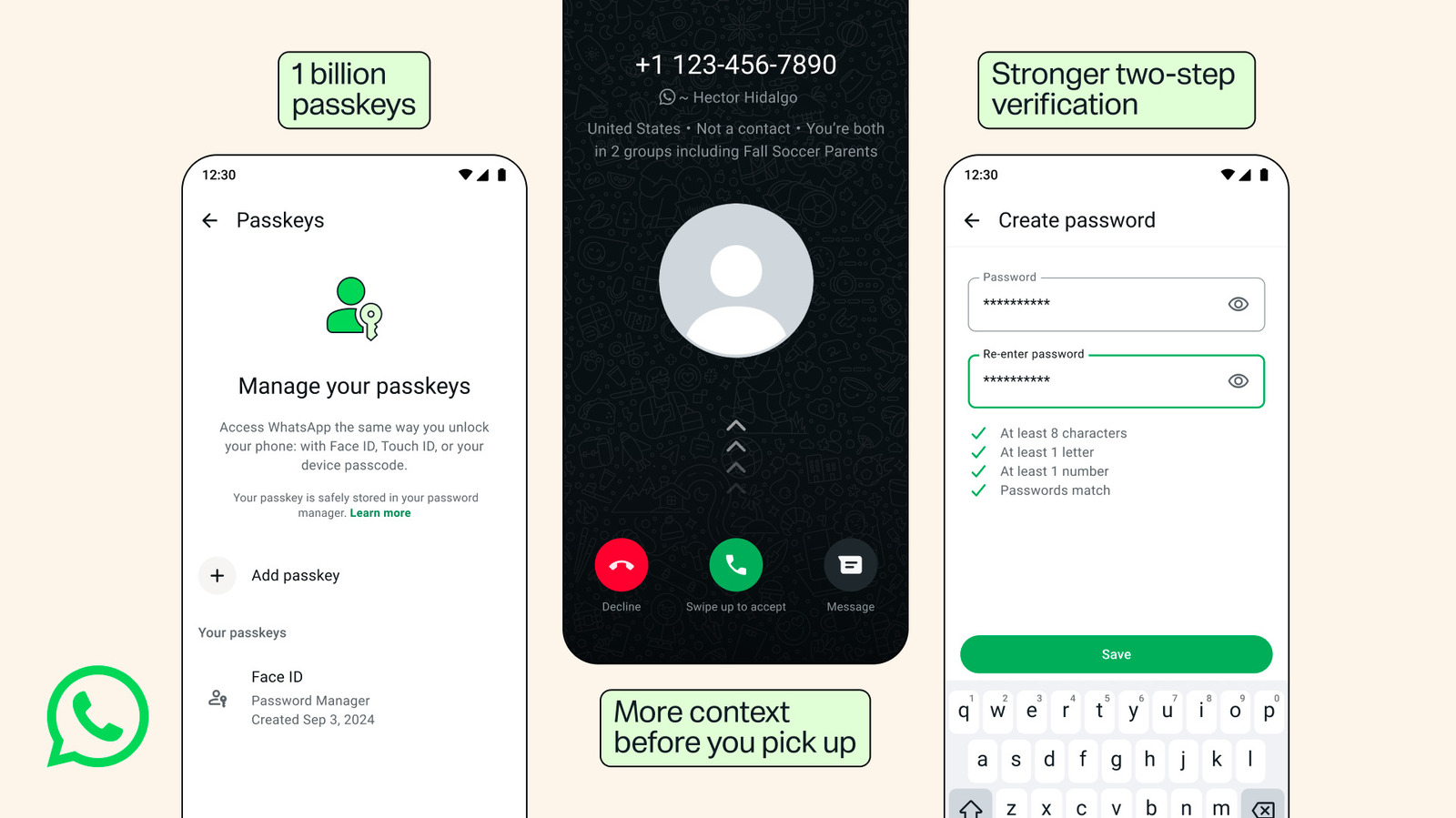
Meta’s WhatsApp is changing how two-step verification works for its users, moving beyond the six-digit numeric pins that have protected accounts since the feature launched in 2017. The messaging service now allows people to set a stronger, alphanumeric password as an extra security layer. This new option requires at least eight characters, including at least one number and one letter, with special characters also permitted. The feature remains optional, but WhatsApp is encouraging users who have relied on simple pins, such as “123456,” to upgrade to a stronger password.
The shift addresses a long-standing weakness in the previous system, where short numeric codes were vulnerable to guessing or brute-force attacks. By allowing longer passwords that mix character types, WhatsApp is giving users a way to significantly increase the difficulty of unauthorized access. The change applies to the two-step verification process, which is distinct from the passkeys used for device authentication. WhatsApp noted that anyone currently using a basic pin should prioritize switching to the new password format.
In addition to the password update, WhatsApp is expanding passkey management for people who use the app on multiple devices. The service now supports multiple passkeys on the same account, which is relevant for users who run WhatsApp on both Android and iOS devices. To add another passkey, users can navigate through the app’s settings by going to Account and then Passkeys. This removes a prior limit that may have forced cross-device users to choose a single passkey.
The company is also rolling out a new layer of context for incoming calls from unknown numbers. When a call arrives from a number not saved in the user’s contacts, the app will now display the country of origin. It will also indicate whether the caller shares any group chats with the user. Meta said this extra information could help people identify potential scammers before answering. The call context feature is currently available only on the Android version of the app.
These updates come as WhatsApp continues to balance security with usability across its large user base in the United States and elsewhere. The stronger password option addresses a common complaint about the old pin system, while the multi-passkey support simplifies life for people who switch between phones. The unknown-call context feature targets a growing problem with spam and fraud calls on mobile networks. All three changes are rolling out to users, though the call labeling is limited to Android for now.
The password upgrade does not force anyone to adopt the new format, but the company’s reminder about weak pins suggests a push toward better habits. For U.S. users, where sim-swapping and account takeover attempts are a known concern, the alphanumeric option provides a practical defense. The multi-passkey support also aligns with industry moves toward passwordless authentication, though WhatsApp still keeps the optional two-step password as a separate safeguard. None of the changes require action from users who are satisfied with their current settings, but the new options are available to all.
More software news from TechManNews.