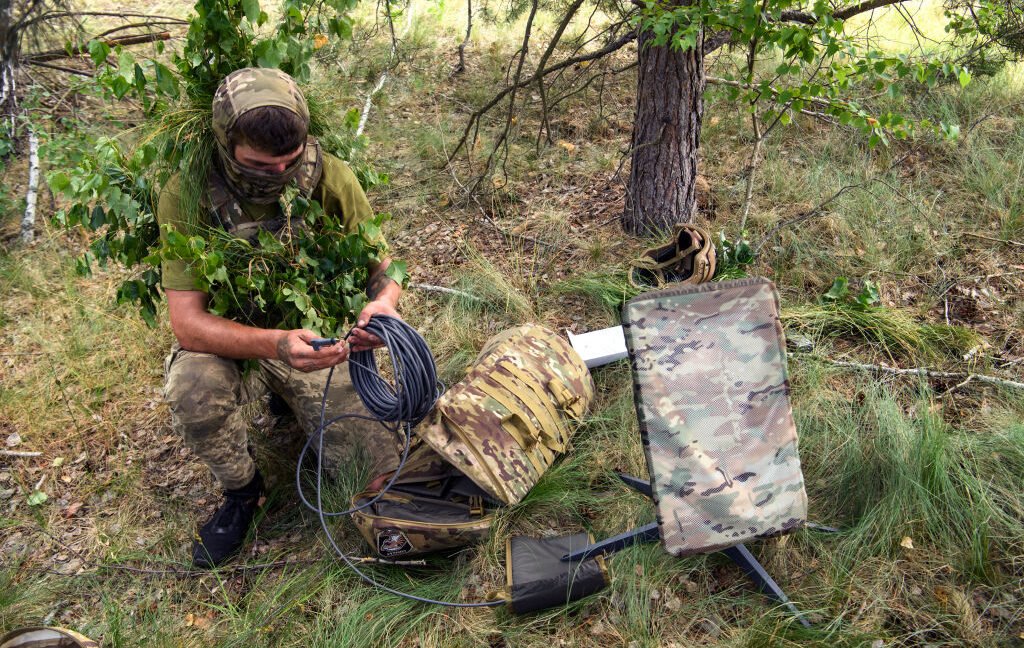
Starlink terminals used by Ukrainian drone units began failing at speeds above 160 km/h early Wednesday, disrupting several missions, according to military personnel and senior Ukrainian officials. One senior official familiar with the front-line situation told the FT that logistics and middle strikes, which target Russian military supply lines, were badly limited. The official said the restrictions arrived with no warning in the middle of the night.
Ukrainian defense ministry adviser Serhii Beskrestnov said long-range drone operations were affected, along with Ukraine's ability to defend against Russia's new jet-powered drones, since Starlink is used on interceptors being developed to counter them. He wrote on Telegram that the action was clearly not coincidental and was tied to the current political situation. The disruption comes as Kyiv faces escalating Russian attacks on its energy infrastructure and mounting pressure from US President Donald Trump to make concessions to Moscow.
Trump has increased pressure on Ukraine since last week to halt drone strikes on Russian oil refineries and has threatened to cut off vital intelligence sharing. He has been angered by rising global diesel prices, which he blames on Ukraine, though analysts have said the increase is largely caused by the US war with Iran. The absence of advance warning about Russia's missile strikes, combined with the Starlink restrictions, has heightened concerns in Kyiv about the reliability of US support.
The 7th Rapid Response Corps of Ukraine's air assault forces on the southeastern front said the restrictions affected Starshield, SpaceX's military-grade satellite network built for defense, governments and intelligence agencies. The unit wrote on its Telegram channel that the Starshield package previously had no data transmission speed limits, and that the changes directly affected unmanned aerial vehicles using Starlink for flight control. It said a pilot observed the connection disappearing for 10 to 20 seconds even at speeds of 110 to 120 km/h, and that slower speeds complicated take-offs and made drones more vulnerable to Russian air defenses. Some missions had to be cancelled.
Some Ukrainian officials speculated that SpaceX, which operates Starlink and the thousands of terminals used in Ukraine by its military and civilians, imposed the restrictions at the request of the Trump administration after Musk posted messages critical of Ukrainian President Volodymyr Zelenskyy this week. Musk wrote on X that Zelenskyy had gone too far, responding to a White House video in which Trump said he told Zelenskyy not to hit the refineries. The White House, SpaceX and Musk did not respond to requests for comment.
Polish Foreign Minister Radosław Sikorski wrote on X asking Musk whether he was playing politics with his products again, saying European customers were watching. A Ukrainian presidential adviser said military officials were trying to resolve the issue through the coordination center in Wiesbaden, Germany, the hub for Ukraine's military liaison with Western partners.
Zelenskyy, who arrived in London on Wednesday morning to meet Prime Minister Andy Burnham, said Ukraine had once again received no early warning from its partners before Russian ballistic missiles struck the capital's energy infrastructure, including a main combined heat and power plant. He said Russian forces launched 39 ballistic missiles and more than 120 attack drones overnight and into the morning, and that Ukraine's air force intercepted just four missiles. He reported significant damage at 26 power system facilities and four in the oil and gas sector, with at least 600,000 people without electricity on Wednesday morning. Kyiv authorities reported at least two people killed and more than 20 injured.
More technology news from TechManNews.