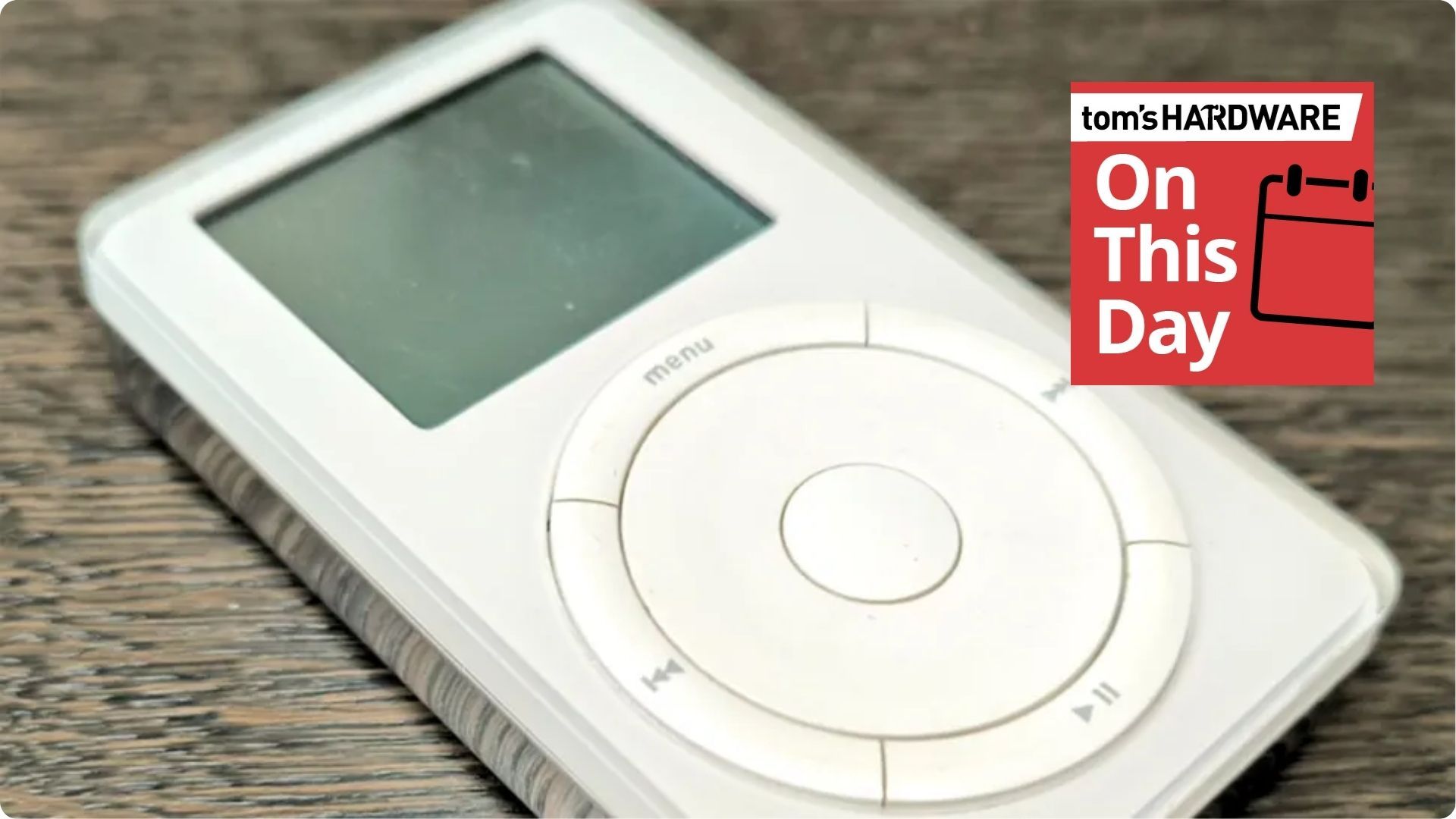
Apple's original iPod reached its 25th anniversary on October 23, 2026, marking a quarter century since the company introduced its first portable digital music player. The device arrived in October 2001, a period when Steve Jobs had moved Apple past its beige era into the Mac OS X years, with the iBook and iMac already on the market. The company's turnaround was underway, and its iDevices were selling well among consumers despite difficult conditions following the dot-com bubble's collapse.
Jobs framed the Mac as a potential hub for digital life, tying together digital cameras, camcorders, DVD players and a portable music player. Apple chose music because of its broad appeal and large market size, which Jobs noted had no clear leader. He acknowledged that smaller firms such as Creative and Sonic Blue, along with the far larger Sony, already sold portable digital players, but said none had yet found the right formula for digital music. At the time, Apple identified four mainstream portable options: CD players, MP3 CD players, flash players and hard disk-based jukebox players. Jobs judged the last category the best entry point.
The iPod shipped as an MP3 player with CD-quality sound that handled the popular formats of the day, including MP3, WAV and AIFF. Its 5GB capacity held 1,000 songs, described as 1,000 typical pop-length MP3s at 160Kbps, which Jobs said would cover most people's entire music library. He presented three main reasons the device would succeed. The first was its ultra-portable design, made possible by Toshiba's 1.8-inch, 0.2-inch-thick hard drive. The player measured 2.4 by 4 by 0.78 inches, weighed 6.5 ounces and was compared to the size of a deck of cards.
Apple also promoted 20-minute skip protection, fast file transfers and charging through a single FireWire 400 cable, calling the iPod the first and only music player with FireWire. Jobs said the connection could move a full CD to the device in five to 10 seconds, against roughly five minutes over the USB connections of the era. Filling the player with 1,000 songs was estimated at 10 minutes, versus five hours for a USB player. A rechargeable lithium-polymer battery provided 10 hours of playback and could reach 80% charge in an hour.
The second claim centered on Apple's design and ease of use, with minimal, durable back and sides. The controls were built for one-handed operation, including an accelerated scroll wheel with a piezoelectric clicker for tactile feedback that let users find and play music by playlist, artist or song. Sarah MacLachlan's "Building a Mystery" was the first song demonstrated on stage.
The third was Auto-Sync with iTunes libraries. iTunes 2 launched the same day with MP3 CD burning and syncing support for the new player, and Auto-Sync kept a user's curated Mac library matched to the device whenever it was connected to transfer music or charge. The iPod also worked as a FireWire hard drive. The first iPhone arrived in early 2007, more than five years later, and the two products shared Apple's lineup for over a decade. The iPod's final model was the 7th-generation iPod Touch in May 2019, and the line, though unmaintained, was officially discontinued in May 2022.
More company and startup news from TechManNews.


