Tachyum Slovakia, the subsidiary behind the long-delayed Prodigy universal processor, filed for bankruptcy on October 22, 2026, without waiting for creditors to petition for repayment of unpaid debts, according to court documents cited by Forbes. The Bratislava III Municipal Court opened bankruptcy proceedings after finding the company's filing met legal requirements. Under Slovak law, a voluntary bankruptcy filing carries a presumption of insolvency, meaning Tachyum Slovakia is technically bankrupt. The development leaves the future of the Prodigy processor intellectual property uncertain, and the outcome carries stakes for the U.S.-based parent company Tachyum Inc.
Tachyum introduced Prodigy in 2018 with plans for a 2019 tape-out and commercial availability in 2020, but the company has yet to demonstrate working silicon after eight years of development. The launch slipped repeatedly, to 2021 and then to 2022, 2023, 2024 and 2025. The design changed along the way as well: an original 64-core chip became a 128-core processor on a 5nm-class process, then a 192-core part with 16 DDR5 memory channels. In late 2025, Tachyum announced a chiplet-based redesign with 1,024 cores, 24 DDR5 memory channels and a 1,600W TDP built on TSMC's 2nm-class node, a change that would have required substantial additional work and pushed availability to 2030 or later.
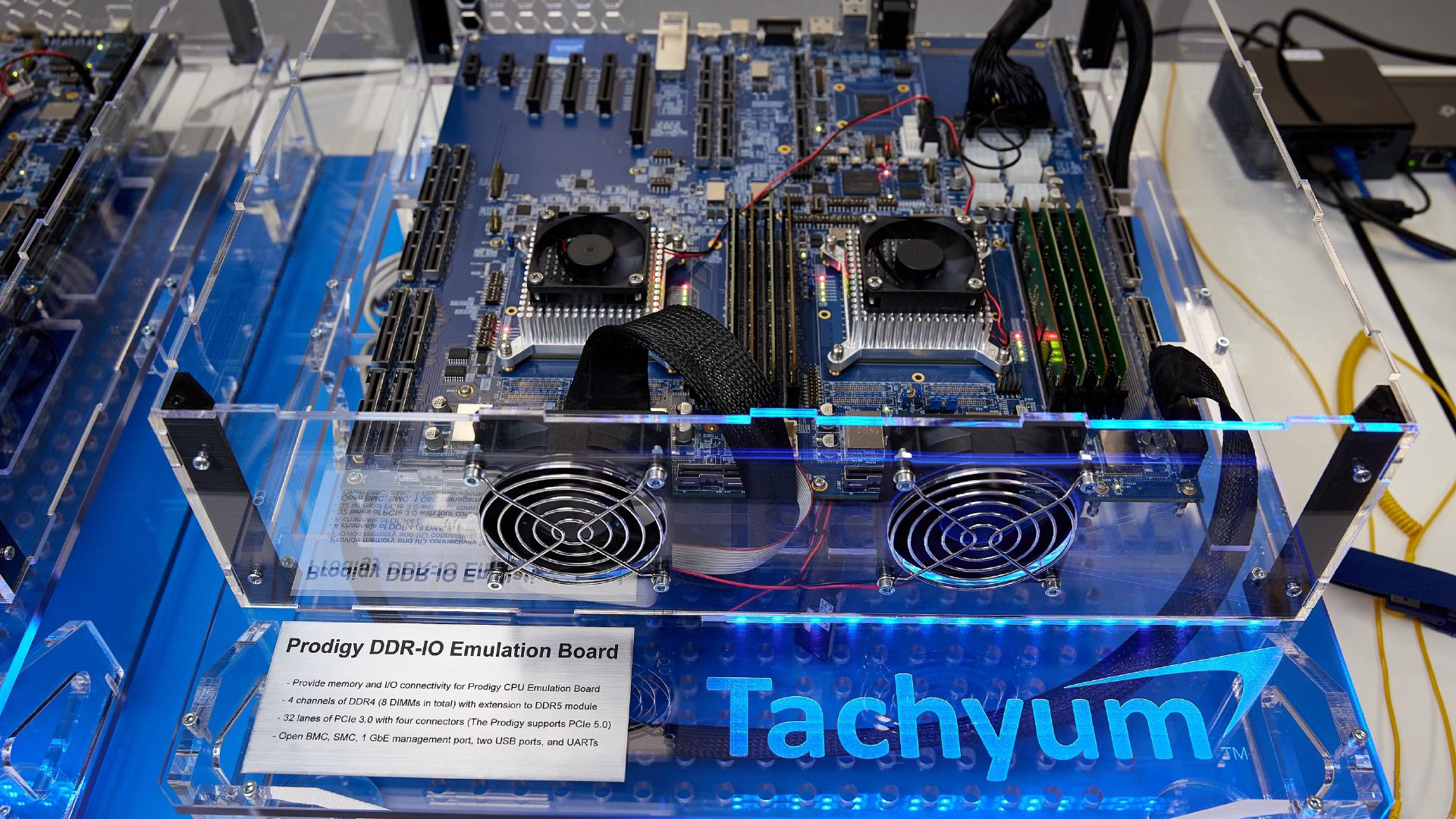
If the court formally declares Tachyum bankrupt, a court-appointed trustee would take control of company assets, which could be sold to repay creditors. The specific assets are not known, but they could include Prodigy-related intellectual property, patents and other technologies as well as development hardware. Absent new financing or a buyer able to fund further development, work on Prodigy could effectively stop.
Tachyum's ownership structure complicates the picture. Most development activity is concentrated in Slovakia, but Tachyum Slovakia is a subsidiary of U.S.-based Tachyum Inc., according to Dennik N. If the American parent holds the Prodigy IP while the Slovak subsidiary employed the engineers, conducted development and accumulated the debts, the bankruptcy could let the group shed much of those liabilities without losing its core technology. If the Slovak entity owns the IP, the American parent could in theory purchase it from the bankruptcy estate.
The parent company faces its own pressure. Dennik N reported that Tachyum Inc. has faced demands from creditors, some of whom have requested its liquidation. The future of Prodigy therefore hinges on which entity actually owns the intellectual property and whether the American parent survives or is liquidated, a question that could determine whether the Slovak filing marks the end of the processor or a restructuring of the Tachyum group aimed at continuing development.
More hardware news from TechManNews.