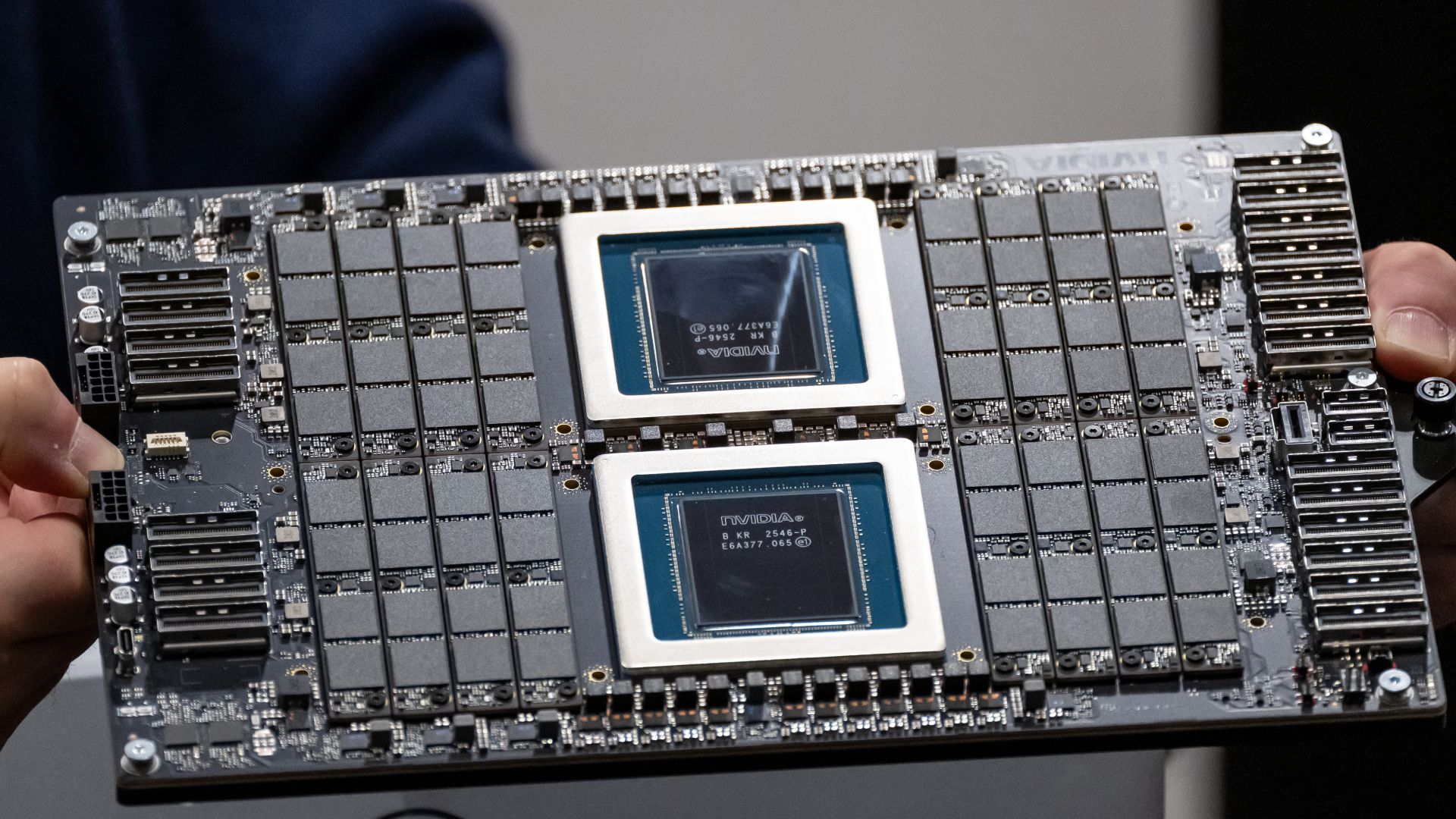
Oracle Cloud has begun offering standalone instances of Nvidia's Vera CPU, marking the first time Nvidia has pushed a CPU on its own into a hyperscale data center, according to Tom's Hardware. The publication reported that it conducted independent benchmarking of a local Vera server and found the chip holds a substantial memory bandwidth advantage over a dual Intel Xeon 6 system. The deployment puts Vera alongside the x86 processors that hyperscalers have traditionally favored.
Vera has already been appearing at GPU-focused neoclouds including Nscale, CoreWeave and Nebius, but a standalone deployment at a hyperscaler like Oracle carries different weight. Oracle's OCI Superclusters have otherwise offered the Ampere Altra for Arm-based instances, while the company's CPU focus has remained primarily on x86. The move places Vera in competition with x86 chips regardless of GPU compute.
Nvidia has said Vera's memory system is capable of 1.2 TB/s of bandwidth. In Tom's Hardware's testing of the Stream benchmark, Nvidia's use of LPDDR5X-9600 memory, a monolithic die and a distributed mesh for caching allowed Vera to more than double the bandwidth of a dual Intel Xeon 6980P system, even when that system was paired with MRDIMMs running at 8,800 MT/s. The publication showed results for the triad operation and said Vera's leads were similar across add, copy and scale.
The distributed memory design stood out in testing. Whereas AMD and Intel keep centralized memory control and system-level cache, Vera spreads memory across the die in a mesh. The publication reported that OpenMP's spread policy delivered a large boost to Vera's memory bandwidth by binding processes as far apart as possible.
Tom's Hardware also highlighted Python performance as a critical measure for agentic AI, noting that frameworks such as CrewAI and LangGraph are written in Python, as are foundational libraries including PyTorch and TensorFlow. It said Vera beat CPUs that are more powerful on paper in that area. The publication also pointed to SQLite performance, where Nvidia's second-generation Scalable Coherency Fabric showed up in a real workload bound largely by data movement across the system.
Ian Buck, the Nvidia executive behind CUDA and the face of the company's AI infrastructure buildout, said in March, when the chip was revealed, that the world could not be served by a single 88-core SKU. AMD and Intel still lead on single-socket density, with AMD's upcoming EPYC Venice CPUs able to pack up to 512 threads in a single socket.
Oracle is proceeding cautiously. The company said it will also offer Nvidia's HGX NVL8, which brings eight Rubin GPUs together in a cluster connected to a dual, 64-core Intel Xeon 6 host with 4TB of DDR5 memory. Tom's Hardware said its testing is part of a larger benchmarking session and that a full review with technical details of the test setup will be published shortly.
More hardware news from TechManNews.