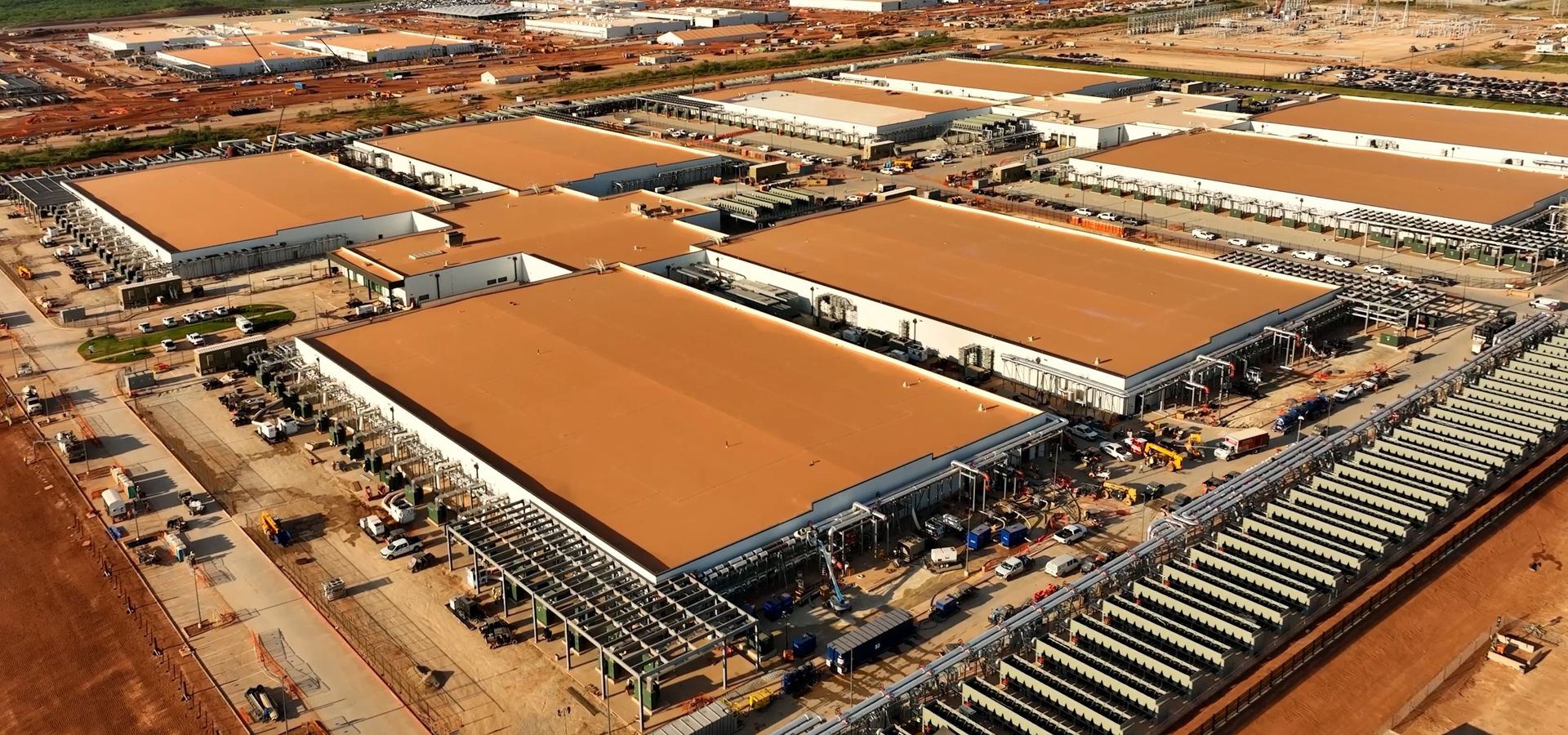
Analysts at Semianalysis say SpaceX could build more data center compute in roughly a year and a half than Google has amassed over its entire history, according to an assessment reported by Tom's Hardware. The projection rests on the pace of SpaceX's Colossus 1 and Colossus 2 buildouts, which the analysts tracked using aerial photographs and other available information. For a US AI industry already competing fiercely for capacity, the claim points to a buildout moving faster than established hyperscalers.
The clearest measure cited is power. Colossus 2's generation capacity stood at only 0.4 GW in January and is projected to reach 2.4 GW by the end of the year at the rate hardware is appearing on site. Across the sites the analysts are tracking, including Colossus and Starbase facilities, they tally 9 GW of potential data center capacity.
The campus itself holds 89 turbines capable of delivering approximately 2.5 GW, along with 1,377 Tesla battery Megapacks already installed. Emissions rules will eventually limit the facility to running roughly 1.24 GW of its own turbines. Even with 1.2 GW eventually arriving from the grid, a 300 MW shortfall remains to be covered by the batteries, which Semianalysis expects will absorb compute load variation and possibly external power. SpaceX has an agreement with the state of Mississippi allowing temporary operation of the extra turbines, with a promised phase-out by July 2027.
On September 25, Elon Musk stated that Colossus 2 already had 550,000 GPUs working, presumably in the existing Macrohard and Macroharder facility. SpaceX was reportedly aiming to have its Gun Range and Project SPAM centers ready soon, and photos show visible facilities where only loose dirt stood a few months earlier, though nothing confirms GPU racks are installed inside.
Semianalysis notes that SpaceX starts construction well before deciding how a facility will be powered. The analysts believe Tesla may manufacture mechanical and electrical equipment in modules ready for direct installation from a factory or truck, and the temporary turbines are mounted on truck flatbeds as mobile generation, seemingly to skirt regulations. They credit in-house infrastructure and power hardware via Tesla's manufacturing for the speed, potentially bypassing supplier lead times other hyperscalers face, and note two data centers at Starbase are also under rapid construction.
Capacity under construction does not guarantee working systems. Zoning, permits, grid connections, power constraints, water supply and public opposition have slowed builds elsewhere. Microsoft's Satya Nadella has said chips can sit in inventory that cannot be plugged in, describing that as his problem today, and other reports indicate a significant percentage of AI accelerators remain in warehouses awaiting server racks. Even if Colossus 2 finishes quickly, hardware and materials availability, legal changes and public opposition remain hard to predict, though Semianalysis suggests Starbase shows the model can be replicated.
More hardware news from TechManNews.